Godset: Kolding's Loud Corner
The small regional room that keeps the Triangle heavy
Contents
Kolding is not the first name that comes up when people talk about Danish live music, or the second, or the tenth. It is a mid-size town in the south-east corner of Jutland, part of the industrial Triangle region — the cluster of Kolding, Vejle and Fredericia that most of the country thinks of as a place you change trains rather than a place you go out. And yet Kolding has Godset, a small, loud, stubborn regional venue that has spent years making the case that the heavy stuff belongs everywhere, not only in the big cities. It is one of my favourite kinds of room: the tight corner club that punches so far above its town that touring bands make a point of stopping.
The room
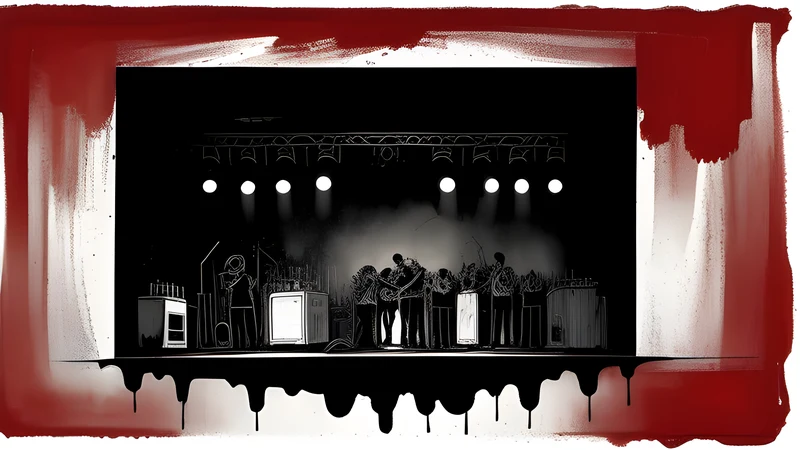
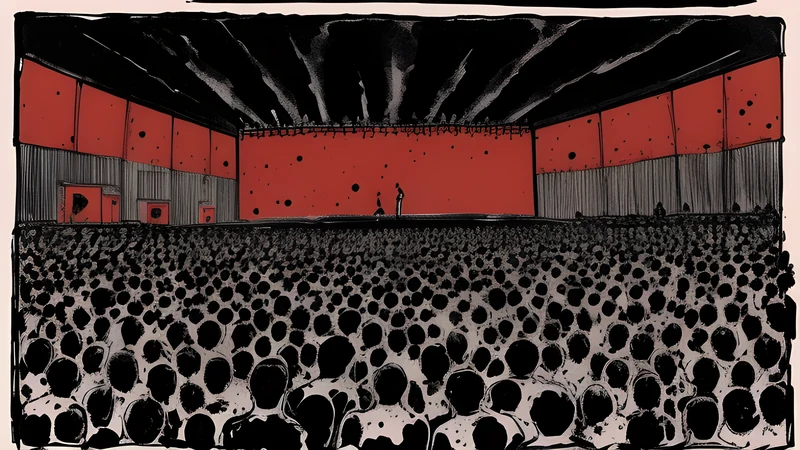
Godset is small, and its smallness is the entire proposition. This is a few-hundred-capacity room, close and low and built for volume, the kind of space where a full house is a physical crush and the band is right on top of you. There is no grand production, no deep floor, no distance to speak of between the stage and the back wall. You walk in and you are already at the gig. For loud music that intimacy is a feature of the highest order, because a heavy band in a small hard room is one of the best experiences live music offers, and Godset is engineered — by design or happy accident — to deliver exactly that.
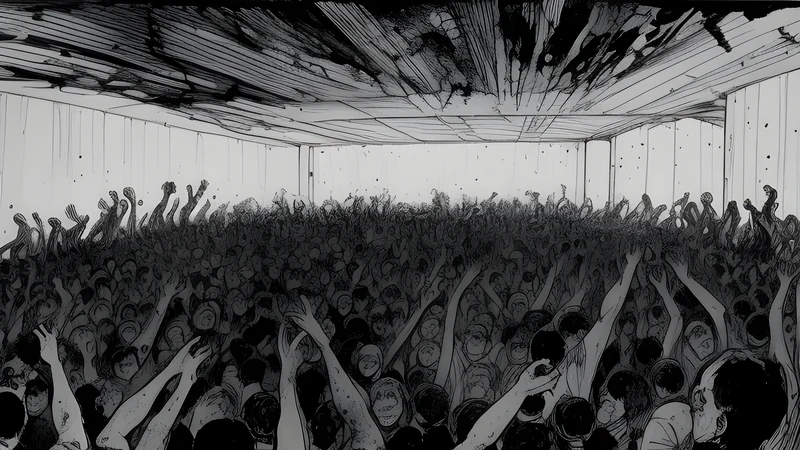
The sound in a room this size is a physical assault in the good way. There is nowhere for the volume to dissipate, so a proper metal or hardcore act fills the space completely and the low end arrives through your ribcage rather than your ears. A tight band sounds enormous here; the room amplifies the intensity of a good performance and leaves a bad one nowhere to hide. That honesty is what small rooms do best, and it is why the connoisseurs of loud music will always rate a sweaty corner club over a comfortable barn. Godset is a sweaty corner club of the first rank.
The crowd completes it. A room this small only works when it is full of people who actually want to be there, and Godset draws exactly that — the committed local heavy-music crowd who have kept the room alive through the years when a smaller town’s scene could easily have withered. There is a loyalty to a venue like this that the big-city rooms, spoiled for choice, rarely inspire. In a town the size of Kolding, the loud room is the loud room, and the people who love it treat it accordingly.
Carrying the Triangle
Godset’s real significance is regional, and it is bigger than the town it sits in. Kolding anchors the Trekantområdet — the Triangle — a cluster of towns in south-east Jutland with a combined population large enough to sustain a serious appetite for live music, but historically short of the venues to feed it. Godset carries a disproportionate share of that load. When a touring loud act wants to play the region between the Copenhagen–Aarhus poles, this is often the room that hosts them, drawing a crowd from Kolding and the whole surrounding catchment.
That is the quiet logic of the room. A venue matters when it is the right room in the right gap, whatever the size of its town, and Godset sits in a genuine gap on the map. The heavy-music fans of the Triangle would otherwise face a long drive to Aarhus or across the water for every show worth seeing, and a scene that has to commute for everything slowly dies. Godset keeps the region’s loud culture local, and that is a more valuable job than a hundredth room in Copenhagen would be.
The subsidy that makes it possible
Like the other rooms in this series, Godset is a regionalt spillested — part of Denmark’s network of venues co-funded by the state and the municipality, on a four-year cycle, with a mandate to develop and present live rhythmic music rather than just book the safe bets. In a town the size of Kolding that support is essential; it is the difference between the room existing and not existing. The commercial maths of a few-hundred-cap heavy-music venue in a mid-size Jutland town simply do not work without it. The subsidy is what lets Godset book the developing acts, the difficult genres and the loud touring bills that a purely profit-driven room would never risk.
I keep coming back to this point across every one of these venue pieces because it is the single most important thing to understand about the Danish scene: the country decided, as a matter of policy, that live music should exist outside the big cities, and it funds a network of rooms to make that true. Godset in Kolding, Posten in Odense, Skråen up in Aalborg — these are the nodes that turn a country of two music cities into a country with a genuine national circuit. When you stand in Godset watching a band that would never draw a crowd big enough to interest a commercial promoter, you are watching that policy work.
The scene it feeds
Small regional rooms are where a national scene actually grows, and Denmark’s outsized record as a loud-music exporter does not happen without them. A country this small has no business producing as many good metal and hardcore bands as it does, and the reason it manages is the density of rooms like Godset — places where a local band can get a real stage and a real crowd early, and where the touring circuit comes close enough that a young act can support a name they grew up on. The story of Denmark’s little country, big loud export is written in rooms exactly like this one.
That incubating work is invisible from the outside. Nobody writes about the Tuesday all-local bill in Kolding, but that bill is where a scene tests its next generation, and a region that has a room to host it stays healthy while one that does not goes quiet. Godset gives the Triangle’s young heavy bands somewhere to become good, and a handful of them will go on to fill much bigger rooms one day. The corner club is the root system; the arena shows are the flowers. Cut the roots and eventually nothing blooms.
The honest limits
I will be straight about the trade-offs, because a venue guide that only gushes is useless. A small room in a mid-size town has real constraints. The biggest touring productions cannot fit, so the arena-scale acts skip Kolding entirely and play the cities. The calendar is thinner than a big-city room’s, because a town this size can only sustain so many nights. And the smallness that makes the loud shows so intense also means comfort is not on the menu — a busy night at Godset is hot, tight and unglamorous, and if you want a seat and a good sightline from the back you are in the wrong building.
None of that is a criticism, because none of it is what Godset is for. The room knows exactly what it is: the loud corner of the Triangle, the place the heavy stuff lives, the small hard room that gives the region its edge. Accept it on those terms and it is one of the most rewarding venues in Jutland. Reject it for not being VEGA and you have missed the entire point of what a small regional room is meant to do.
Getting there and the practicalities
Kolding sits on the main Jutland rail line, roughly midway between the German border and Aarhus, which makes Godset more reachable than its off-the-radar reputation suggests. Trains run frequently, the town centre is compact and walkable, and for the surrounding Triangle towns Kolding is an easy hop by train or car. That connectivity is part of why the room can pull a regional crowd rather than only a local one — a punter in Vejle or Fredericia can be at the show and home again the same night without much trouble, and even a determined fan from further afield can route a Kolding date into a weekend.
Inside, keep your expectations calibrated to the room. There is a bar, there is a floor, there is a stage, and there is not a great deal else, which is exactly as it should be. Dress light for a busy night because the room holds heat, get there early if the bill is a big draw and you want the front, and understand that the whole appeal is the closeness. The lack of frills is the point. You came for the band and the volume, and Godset strips away everything that is not those two things.
A night worth planning
The best way to use a room like this is to treat the occasional standout show as a proper night out rather than a casual drop-in. When a genuinely good touring loud act lists Kolding, that date is often better than the same band’s big-city show, because the room concentrates the intensity in a way a larger venue physically cannot. The band is close, the crowd is committed, and the whole thing has the charged feel of an event the town has been waiting for. Those nights are why the small regional room earns its place, and why I will always check a Godset listing when I am anywhere near that corner of Jutland.
The verdict
Godset is the sort of venue I want to defend loudly, because it is the sort that a purely commercial world would never build and a slightly less generous cultural policy would let die. It carries the loud music of a whole region on a few hundred square metres of sweaty floor, it keeps the Triangle from having to commute for its gigs, and it does the unglamorous root work of growing the next generation of Danish heavy bands. Next time a band you love lists a Kolding date, do not dismiss it as a minor stop. It might be the best show of the tour, precisely because the room is so small and so loud and so genuinely alive. That is what a corner club is for, and Godset is one of the best of them.
Related Content