Ghost: The Theatre Band That Won
How an anonymous Swede in a mask turned metal theatre into stadium pop
Contents
When Ghost first appeared around 2010, a Swedish band fronted by a man dressed as a demonic Pope backed by anonymous musicians in identical hooded robes, the sensible reaction was to dismiss them as a gimmick. Metal has a long history of bands in costumes and corpse paint, and most of them are remembered as jokes. Fifteen years later Ghost headline arenas across the world, have a Grammy on the shelf, and have become one of the biggest rock bands on the planet. The costume band won, comprehensively, and the story of how is one of the most instructive in modern heavy music.
The man behind the mask
For years Ghost maintained total anonymity. The frontman appeared only as a character — first “Papa Emeritus”, a satanic anti-Pope, later the slicker “Cardinal Copia”, the role recast and renamed with each album cycle as part of an ongoing theatrical narrative. The backing musicians were simply “Nameless Ghouls”, faceless and interchangeable, credited to nobody. The anonymity was the whole aesthetic, a band presenting as a sinister ecclesiastical order rather than a group of Swedish blokes.
The mask eventually came off under legal pressure. A 2017 lawsuit brought by several former Nameless Ghouls over money forced the frontman’s identity into the open: Tobias Forge, a Swedish musician from Linköping with a long history in the underground metal scene. Forge is Ghost, the sole constant, the writer and creative director who conceived the whole project and plays every character behind the paint. Learning that the demonic Pope was one clever, meticulous Swede with a deep knowledge of pop history did nothing to hurt the band; if anything it clarified what Ghost actually is, which is a single artist’s vision executed with total control.
Pop songs in a metal costume
Here is the trick that made Ghost enormous, and it is worth stating plainly because so many people miss it. Ghost look like an extreme metal band and largely are not one. Underneath the satanic imagery and the occasional heavy riff sit some of the most expertly crafted pop-rock songs of the last two decades, all soaring melodies, huge choruses and arrangements that owe as much to seventies arena rock and ABBA-grade Swedish pop craft as to anything from the metal underground. Forge is a student of the hook, and Ghost’s records are stuffed with them.
The imagery is the delivery system for the melody. The Satanism is theatrical and knowing, played with a wink, a horror-movie aesthetic rather than a genuine ideology, and it gives the gorgeous pop songs a dangerous, transgressive frame that makes them far more interesting than a straight pop act singing the same tunes. Across Opus Eponymous (2010), Infestissumam (2013), the Grammy-winning Meliora (2015), Prequelle (2018), Impera (2022) and 2025’s Skeletá, the band steadily dialled up the pop and the theatre together, and the audience grew with every step.
The theatre that made it real
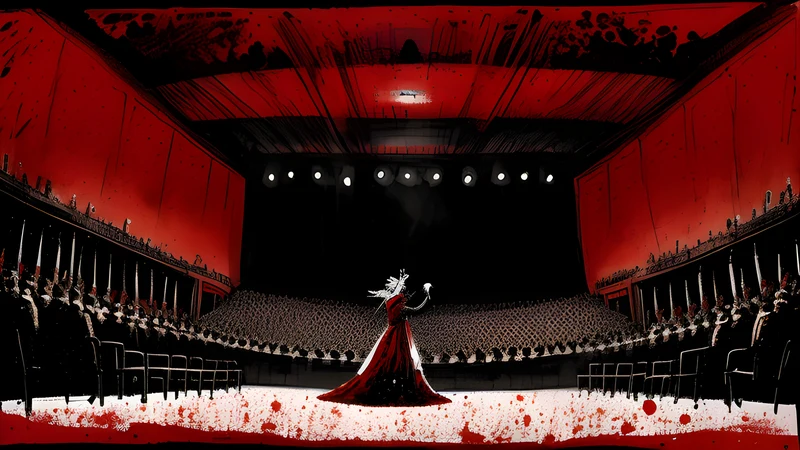
Where Ghost fully justify themselves is live, because Forge understood something most heavy bands ignore: that a rock show can be actual theatre. A Ghost concert is a staged production with a plot, recurring characters, costume changes, ritual and genuine spectacle, closer to a piece of horror pageantry than a standard gig. It is the rare metal-adjacent show you could take someone who does not like metal to, and they would be entertained by the sheer craft of the presentation. The songs are strong enough to carry the arenas; the theatre is what makes filling them feel inevitable.
That commitment to spectacle places Ghost in a specific lineage. The band descend from Alice Cooper and KISS and the whole tradition of rock as staged theatre, updated with a Scandinavian pop sensibility and a horror-film budget. Forge’s use of a persona and paint also connects to metal’s older theatrical traditions, the ones I traced in a short history of corpse paint, though Ghost use the mask for pop seduction rather than black-metal menace. And their success cracked open a door that other faceless, image-driven acts walked straight through, part of the same cultural moment that produced the anonymous, ritualistic rise of Sleep Token.
Winning over the sceptics
The most satisfying part of the Ghost story is how thoroughly they converted the doubters. Serious metal fans are a suspicious crowd, quick to sniff out a gimmick and quicker to reject anything too polished or too popular. Ghost faced exactly that scepticism at the start and answered it the only way that works: by writing better songs and putting on a better show than the people sneering at them. The Grammy for “Cirice” in 2016 was an early signal; the steady climb from clubs to theatres to arenas over the following decade was the proof. You cannot fake your way to headlining stadiums for fifteen years. The songs have to be there, and Ghost’s are.
They became festival royalty along the way, the kind of act that headlines the biggest European events and closes out nights at the harbour-side spectacle of Copenhagen’s own Copenhell. Watching a field of metalheads sing along to what are, structurally, immaculate pop songs, delivered by a man in a skull mask playing a fictional anti-Pope, is one of the odder and more delightful sights in modern live music.
The scale of the operation grew to match the ambition. Ghost’s live production expanded from club-sized theatrics into full arena spectacle, with elaborate sets, costume changes and a stage show that would not disgrace a West End production, all in service of songs built to be sung back by thousands. The awards and chart positions followed the crowds: the Grammy for “Cirice” in 2016, high-charting albums across the world, and a steady promotion up the festival bills until Ghost became the act that closes the night rather than warms up the afternoon. That climb happened without a single compromise to the concept, which is the whole point of the achievement.
The ritual, told across the records
Part of Ghost’s genius is that the whole project is an ongoing story, and following it is half the fun. Each album cycle introduces a new incarnation of the frontman character within a running mythology: a succession of Papa Emeritus figures, numbered like Popes, each replaced by the next in staged ceremonies, with the ancient Papa Nihil and the Cardinal Copia who ascended to become Papa Emeritus IV all playing roles in an elaborate soap opera of ecclesiastical succession. By 2025 and the album Skeletá, the character had evolved again into Papa V Perpetua, the latest chapter in a narrative Forge has been building for fifteen years.
This world-building is what elevates Ghost above a straightforward costume act. The band reward long-term attention with a genuine ongoing story, complete with lore, recurring characters and staged plot developments delivered through music videos, live rituals and elaborately produced skits. It turns the audience into an invested community following a serialised drama, and it gives each new album a narrative hook beyond the songs themselves. Very few bands treat their entire career as a single unfolding piece of theatre, and fewer still pull it off with this much wit and commitment.
A Swedish pop machine
Tobias Forge did not emerge from nowhere. Before Ghost he served a long apprenticeship in the Swedish underground, playing in the death metal band Repugnant and the pop-rock outfit Subvision, and that dual background — extreme metal on one side, melodic pop craft on the other — is precisely the fusion that Ghost perfected. Forge absorbed the songwriting lessons of Sweden’s formidable pop tradition, the same national knack for melody that gave the world ABBA and an entire export industry of hit-writers, and applied it to metal imagery.
The band’s love of a great song shows clearly in their choice of covers, including a well-received EP produced with Dave Grohl’s involvement that reinterpreted an eclectic range of older songs and revealed the pop DNA under the metal costume. Ghost’s real lineage runs through the theatrical, hook-driven rock of Blue Öyster Cult and the arena showmanship of Alice Cooper as much as through any metal band, and Forge wears those influences openly. Understanding Ghost as a pop project in metal clothing, built by a lifelong student of the craft, is the key to understanding why they succeeded where so many gimmick bands failed.
What the win means
Ghost matter beyond their own success because of what they proved. They demonstrated that theatre and spectacle are strengths rather than embarrassments, that pop craft and heavy imagery can share a stage without either being compromised, and that a single artist with a clear vision can build a global phenomenon out of costume, concept and a genuinely bottomless supply of hooks. They took every reason the metal establishment had to dismiss them and turned each one into an asset.
The gimmick, in the end, was never a gimmick at all. It was a coherent artistic vision, executed by one of the sharpest songwriters and showmen of his generation, disguised as a joke long enough for everyone to underestimate it. By the time the world worked out that Ghost were serious, they had already won.
Related Content