Gefle Metal Festival: Gävle's Curated Weekend
A young Swedish festival that treats booking as an act of taste rather than volume
Contents
Gävle is a mid-sized Swedish town on the Gulf of Bothnia, an hour and a half north of Stockholm, best known internationally for a giant straw goat that arsonists burn down most Christmases. It is an unlikely place to run one of the most respected metal festivals in the Nordic countries, and that unlikeliness is roughly the point. Gefle Metal Festival started in 2016 and has spent every year since proving that a small event booked with real taste can matter more than a giant one booked by a spreadsheet. I have never made the trip. Even so, I have watched the bills land each year with the attention you give a record label whose every release you trust.
The case for the small festival
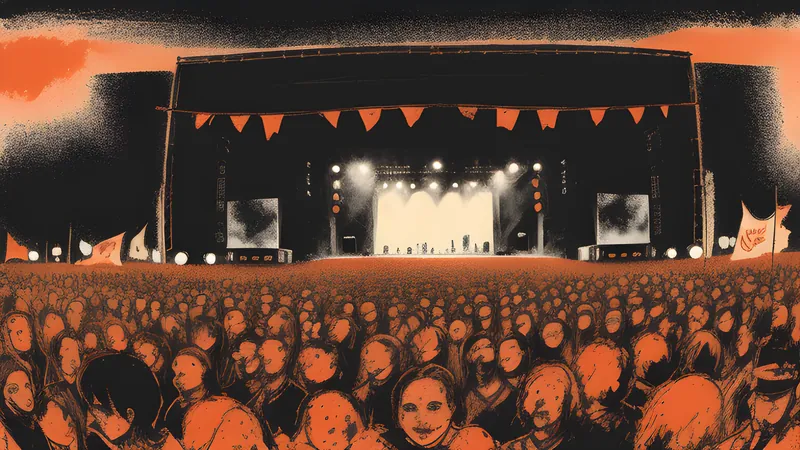
The metal-festival economy pulls relentlessly toward scale. Wacken turns a German village into a temporary city of 85,000; the big commercial events chase ever-larger headliners and ever-longer bills until the experience becomes a logistics exercise punctuated by music. Gefle went the other way on purpose. It caps its capacity at a few thousand, runs a tightly edited line-up across a long weekend in mid-July, and stakes its reputation entirely on the quality of the bookings rather than the quantity. That is a risky model, because it removes the safety net of sheer volume. If the curation is dull, there is nothing else to sell.
The curation has not been dull. Gefle built its name booking the kind of bands that critics and other musicians rate highly and casual punters may never have heard of, alongside enough recognisable names to anchor each night. It is a festival programmed by people who clearly go to a lot of gigs and have strong opinions, and that shows in the way sub-genres get balanced across a weekend: doom against death, post-metal against thrash, a black-metal deep cut next to a melodic headliner. The result is a bill you can trust to have thought about you.
A gasworks for a backdrop
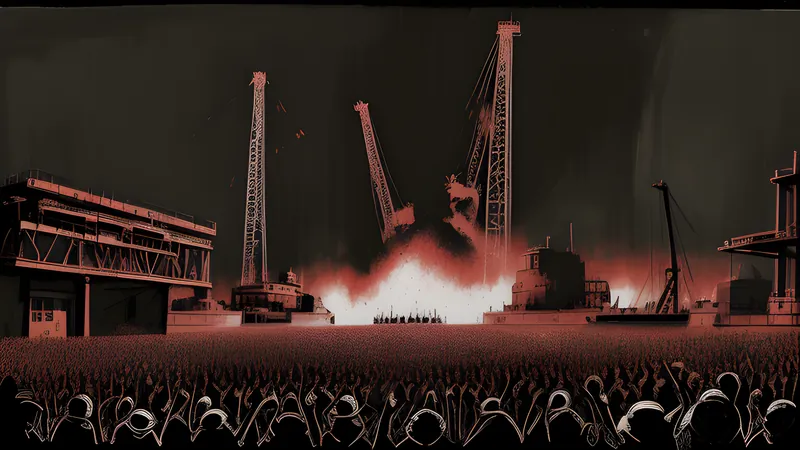
The site helps enormously. Gefle stages much of the festival around Gasklockorna, the old gasworks in Gävle, a cluster of industrial brick structures that give the whole thing a look no greenfield can buy. Repurposed industrial architecture is a recurring theme in Nordic metal festivals, from Tuska’s former Helsinki power plant to the reclaimed shipyards and works that host events across the region, and it flatters the music every time. Heavy music grew out of heavy industry, and a stage framed by a nineteenth-century gasometer states that lineage without anyone having to say a word.
The compact footprint also fixes the single worst problem of the giant festivals: the walk. At an 85,000-capacity site you can spend a set’s worth of time trudging between stages. At Gefle everything is close, the stage clashes are manageable, and you can realistically see almost everything you came for. That intimacy changes the crowd chemistry too. A few thousand committed metal fans in a tight industrial space generate a concentration of enthusiasm that a sprawling field dilutes, and bands notice it from the stage.
The Swedish metal deep bench
Gefle draws on one of the richest scenes in the world. Sweden’s contribution to heavy music is absurd for a country of ten million: Gothenburg gave melodic death metal its blueprint through At the Gates and their peers; Stockholm built the buzzsaw death-metal sound; the country produced Meshuggah, Opeth, Ghost, Watain, Candlemass and a hundred more across every extreme sub-genre. A Swedish metal festival never has to import its identity. It can build a compelling weekend almost entirely from acts within a few hours’ drive, and Gefle regularly leans on that domestic depth while still reaching abroad for its bigger names.
That national pedigree is why a boutique festival in a provincial town can command real bands. Sweden takes this music seriously as culture, funds venues and rehearsal spaces, and produces new acts faster than any single festival can absorb them. Gefle positions itself as the discerning end of that pipeline, the place you go to have your taste confirmed and occasionally corrected. It is the festival equivalent of a well-run independent record shop, where the person behind the counter has heard everything and is quietly judging your choices.
Where it fits in the Nordic calendar
The Nordic metal-festival map is crowded, and each event has carved out a lane. The giant destination festivals sell scale. Nummirock over in Finland sells rural midsummer camping. Sweden Rock down in Sölvesborg sells a vast, classic-leaning, seventy-thousand-strong institution that has run since 1992. Gefle sells editorial judgement. It is the smallest and youngest of the Swedish festivals worth crossing a border for, and it competes purely on the quality of its “yes”.
That is a fragile identity to maintain. The danger for any curated festival is that success tempts it to grow, and growth erodes the very intimacy that made the curation legible. So far Gefle has resisted, holding its size and its standards while the bigger events chase reunion headliners and premium packages. Whether it can keep resisting as it ages is the open question, and it is the same question that eventually confronts every festival built on taste rather than turnover.
What curation actually costs
It is easy to praise a curated festival and harder to appreciate what the model demands of its organisers. Booking on taste rather than volume means every single slot has to justify itself, because there is no crowd of filler acts to hide a weak choice among. A festival with a hundred bands can afford a dozen duds; a festival with a couple of dozen carefully chosen acts cannot afford one. That pressure forces a level of attention and knowledge that the big commercial events, insulated by sheer scale, simply do not need. The people programming Gefle have to actually know the underground, follow the emerging bands, and back their own judgement in public, year after year.
The reward for getting it right is a kind of trust that the giants can never earn. When a curated festival announces its bill, the audience reads it as a recommendation from people whose taste they have learned to rely on, and they will buy tickets on that trust alone, often before they recognise half the names. That relationship — between a festival’s editorial judgement and an audience willing to follow it into the unknown — is the whole value proposition, and it is fragile. One or two dull years and the trust evaporates, because trust is the only product a boutique festival actually sells.
The industrial-heritage tradition
Gefle’s gasworks setting connects it to a wider Nordic instinct for staging heavy music inside reclaimed industrial architecture, and that instinct is worth dwelling on because it does so much of the atmospheric work. Across the region, festivals and venues have colonised old power plants, shipyards, foundries and gasometers, and the marriage is close to perfect. Heavy music was born from industrial cities and industrial sounds, and a stage framed by nineteenth-century brick and iron restates that lineage far more eloquently than any greenfield ever could. The buildings supply a gravity and a history that a rented field in the countryside cannot fake.
There is a practical dimension too. Repurposed industrial sites tend to sit in or near towns, with real infrastructure around them, which makes a festival like Gefle far more comfortable to attend than a remote camping event miles from anywhere. You can stay in a hotel, walk to the site, and treat it as a city weekend rather than an endurance test. That accessibility broadens the audience to include people who love the music but have aged out of sleeping in a muddy field, and it fits Gefle’s whole identity as the grown-up, discerning end of the Nordic metal calendar, a festival for people who want their weekend curated in every sense.
The trip I keep planning
I have a running list of Nordic festivals I mean to reach before I am too old to enjoy the camping, and Gefle sits high on it precisely because it is the sort of event my own instincts were built for. I have always been the punter who arrives early for the openers, who values a well-programmed second stage over a stadium headliner, who would rather see six great bands in a tight room than sixty adequate ones spread across a field. That is Gefle’s whole proposition, and it is why the festival has earned its reputation among people who care about this music without ever growing large enough to appear on the average punter’s radar.
Some year the calendar will open a July window, and I will take the train up from Stockholm to see whether Gävle’s gasworks lives up to the bills I have admired from a distance. Until then, Gefle remains the festival I recommend most confidently without having set foot in it, on the strength of a decade of programming that has never once made me doubt the taste behind it. That is a strange thing to say about an event you have never attended, and it is the highest compliment I can pay a festival built entirely on judgement.
Related Content