Fryshuset, Stockholm: The Youth-Centre Room That Books the Loud
A converted cold store in Hammarby that's been a basketball hall, a recording studio complex, and Stockholm's most unlikely metal venue since 1984
Contents
Fryshuset is not a rock venue that happens to also do youth work. It’s the other way round entirely, and understanding that order is the whole key to the place. The building sits in Hammarby Sjöstad, south of central Stockholm across the water, in what used to be a cold-storage warehouse for the city’s food supply — a genuinely unglamorous industrial shell that a Swedish social worker turned into one of the more interesting live-music footnotes in the Nordics almost by accident, decades before anyone booked a touring metal band into it.
A cold store turned youth centre
Fryshuset was founded in 1984 by Anders Carlberg, a former leader of the Swedish Young Communists turned Social Democratic youth worker, who found the old cold-storage building on the city’s outskirts and saw, where most people would have seen a derelict industrial shed, a basketball hall and a set of music studios for kids with nowhere else to go. The pitch was simple and, by the accounts of everyone who’s written about Carlberg since, sincerely meant: give young people — including plenty who’d fallen out with school, family or the law — a legitimate place to put their energy, and treat music and sport as tools for that rather than as the point in themselves.
It grew fast. In the summer of 1986, when a wave of gang-related teenage violence broke out across Stockholm, the Swedish government turned to Fryshuset specifically and asked it to help, and the organisation responded by launching a national anti-violence lecture tour. That’s an unusual origin story for a building that would go on to host Motörhead and Sabaton, and it’s worth sitting with, because it explains almost everything about how the place actually operates today: Fryshuset is still, first and foremost, a youth organisation with a gymnasium, a basketball programme with thousands of registered players, an indoor skate park, and — buried inside all of that social infrastructure — a genuinely serious music department.
Carlberg himself stayed involved with Fryshuset for the rest of his working life and became something of a national figure in Swedish social work as a result — a former hard-left youth organiser who ended up running one of the country’s most respected youth institutions, a trajectory that says as much about the pragmatism of Swedish social democracy in the 1980s as it does about the man himself. He died in 2013, by which point Fryshuset had expanded well beyond the original Hammarby building into satellite operations in other Swedish cities including Gothenburg and Malmö, all built on the same basic template: sport, music and a place to be that isn’t the street.
The music side of the operation
That music department is bigger than most people expect from an organisation whose primary business is youth welfare: something in the region of 600 young musicians across roughly a hundred bands, working through around 39 recording studios on site, plus night classes in guitar, bass, drums, keyboards and DJ mixing. It’s less a “venue with a side hustle” and more a genuine music school and rehearsal complex that happens to have built performance rooms as the natural next step for its own students — and then, because the rooms existed and were good, started booking outside touring acts into them as well. Scandinavia has a long tradition of publicly and municipally supported rehearsal spaces for young musicians — Sweden in particular treats access to a decent rehearsal room as close to a civic right for teenagers, which is a large part of why the country has punched so far above its population size in exported metal and pop talent across five decades — and Fryshuset is one of the more thoroughgoing examples of that model, scaled up into something closer to a full campus than a single rehearsal room above a youth club.
The two rooms that matter for a touring circuit are Klubben, the smaller club space, and Arenan, the larger hall, both operating under the Fryshuset name and both booked as legitimate stops on the Swedish metal and hardcore circuit rather than as some kind of community-hall novelty. Concert archives for the venue read like a fairly serious mid-size metal routing sheet — Machine Head, Motörhead, Nightwish, Sepultura, Sabaton, Amon Amarth and HammerFall have all played the rooms multiple times over the years, alongside Helloween and Children of Bodom, which tells you the booking has never treated the venue’s youth-centre roots as a reason to play it safe or small. A few of those names played the room more than once across the years, which for a touring metal act says something about how a venue with no obvious nightlife pedigree nonetheless earned a reputation as a genuinely good room to route through on a Nordic leg — word travels fast on a circuit that size, and a bad-sounding room with an awkward load-in gets crossed off tour routing sheets quickly, youth-centre mission statement or not.
What the room feels like
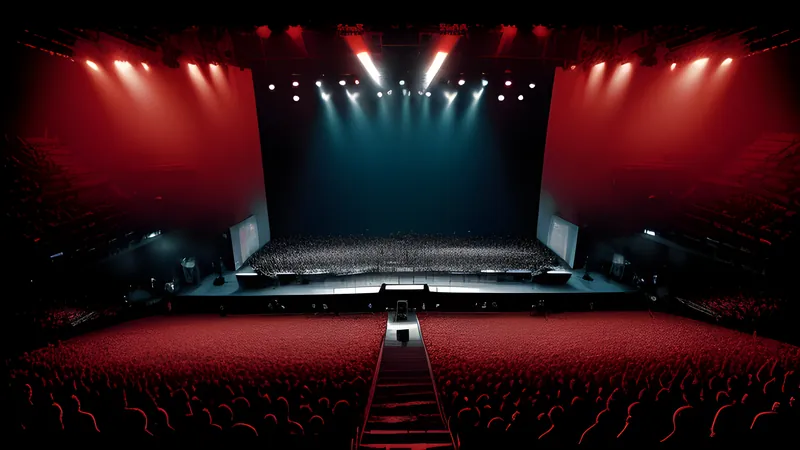
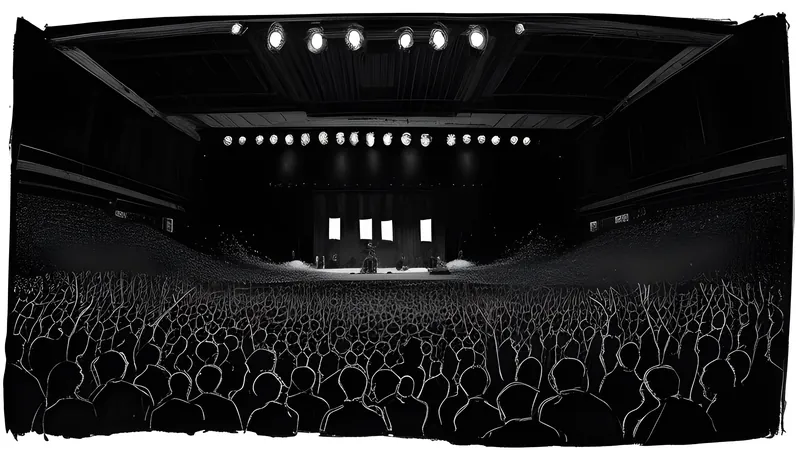
Walking into Arenan for a gig is a genuinely different experience from walking into a purpose-built rock club, because the building around it is unmistakably an institution rather than a nightlife venue — corridors that lead to a gymnasium and classrooms as much as to a stage, a general air of a large multi-use civic building rather than a dedicated music space. It’s arguably the most honest thing about the room: you’re a guest in a working youth centre’s space for a few hours, and the building doesn’t pretend otherwise. There’s a particular kind of adjustment involved in queuing for a Sabaton or Amon Amarth show past noticeboards advertising after-school homework help and youth basketball try-outs, and it never entirely stops being a little surreal, even on a repeat visit.
The hall itself scales to a genuinely substantial mid-size metal crowd, with the flat-floor, high-ceiling character that most converted industrial and civic spaces share — decent for a moshing crowd, unfussy rather than acoustically remarkable, built for function over polish. Arenan is the larger of the two rooms and the one most touring metal acts of any real size end up booked into; Klubben is the tighter, clubbier room for a support-tier act or a smaller headline draw, and the two together give the complex a genuine range across a single building rather than forcing every booking into one fixed capacity.
Getting there
Hammarby Sjöstad is south of central Stockholm across the water, reachable by tram or bus from the centre in fifteen to twenty minutes rather than a proper trek, which is worth knowing because the venue’s slightly out-of-the-way reputation among visiting punters oversells the actual inconvenience. It isn’t a city-centre room, and you won’t stumble onto it wandering Gamla Stan, but it’s not remotely a schlep either. For anyone flying into Stockholm from Copenhagen specifically for a show — a five-hour train or an hour’s flight either way — the venue is an easy add to a weekend trip rather than a destination requiring its own dedicated logistics. There’s no dedicated food operation inside the complex beyond whatever the youth centre’s own canteen happens to be serving, so plan on eating in central Stockholm before making the trip south, the same as you would before most industrial-district gigs anywhere in the Nordics.
Stockholm’s venue map
Stockholm’s live-music geography has a scattered, slightly improvised quality that Fryshuset sums up well — the city doesn’t have one obvious central rock district the way Hamburg’s Reeperbahn or Copenhagen’s Vesterbro does, so its venues turn up in industrial docklands, converted slaughterhouses and, in this case, a youth centre on the southern edge of town. Slaktkyrkan, the converted former slaughterhouse hall over in Slakthusområdet, is the closer comparison in spirit: another building that started life doing something entirely unrelated to music and ended up as one of the city’s better heavy-music rooms once someone worked out the industrial bones suited a PA and a crowd. Debaser, the waterside rock institution closer to the centre, gives you the more conventional dedicated-venue version of the same city, if you want the contrast.
What separates Fryshuset from both of those is the mission behind it. Slaktkyrkan and Debaser exist because someone wanted to run a music venue. Fryshuset’s rooms exist because a youth organisation needed rehearsal space for its own students and, having built good enough rooms, discovered it could also host Sabaton on a Tuesday. That accidental-venue quality is rare, and it means every ticket bought for a touring show there is, whether the crowd clocks it or not, indirectly subsidising a basketball programme and a skate park a few corridors over. For a scene that spends a lot of energy debating authenticity and community, Fryshuset has been quietly the real thing since 1984, several years before most of the bands on its bill sheet had even formed. Plenty of venues put the word “community” on a flyer as marketing. Fryshuset’s version of the word predates the venue itself by years, was never really optional, and is still, thirty-five-odd years on, the entire reason the building has a stage at all.
Related Content