FortaRock: Nijmegen's Metal Weekend
A city park in the oldest town in the Netherlands, given over to the loud for a weekend
Contents
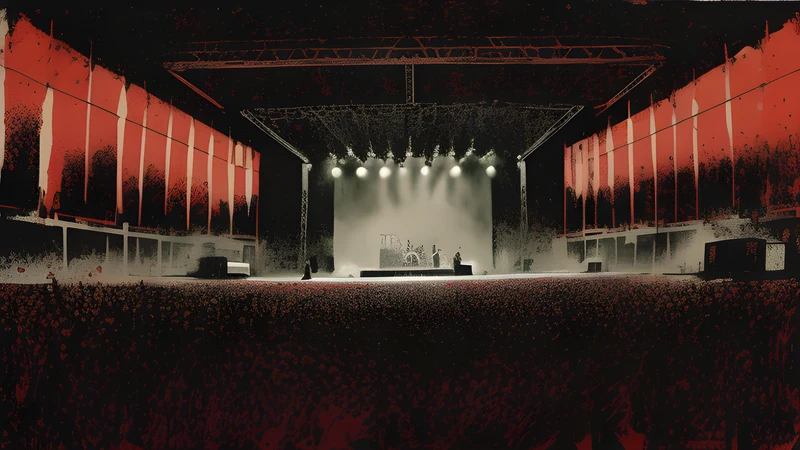
Nijmegen makes a claim that most Dutch cities cannot: it is the oldest town in the Netherlands, a settlement the Romans fortified two thousand years ago on the high ground above the river Waal near the German border. Every summer a slice of that history’s descendant, the Goffertpark on the city’s edge, is handed over to FortaRock, a metal festival that has quietly become one of the most dependable weekends on the Dutch loud calendar. The name is a nod to Nijmegen’s fortress past; the reality is a broad, well-organised metal festival in a green city park, close enough to Germany that half the crowd seems to have driven across the border for it.
From Copenhagen the Netherlands is second only to Germany on my map of foreign loud music, and FortaRock sits in a specific corner of it. It is not the experimental pilgrimage that Roadburn is, nor the harbour-industrial spectacle of the big harbour festivals. It is a mainstream-to-heavy metal weekend run with Dutch competence in a city that knows how to host, and that reliability is exactly its appeal. You know what you are getting, and what you are getting is good.
A park, a fortress town, a festival
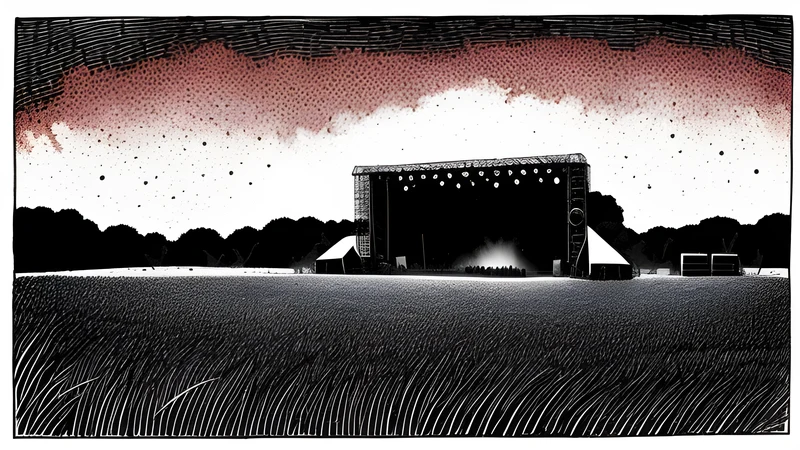
The Goffertpark is a large public park in Nijmegen, home to a stadium and open green space, and it turns out to be an excellent festival site. It is close to the city, well served by transport, and big enough to hold a two-day metal festival without the crowd ever feeling trapped or the neighbours ever quite revolting. Nijmegen itself is a student city with a long history and a healthy appetite for culture, which means FortaRock lands in a place that treats live music as part of civic life rather than an invasion to be endured. The festival has become part of the city’s summer, and that civic buy-in shows in how smoothly it runs.
FortaRock began around 2009 and grew through the 2010s into a fixture, expanding from a single day into a full weekend as its audience proved itself. It has weathered the ordinary turbulence of the Dutch festival market — the shifting between one-day and two-day formats, the year-to-year gamble of booking — and come out the far side as one of the events the Dutch metal crowd simply plans around. In a market that has swallowed plenty of festivals, longevity like that is the review. A festival lasts because the crowd trusts it and the city keeps welcoming it, and FortaRock has both.
The site up close
What makes the Goffertpark work as a festival site is the balance it strikes. It is urban enough that you can be back in a city-centre bar within twenty minutes of the last band, and green enough that the days do not feel like standing in a concrete bowl. The main stage anchors the open field with a second stage close enough to keep the schedule flowing but far enough that the sound does not bleed. There is no marathon hike between the two, which for a two-day festival is a genuine mercy on the legs and a rarity worth naming. The Dutch instinct for orderly crowd flow shows in the layout: entrances that do not bottleneck, bars that do not run dry, toilets that do not become a warzone by mid-afternoon.
Nijmegen’s transport links do a lot of the quiet work. The city sits on the main rail line, close to the German border and an easy run from Arnhem, Eindhoven and the Ruhr, so the catchment for a heavy weekend is enormous and the getting-there is painless. For an international punter that matters more than it sounds — a festival you can reach on public transport without a car-hire saga is a festival you actually go to. FortaRock’s siting means the crowd arrives unstressed and leaves the same way, and that shapes the whole mood of the weekend.
The booking: broad, heavy, dependable
FortaRock’s programming instinct is inclusive within metal — it books the big mainstream metal headliners alongside a strong undercard of heavier and more extreme acts, so the poster spans from the arena-filling names down to the death and thrash bands that draw the committed. That breadth is deliberate. It lets a casual metal fan and a died-in-the-wool extreme-metal obsessive share the same weekend, each finding their bands, without the festival losing a coherent identity. The spine is always heavy; the range around it is wide.
Over the years FortaRock has hosted a great cross-section of the metal world, from melodic-death mainstays to groove and modern-metal headliners to the harder underground. The Dutch scene’s appetite is broad and FortaRock feeds all of it. If you follow the Gothenburg melodic-death lineage or the wider European heavy circuit, you will recognise most of the poster in any given year — this is a festival that books the working core of the genre rather than reaching for one impossible reunion. That dependability is undervalued. A festival you can trust to be good every year is worth more to a scene than one that swings for glory and misses half the time.
The Dutch crowd, again
I have written before that the Dutch metal audience is one of the best in Europe to stand among, and FortaRock is more evidence for it. The crowd is knowledgeable, unpretentious, and up for it — the same population that keeps 013 in Tilburg and the Effenaar busy year-round, out in a park for a weekend. Nijmegen’s border-town position means a heavy German contingent joins them, which only raises the temperature; the German and Dutch metal crowds share a seriousness about the music that makes for enthusiastic pits and loud, word-perfect sing-alongs.
There is a civility to a FortaRock crowd that reflects the setting. This is a city-park festival with a family-friendly daytime edge, well-run and safe, and the crowd behaves accordingly — the pits are hard but fair, the atmosphere warm, the aggravation minimal. Some purists find the mainstream edge of the booking a touch safe, and there is a fair argument that FortaRock rarely takes the wild programming risks that a Roadburn or a smaller underground field will. What it offers in exchange is reliability, and for a lot of people that trade is exactly right. Not every festival needs to be an adventure; some just need to be a great weekend, delivered.
The clash question is worth a word for anyone weighing the Dutch options. FortaRock, Dynamo, Roadburn and the venue calendar rarely step on each other — the Dutch scene is coordinated enough, and the audience deep enough, that a committed metalhead can plausibly do several of them in a year. That is a luxury a smaller scene cannot offer. In Denmark the loud calendar is thinner and the choices starker; the Netherlands packs enough events into a small country that the hard part is budgeting rather than choosing. FortaRock earns its slot in that crowded field by being the broad, safe, brilliant weekend — the one nobody regrets buying a ticket for.
A festival that survived its wobbles
FortaRock’s history is not a smooth upward line — few festivals’ are. It has flexed between one-day and two-day formats depending on the strength of a given year’s lineup and the temper of the market, and it has sat out or reshaped editions when the economics or the bookings did not line up. Some years it has run as a single blockbuster day; others as a full weekend. That flexibility is a survival trait rather than a weakness. A festival that refuses to bend to the market snaps; FortaRock bends, and it is still standing while glossier events have folded around it.
The pandemic years hit the whole European festival ecosystem hard, and the Dutch calendar lost editions across the board in 2020 and 2021 — a hole every festivalgoer of my generation remembers, the summers that simply did not happen. FortaRock came back through that, as the Dutch scene came back, hungrier for the real thing after two years of its absence. There is a particular energy to a festival crowd that has been denied, and the post-lockdown editions across Europe carried it. Standing in a field with a band in front of you stopped being something you took for granted.
Where it sits in the Dutch year
The Netherlands has an unusually dense festival ecology for a small country, and each event has found its niche. Roadburn owns the experimental and doom weekend. Dynamo Metalfest carries the heavy-legacy torch near Eindhoven. The venues carry the winter. FortaRock’s niche is the broad, dependable, well-run metal weekend in a genuinely pleasant city — the festival you take a mixed group to, confident that the mainstream fan and the extreme-metal head will both go home happy. It is the safe recommendation in the best sense, the one you can make without caveats.
What Nijmegen gives it that the other Dutch festivals cannot is the setting. There is something quietly satisfying about a metal festival in the Goffertpark of the oldest town in the country, a place fortified by Romans, given over for a weekend to the loudest music the modern world produces. Two thousand years of history and a wall of guitars, in the same park. The Dutch make it look easy, which is the surest sign of how much work goes into it. FortaRock has earned its place on the calendar the hard way — by being good, year after year, until the crowd stopped needing convincing. That is the whole trick, and Nijmegen has mastered it.
Related Content