Finland's Mosquito-Swatting Championship: The Least Glamorous Sport
Five minutes, one square metre of Lapland grass, and the itchiest world record on the books
Contents
Every summer in the Finnish Lapland village of Pelkosenniemi, a small crowd gathers to watch grown adults stand perfectly still in a swarm of mosquitoes and hit themselves as hard as they can. There is no ball, no opponent to grapple, no track to run. There is a five-minute clock, a metre-square patch of marked grass, and the single most abundant natural resource north of the Arctic Circle: blood-hungry insects. The winner is whoever kills the most of them.
I write this from Copenhagen, where our mosquitoes are a minor summer nuisance rather than a civic feature of the landscape. Lapland’s are a different order of problem entirely — the wetlands and the long, light-soaked summer days breed them in numbers that outsiders find genuinely hard to credit, and the locals have spent generations building a dark, self-deprecating humour around the fact that the county’s unofficial state animal might as well be Aedes communis. Pelkosenniemi, a village of a few hundred people best known otherwise as a gateway to Pyhä-Luosto National Park, took that irritation and turned it into a scoreboard.
The rules are almost insultingly simple
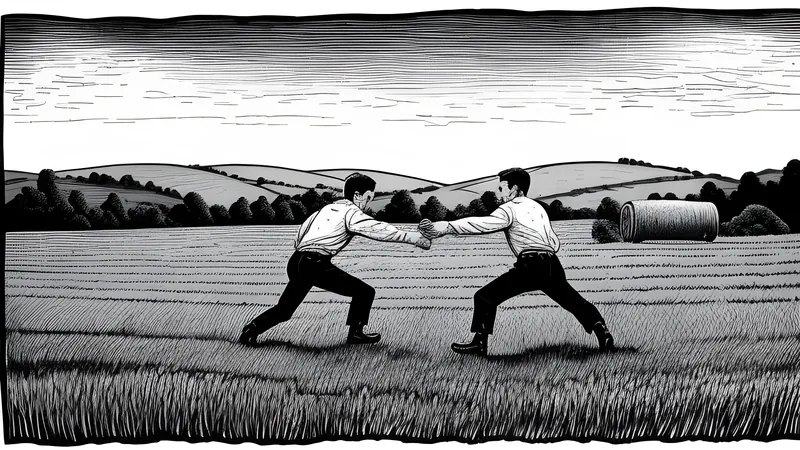
There is no equipment to master and no technique to hide behind. A competitor steps into a marked square of open grass — one metre by one metre — and for five minutes does nothing but stand there and swat, bare-handed, at whatever lands. The only skill on display is the willingness to be bitten while you wait for a decent kill, and the reflexes to convert an itch into a corpse before the insect flies off again. Judges count the bodies as they accumulate on skin and clothing, and the highest tally when the clock runs out wins.
That is the whole sport. No stick, no net, no protective spray permitted — the entire appeal collapses if you can simply repel the things you are meant to be killing. Competitors are actively baiting a cloud of mosquitoes with their own arms and necks, which means the two obvious strategies pull in opposite directions: you want to attract as many insects as possible, and you want the nerve and patience to let them settle before you strike, since a swing that only wounds doesn’t count and a swing that misses entirely has cost you time you don’t get back. Seasoned competitors talk about picking a still spot with poor airflow, working up a sweat beforehand because carbon dioxide and body heat are what draw mosquitoes in the first place, and resisting the urge to swing early at a single insect when three more are about to land.
The championship’s own record has stood since the competition’s early years — 21 mosquitoes killed in five minutes, set in 1995 by a competitor named Henry Pellonpää. Nearly three decades on, nobody has beaten it, which tells you something about how much luck is baked into a sport that depends on how many insects happen to be flying on a given afternoon.
Why Lapland has mosquitoes to spare
This is not exaggeration for comic effect. The wetlands, marshes and slow rivers that cover much of Finnish Lapland are close to ideal mosquito nurseries, and the region’s short, intense summer compresses an entire breeding cycle into a few frantic weeks of near-constant daylight. Locals and Nordic outdoor guides alike will tell visitors, half as a warning and half as a boast, to travel with a head net if they plan to sit still anywhere near water in July. The insects are so reliably present that they show up in tourism copy for the region as a feature to be managed rather than a rare inconvenience, alongside the midnight sun and the reindeer.
Pelkosenniemi’s championship works precisely because it doesn’t fight that reputation. It leans into it, the way a seaside town leans into its wind by hosting a kite festival rather than pretending the wind isn’t there.
An accidental sport with a real gap in its history
The championship first ran in Pelkosenniemi in 1993, a fairly typical piece of small-village Finnish humour: if your town’s defining feature is an insect nobody can escape, you might as well crown a champion at killing it rather than merely enduring it. It ran through the 1990s before lapsing — village events built around a single volunteer organiser and a good local joke tend to fade once the novelty wears off or the person running it moves on, and Pelkosenniemi’s was no exception.
It sat dormant for roughly two decades before a new generation of organisers revived it, betting correctly that the joke still worked and that a village of a few hundred people could still turn out a crowd for an afternoon of communal, good-natured suffering. That gap matters: this is not a slick, continuously branded “world championship” in the manner of the bigger Finnish absurd-sport exports. It is closer to a local custom that went quiet and came back, the way a good pub tradition survives a change of landlord.
A cross-border rival in Sweden
Finland does not have a monopoly on this particular joke. Across the border in the Swedish town of Övertorneå, a separate and self-consciously “unofficial” mosquito-catching world championship has run its own version of the contest, drawing entrants willing to travel for the dubious honour of the title. A Swedish competitor there, Kristoffer Ekersund, has been credited with tallies far beyond Pelkosenniemi’s rules allow for — well over a hundred insects in a longer attempt — a reminder that the two events use different formats and different clocks, and that “world record” in this particular field is closer to a standing joke between neighbouring towns than a single governed statistic. Nobody is suing anybody over the title. That, too, feels correct for a sport whose prize is a body count of insects that were going to bite somebody regardless.
What counts as proof
Judged sports built on a body count live or die on how trustworthy that count is, and the mosquito championship handles it about as plainly as you’d expect from a village fete rather than an Olympic federation. Officials watch each competitor for the full five minutes and tally kills as they happen — a swat that draws blood or leaves a visible corpse on skin or clothing counts, a swing at empty air does not. There is no laboratory verification, no disputed-kill review panel, and that informality is arguably the whole point. Nobody is chasing a sponsorship deal off the back of a mosquito count; they are chasing bragging rights in a village where everybody already knows everybody’s name.
Finland’s genuinely competitive market in daftness
What makes the mosquito championship worth writing about at all is the company it keeps. Lapland’s insects are an extreme case, but the underlying instinct — take the thing your region is famous for suffering through, and stage a deadpan competition around it — runs right through Finnish small-town culture. A few hours south, the town of Sonkajärvi has spent decades turning a dubious folk legend into the Wife-Carrying World Championships, where the winning man carries his partner over an obstacle course for a prize measured in her weight in beer. In Oulu, every August, competitors mime guitar solos to a backing track for the Air Guitar World Championships, an event with a genuinely sincere “war would end if the whole world played air guitar” manifesto behind the joke. And in the peat country further south still, teams play full ninety-minute matches thigh-deep in bog water at the Swamp Football World Championships, because a country with a lot of bog eventually asks what else you could do with it besides drain it.
Pelkosenniemi’s contribution is smaller and scrappier than any of those — there is no international broadcast deal, no sponsor tent, no wristband economy — but it belongs to the same instinct. Finland treats a hard local condition, whether that’s an insect, a bog, or a long dark winter, as raw material for a sport rather than simply a fact of life to be endured in silence. The joke and the genuine hardiness are the same gesture.
Why this is the honest version of the story
I have never stood in that square metre of grass myself, and I won’t pretend otherwise or hand you an invented anecdote about a particular competitor’s grimace at the final bell. What the record shows is a village-level event, run since 1993 with a long gap in the middle, judged on a body count, holding a record that has survived since 1995 mostly because nobody has had both the patience and the luck to beat it.
There is something quietly admirable in a “world championship” that asks nothing more of its athletes than the ability to stand still and be bitten. No sponsorship deck could improve on that pitch, and no committee, working from a blank sheet of paper, would ever invent it on purpose. It exists because a village with too many mosquitoes decided the only sane response was to keep score.
Related Content