Festival Camping: The Sociology of the Tent City
For one long weekend, a field becomes a town with its own economy, its own landmarks, and its own rules
Contents
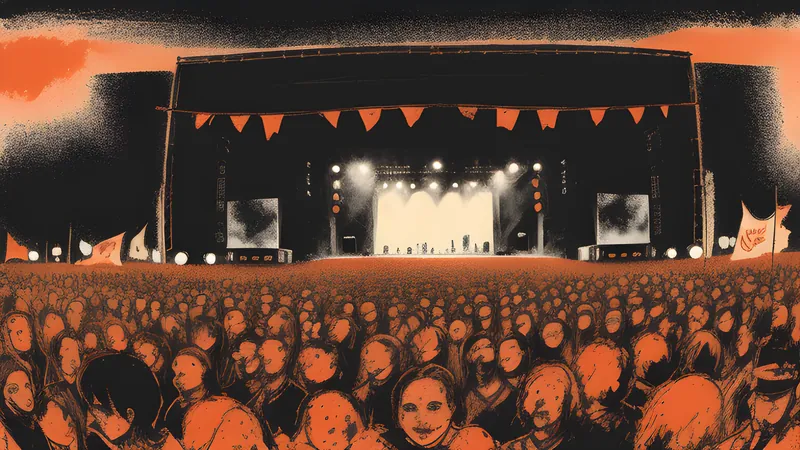
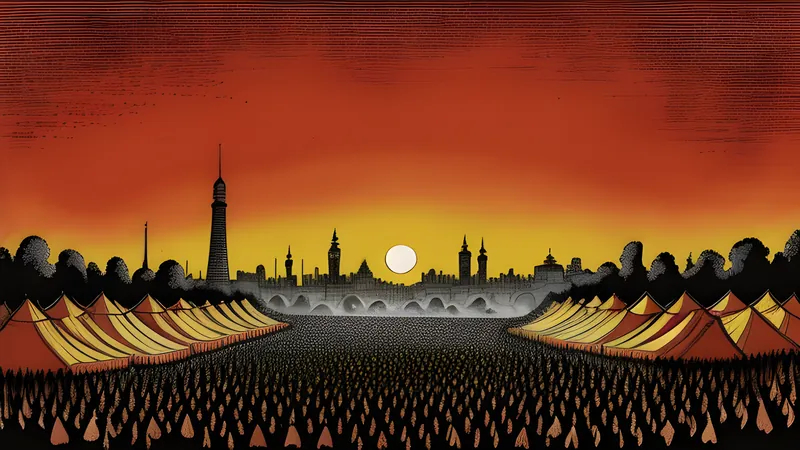
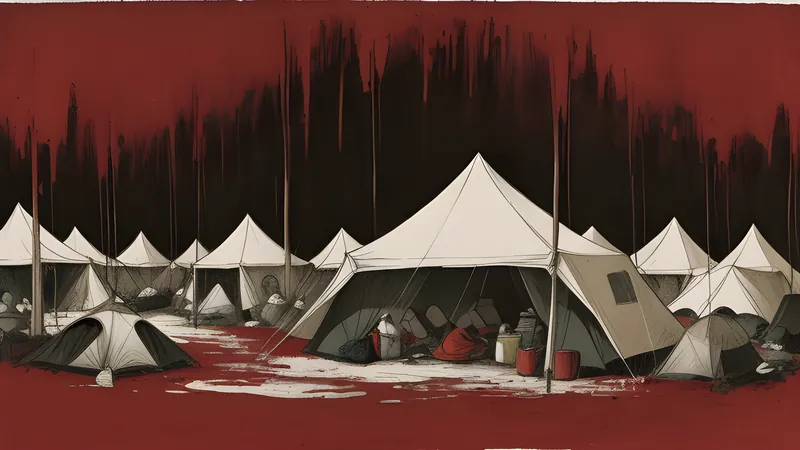
Walk into any large festival campsite on the first night and you have, functionally, walked into a new town. It has no elected government, no permanent buildings, and it will not exist in three days’ time, but for one long weekend it has a population larger than most places on the map, a working internal economy, its own landmarks people navigate by, and a set of social norms that visitors learn within an hour of pitching a tent. Roskilde’s campsite alone regularly holds well over a hundred thousand people across its various fields — bigger, for four days a year, than most Danish provincial towns.
The city plans itself
Nobody assigns pitches at most large festivals, and yet distinct neighbourhoods emerge within hours, sorted by an informal logic nobody writes down. Groups arriving together plant a flag, an inflatable, or increasingly a battery-powered LED sign on a pole, tall enough to be spotted across a field of identical tents, and that landmark becomes the address everyone in the group navigates back to after dark. Roskilde’s dedicated camping areas have long since formalised part of this instinct: family camping sits apart from the general fields, quieter and further from the stages, while areas informally known for round-the-clock noise and drinking games cluster near the site’s main thoroughfares, sorting a hundred thousand strangers into rough tribes within the first evening purely by where they choose to unroll a sleeping bag.
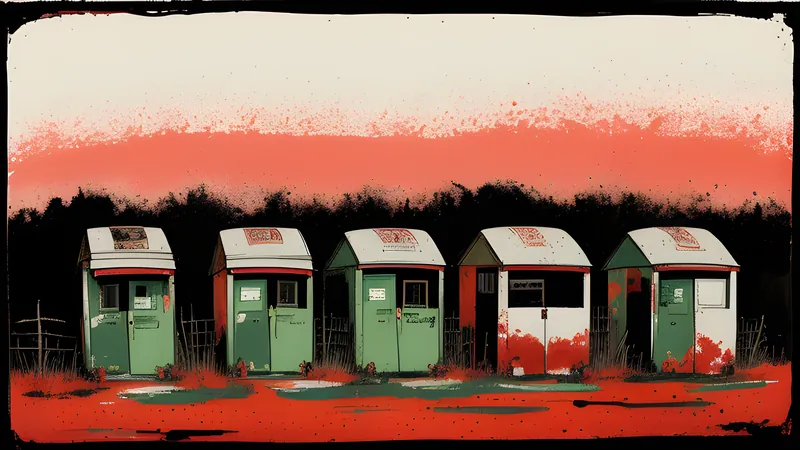
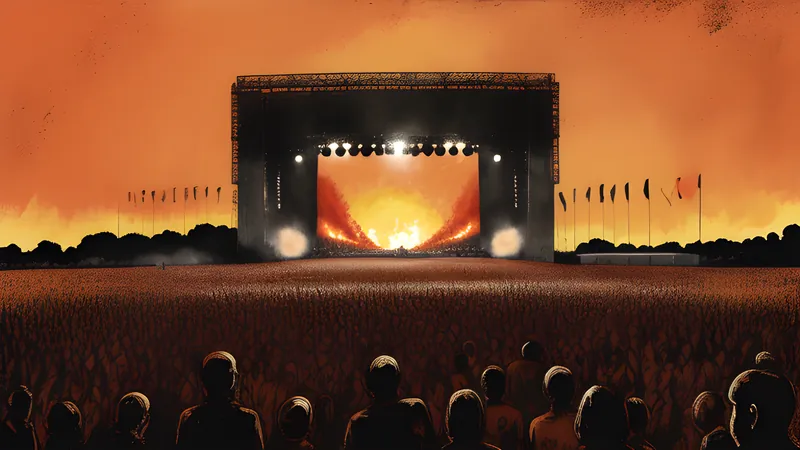
Distance from the stages and distance from the toilets set the real property values of this instant town, and the trade-off between the two is the first serious decision every camper makes. Pitch close to the arena and you are five minutes from the music but potentially a fifteen-minute walk from a working shower block; pitch near the amenities and you accept a longer trudge home at 2am with a torch and a headache. Festival toilets sit at the centre of this calculus more than almost anything else, because a campsite’s whole social geography — where people sleep, wash, cook, and gather — arranges itself around the fixed, unmovable points of plumbing far more than around the stages that are the nominal reason everyone is there.
Welfare tents and the town’s invisible services
Every large festival campsite also runs a quieter layer of infrastructure that most attendees only ever notice if they need it: welfare and medical tents, staffed round the clock, dealing with everything from dehydration and sunburn to lost, separated, or distressed campers who wandered too far from their marked-up flag in the dark. UK festivals have increasingly worked with harm-reduction services such as The Loop, offering on-site drug-safety testing and advice alongside conventional first aid, a response to years of documented festival medical incidents that pushed organisers toward pragmatic welfare provision rather than pure enforcement. None of this is visible on a festival’s marketing poster, but it is as load-bearing to the temporary town’s ability to function safely as the stage schedule itself, and it scales with the size of the crowd exactly the way a real town’s emergency services do.
The gift economy of a temporary town
Festival camping runs a genuine informal economy alongside the vendors selling from proper stalls. A stranger three tents over lends a gas stove for ten minutes and refuses payment; someone with a working phone charger becomes briefly the most popular person on the row; a group that overbought firewood or beer on the first night gives the surplus away by the third rather than haul it home, because carrying it back out is more effort than it is worth. This is not organised generosity so much as basic logistics dressed up as goodwill — most of what people carry into a campsite is either consumed, given away, or abandoned by the time they leave, because almost nobody wants to carry a heavier bag out than the one they carried in.
That logistics problem has a genuinely ugly downstream consequence. UK festivals have faced years of documented criticism over the sheer volume of camping equipment abandoned on site once the music ends — tents, airbeds, gazebos and camping chairs left standing, sometimes still pitched, because a train ticket home leaves little room for a rucksack full of wet nylon. Industry and environmental campaigners have pushed festivals toward tent-recycling schemes, pre-loved tent rental for cheap one-use pitches, and explicit “take it home” messaging precisely because the scale of what gets left behind each summer had become large enough to be a genuine waste problem, not just an eyesore for the clean-up crew.
The Roskilde tradition and the rules nobody writes down
Some campsite customs are peculiar to a single festival and become part of its identity. Roskilde’s naked run — an unofficial dash across the campsite that has run for decades — survives entirely on word of mouth and repetition rather than any official programme, and its longevity says something about how festival camping norms get transmitted: no rulebook is ever handed out at the gate; returning campers simply show first-timers what the unwritten customs are, year after year, until a private joke among a few hundred people becomes a fixture with its own reputation.
The genuinely unwritten rules matter more day to day than any spectacle, though. Guy ropes get marked with glow sticks or bright tape because tripping over an invisible line in the dark is the single most common minor campsite injury at every large event. Music played loudly at 3am draws a very different social response than the same volume at 9pm, and campsites develop their own rough, self-policing quiet-hours consensus long before any official curfew from the festival organisers kicks in. None of this is written on a sign. It gets absorbed the way any newcomer to any town learns which streets are for walking fast and which are for stopping to talk, mostly by watching what everyone around them already does.
Weather as the great leveller
Nothing reorganises a temporary town faster than rain. A campsite that felt spacious and orderly on a dry first afternoon can become a genuinely difficult logistical problem within twelve hours of sustained downpour, as thin nylon groundsheets fail, guy lines pull loose from saturated ground, and the paths between pitches turn to the kind of ankle-deep mud that several UK festivals have become almost as famous for as their lineups. Glastonbury’s history includes multiple widely reported washout years — 1997 and 2007 among the most documented — where the site’s clay-heavy Somerset soil turned much of the campsite into a wading exercise, vehicles had to be towed out of car parks, and wellington boots briefly became more essential festival kit than a ticket. What is notable, reported consistently across those events, is how quickly a shared hardship becomes a shared identity: campers who spend a night baling water out of a flooded tent together tend to remember that festival more vividly, and more fondly in retrospect, than a dry, uneventful one. A temporary town under genuine physical pressure reveals its social bonds faster than a comfortable one ever does.
The stratified town: glamping and the class line
Not every corner of the campsite is built from the same nylon. The last two decades have seen almost every major festival add a premium camping tier — pre-erected bell tents, yurts with real beds, dedicated concierge check-in, private showers and sometimes a private bar — sold at a price multiple of a standard ticket-plus-pitch. This creates a visible class geography inside the temporary town that did not really exist a generation ago, when a muddy field was, roughly, a muddy field for everyone regardless of income. The general campsite and the glamping enclosure are usually fenced apart, sometimes literally, and the contrast between the two — one queuing for a cold shower block at 7am, the other stepping out of a heated yurt onto duckboard walkways — has become its own minor point of festival-going commentary, part of the broader pattern of festivals converging on the same corporate playbook regardless of genre or heritage. The tent city still forms itself from the ground up in the general fields. Increasingly, a smaller and more expensive town sits beside it, built top-down by the festival’s own hospitality division instead.
A town with no permanent residents, rebuilt from nothing every year
The strangest thing about a festival campsite, sociologically, is that it has no continuous population at all. Every one of its temporary neighbourhoods, informal economies and unwritten rules gets built from scratch by a mostly new set of people each year, and yet the same broad patterns re-emerge with remarkable consistency: the flag-marked meeting points, the toilet-distance trade-off, the last-night giveaway of anything too heavy to carry home. That consistency suggests the patterns have less to do with any specific festival’s culture, and much more to do with what a very large number of strangers, given a field, a few days, and no formal authority, will reliably build on their own. It is one of the few genuinely spontaneous forms of temporary community left in a heavily organised industry, even as the festivals themselves grow more standardised year on year — the stage schedule gets corporate, the wristband gets cashless, but the field still fills up the same disorganised, generous, slightly chaotic way it always has.
Related Content