Electric Wizard: Doom's Filthiest Tone
How two Dorset misfits made the ugliest, slowest, most gloriously oppressive sound in British metal
Contents
There is heavy, and then there is the specific, physical wrongness of an Electric Wizard record played loud. Most bands want their guitars to sound clear. Jus Oborn spent thirty years making sure his sound like they were recorded through a blown speaker at the bottom of a flooded quarry, and that decision built one of the most influential catalogues in British doom. When people argue about the heaviest album ever made, this band’s name arrives inside the first three sentences, every time.
They come from Dorset — Wimborne and the Bournemouth commuter sprawl, a stretch of the south coast better known for retirement bungalows than the occult. Oborn formed the band in 1993, and from the start the project ran on a simple conviction: Black Sabbath got it right in 1970 and almost everyone since has diluted it. Electric Wizard set out to reverse the dilution, tuning lower, playing slower, and cranking the fuzz until the riffs stopped sounding like notes and started sounding like weather.
Out of the British doom lineage
Electric Wizard did not arrive from nowhere. Britain had already produced the two pillars this band is built on. Black Sabbath, from Birmingham, invented the vocabulary — the flattened fifth, the trudging tempo, the sense of dread as a musical goal. Then Cathedral, fronted by former Napalm Death singer Lee Dorrian, revived that vocabulary in the early 1990s and founded Rise Above Records to house the revival. Electric Wizard’s early records came out on Rise Above, and the connection matters: Dorrian’s label was the institutional home of British doom, and Oborn’s band quickly became its most extreme tenant.
Where Cathedral kept a foot in psychedelic rock and grim humour, Electric Wizard stripped away the levity and pushed the weight further than anyone thought sensible. The early self-titled album in 1995 was competent traditional doom. The leap came with 1997’s Come My Fanatics…, where the production curdled, the tempos sagged, and the band found the murk that became their signature. By 2000 they were ready to make the record that fixed the whole genre’s expectations.
The tone as a moral position
Most guitar tones are a compromise between weight and clarity. Electric Wizard threw clarity out entirely. The trademark sound — established on Come My Fanatics… and perfected on 2000’s Dopethrone — is a saturated, treble-scorched, low-tuned roar where individual riffs bleed into one continuous mass. Played at volume it produces a genuine bodily effect, a pressure on the sternum that most bands never get near because they are too busy sounding professional.
Dopethrone is the record that fixed their reputation. Recorded cheaply, mixed murky on purpose, it remains a fixture at the top of every “heaviest albums” list the metal press reprints each year, and its influence on two decades of stoner, doom and drone bands is impossible to overstate. Whole labels exist because of the template it laid down: the Sabbath swing slowed to a crawl, the horror-film obsession, the deliberate refusal to clean anything up. Bands who never came within a thousand miles of Dorset spent the 2000s chasing that exact murk.
What separates them from the hundreds of imitators is that the filth is deliberate and controlled. Oborn knows precisely how ugly he wants each passage to be. The murk is a production choice made by someone who understands recording well enough to sabotage it on purpose, which is a harder thing to pull off than clean competence. Listen closely and the songwriting underneath is disciplined — the riffs are memorable, the arrangements go somewhere, and the grime is a coat of paint over solid structure rather than a substitute for it.
Horror, occult and the visual world
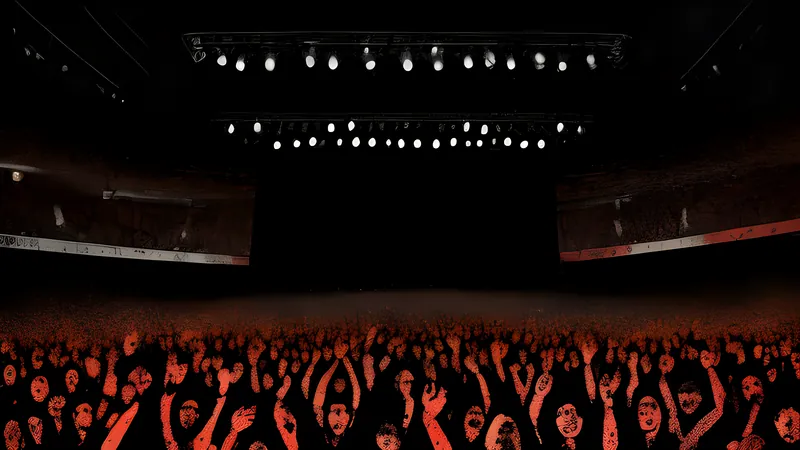
The other half of Electric Wizard is the imagery. Their whole aesthetic universe runs on 1960s and 70s horror cinema, pulp occultism, Hammer films, witch-hunt paranoia and Lovecraft. Sleeves, projections, song titles and samples all pull from the same well of grainy, disreputable British and Italian horror. When they play live, the backdrop is usually a wall of projected vintage horror footage — flickering, degraded, deliberately cheap-looking, the visual equivalent of the guitar tone.
Liz Buckingham, an American guitarist who had played in the New York doom band Sourvein, joined on second guitar in 2003 and later married Oborn. Her arrival stabilised the band’s most productive era and thickened the guitar attack into the two-headed wall it has been ever since. The pairing gives the live show its density: two guitars tuned into the same swamp, no gaps, no daylight. Albums kept coming through this period — Witchcult Today in 2007 leaned into a warmer, more analogue 70s sound, Black Masses in 2010 sharpened the songwriting, and Time to Die in 2014 returned to sheer bludgeoning weight.
They have kept the theme narrow on purpose. Three decades in, Electric Wizard still sing about witches, drugs, cults, doom and cosmic dread, and the refusal to broaden the subject matter is part of the appeal. You know exactly what you are getting, and you are getting a lot of it. The single-mindedness is the point; a band this committed to one mood becomes a kind of institution, a fixed reference the rest of the genre measures itself against.
Live, and why the festivals love them
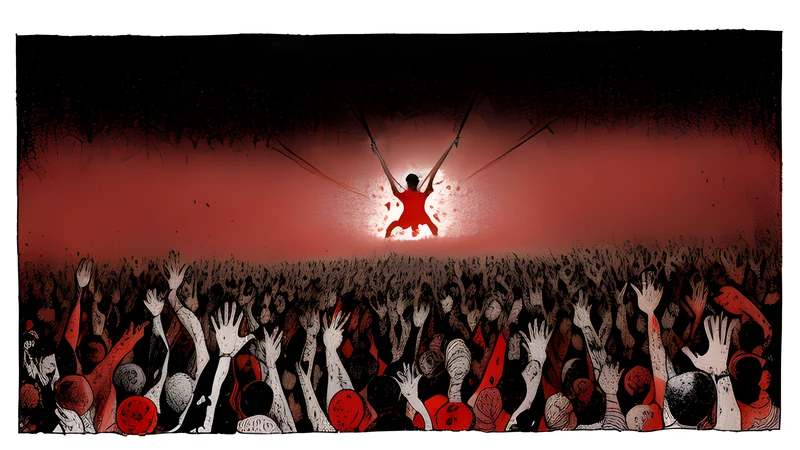
On stage they are the opposite of a spectacle band. There is little movement, few words, no pyrotechnics. The performance is about submersion: the volume, the horror projections, the slow tectonic grind. It is a divisive experience — some people find it hypnotic and some find it monotonous — and both reactions are legitimate responses to what the band is doing. They are testing your tolerance for repetition, and the pay-off only lands if you surrender to it.
This is exactly why the European doom festivals treat them as headline royalty. At Roadburn in Tilburg, the annual pilgrimage where the doom and psych underground gathers each April, Electric Wizard represent a founding text — the sound half the bill is descended from. The same is true of Desertfest in Camden, where a weekend of fuzz-worship bands all, in some sense, answer to Dopethrone. Put them in front of a crowd that already believes, in a room built for low frequencies, and the submersion works the way it is meant to.
I have watched enough doom sets in Copenhagen basements to know how rare their consistency is. Plenty of bands can sound heavy for one song. Sustaining oppressive weight across a full set without it collapsing into noise or tedium takes real craft, and Electric Wizard have been doing it longer and more single-mindedly than almost anyone. When they are on, the room stops being a room and becomes a pressure chamber; when they are off, the same approach can drag. The margin between hypnotic and tedious is thin, and part of the thrill of a live show is watching which side of it the band lands on that night.
The gear and the sub-genre it seeded
Ask a doom obsessive how Electric Wizard get that sound and the conversation turns quickly to equipment: vintage valve amplifiers pushed past their comfort zone, a stack of fuzz and distortion pedals feeding one another, guitars strung heavy and tuned far below standard so the strings flap rather than ring. The specifics change from record to record, and Oborn has always been coy about the exact chain, but the principle is constant — take a rig built for warmth and volume, then overload every stage of it until the signal breaks apart in a controlled way. It is analogue by preference. Part of the reason the older records sound the way they do is that they were tracked to tape with a deliberately limited palette, then pushed into the red.
That approach seeded an entire cottage industry. The 2000s stoner-doom underground — bands in basements across Europe and the American west coast, small labels pressing limited vinyl, festivals built specifically for low frequencies — took the Electric Wizard template as gospel. The green-tinged artwork, the horror samples, the amp-worship, the refusal to speed up: you can trace all of it back through a hundred bands to this source. Later records such as Wizard Bloody Wizard in 2017 leaned harder into a raw, live-in-the-room 70s feel, a reminder that the band could still shift the emphasis without abandoning the core. Whether that self-produced looseness improved on the density of Dopethrone is exactly the sort of argument doom fans enjoy having, which is its own kind of proof of relevance.
The line-up churn and the constant
The one persistent complication in their story is stability. Electric Wizard have burned through rhythm sections repeatedly — drummers and bassists cycle in and out, sometimes acrimoniously, and the band’s history is dotted with line-up disputes and legal wrangles over the name. The original rhythm section that played on Dopethrone departed in the early 2000s; various configurations have followed. Through all of it, Oborn and, since 2003, Buckingham have remained the fixed core. The churn behind them is real and occasionally messy, and it has affected the touring schedule more than once.
It matters less than you would expect, because the identity of the band lives entirely in those two guitars and Oborn’s flat, sneering delivery. The rhythm section’s job is to keep the swamp moving; the character is set by the front line. That is why the sound has stayed so recognisable across three decades and a dozen personnel changes. A newer listener would struggle to tell you who played drums on any given record, and that anonymity is by design.
Why they still matter
Electric Wizard’s achievement is that they took the heaviest thing anyone had made and worked out how to make it heavier, then defended that position for thirty years against a tide of cleaner, more marketable imitators. They proved that a band could build a lasting career on deliberate ugliness, narrow subject matter and a refusal to progress in any conventional sense, as long as the conviction underneath was total. The whole modern underground of low, slow, fuzz-drenched music owes them a structural debt.
There is also something quietly admirable about their refusal to court a wider audience. Plenty of extreme bands soften over time, chasing festival slots and radio play. Electric Wizard did the reverse, digging deeper into the murk as they aged, and the reward has been a fiercely loyal audience that treats each record as scripture rather than product. Longevity on those terms is rare in heavy music.
For a newcomer, the entry point is Dopethrone, played too loud, ideally at night, with no expectation that it will get faster or brighter. Follow it with the doom lineage that runs through Roadburn and the Camden fuzz weekends and you understand a whole strand of modern heavy music. It all leads back to two people from Dorset who decided Sabbath were right and everyone since had been too polite about it.
Related Content