Eistnaflug: Iceland's Loud Weekend in a Fjord
A metal festival at the far east of a remote island, run on the rule 'don't be an idiot'
Contents
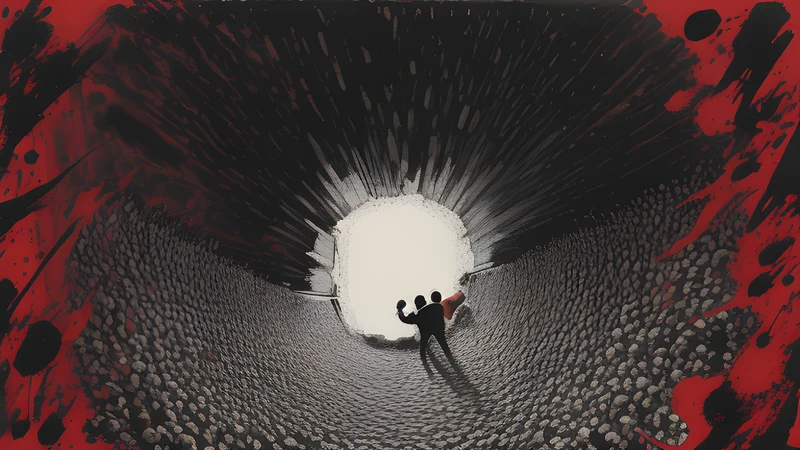
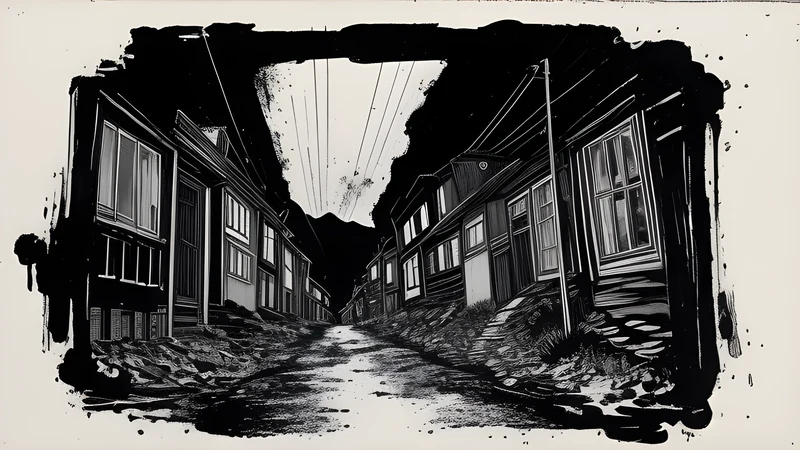
To get to Eistnaflug you point yourself at the far eastern edge of Iceland and keep going until the road runs out at a fishing town called Neskaupstaður, wedged at the head of a fjord with mountains rising almost vertically on either side. It is roughly 700 kilometres from Reykjavík by road, over mountain passes and through a single-lane tunnel bored into the rock, and for a good chunk of the year that tunnel is the only way in. About 1,500 people live there. Once a year, for a long July weekend, a metal festival descends on the town and roughly doubles its population, and it has become one of the most beloved heavy-music gatherings in Europe — not despite being at the end of nowhere, because of it.
This one, like the wider Icelandic scene, I write from the record rather than the floor. My single annual foreign trip lives in the metal calendar of the mainland spring and summer, and it has never yet landed me in a fjord in the east of Iceland in July. But Eistnaflug is too good a story, and too instructive about what a festival can be, to leave off the map.
The name, and the rule
Start with the name, because it tells you the whole spirit of the thing. Eistnaflug translates, with a straight face, as something close to “flying testicles” — a joke, a piece of deliberate small-town absurdism, the opposite of the grim self-importance a lot of metal wraps itself in. Founded in 2005, it grew out of a modest local gathering into a proper destination festival while keeping that daftness right at the centre of everything it does.
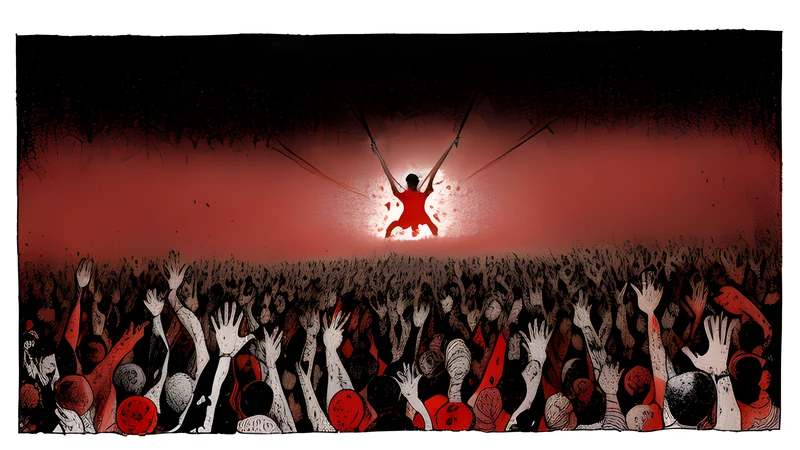
Then there is the rule. Every year, from the stage, the festival restates its one commandment — in Icelandic, “Ekki vera fáviti”, which cleans up as “don’t be an idiot” and means, more precisely, don’t be the kind of aggressive, groping, macho liability that makes a pit unsafe for everyone else. It is possibly the most effective piece of crowd management in European festival culture, and it is four words shouted from a stage. Eistnaflug built its reputation on being ferociously heavy and completely safe at the same time, a place where the violence stays in the music and the crowd looks after itself. Anyone who has been in a pit that has curdled knows how rare and how valuable that is. The wall-of-death and the circle pit run on trust, and Eistnaflug simply made the trust the house rule.
The hall at the head of the fjord
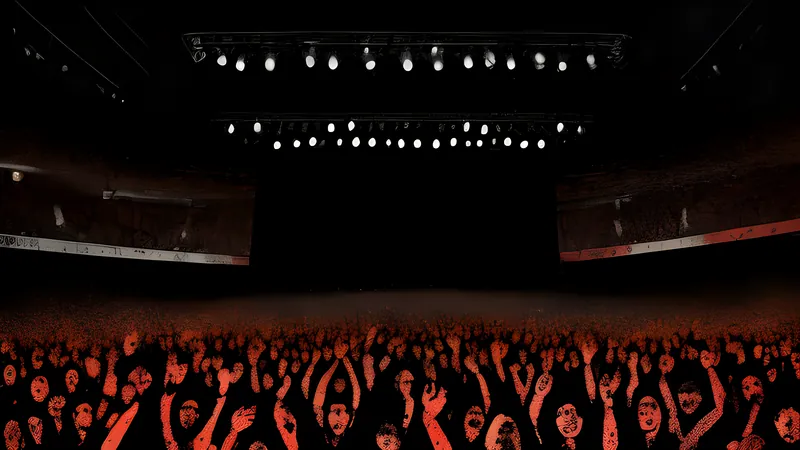
The festival takes place largely in Egilsbúð, the town’s community and sports hall, which is exactly the sort of multipurpose municipal room where you would expect a badminton tournament rather than a death metal band. That is part of the charm. There is no purpose-built festival infrastructure, no ring of corporate hospitality, no VIP tier looking down on the plebs. There is a hall, a stage, a bar, a town, and the mountains doing the set design for free.
Because the venue is small and the town is smaller, the whole event has a density of contact you never get at a big field festival. Bands and punters drink in the same handful of rooms. The international act that just melted the roof off is queuing behind you for a hot dog an hour later. The whole population of Neskaupstaður is, to varying degrees, involved — hosting, feeding, tolerating, joining in — and the festival has become a genuine fixture of the town’s year rather than an invasion it endures. In July the light barely goes; you can walk out of a brutal set at one in the morning into something close to daylight with the fjord glassy and still, which does strange and wonderful things to a hangover-in-waiting.
The lineup: local backbone, chosen guests
Eistnaflug’s bills are built on the Icelandic scene first — the country produces far more metal per head than it has any statistical right to, and the festival is its annual summit. The atmospheric heavyweights like Sólstafír are natural fits, their widescreen melancholy tailor-made for a stage with actual mountains behind it, and the folk-metal and black metal ends of the domestic scene all pass through. Around that backbone the festival brings in a carefully chosen handful of international names each year rather than chasing a stadium headliner it could never fit in the hall or afford to fly out.
That constraint is a feature. A remote festival with a small hall cannot compete on scale, so it competes on curation and atmosphere, and the result is a bill with almost no filler. You are not wandering a field trying to work out which of six stages to ignore. There is essentially one thing happening at a time, everyone is watching it, and the shared focus turns a decent set into a communal event. It is the polar opposite of the mega-festival model — a difference thrown into sharp relief when you set it beside the logistics of a place like Wacken, where a German village absorbs 85,000 people. Eistnaflug and Wacken sit at opposite ends of the same idea: a small community giving itself over to loud music for a few days. One does it at overwhelming scale; the other does it in a room you could shout across.
Getting there is the initiation
You do not end up at Eistnaflug by accident. The journey is a filter and everyone who makes it has, in some sense, chosen the festival on purpose. You either commit to the long drive east — a genuinely spectacular haul over the interior and down through the fjords, with the final approach to Neskaupstaður through the mountain tunnel — or you fly to the small regional airport at Egilsstaðir and drive the last stretch from there. Either way, arriving feels like an achievement, and that shared effort binds the crowd together before a note is played.
This is the deep logic of the place. Because it is hard to reach, the people who reach it are the committed, and a festival of the committed polices itself. The “don’t be an idiot” rule works partly because the crowd is already self-selected for people who travelled to the far east of Iceland to watch metal in a sports hall and are not about to wreck it for each other. The remoteness that should be a liability turns out to be the quality-control mechanism.
The scene it grew from
It is worth pausing on the underground that feeds this festival, because Eistnaflug did not appear in a vacuum. Iceland’s metal scene has been quietly overachieving for two decades, and the reasons are structural. In a country this small, with a music-mad culture and a state that treats the arts as infrastructure, a teenager who wants to start a band finds fewer obstacles and a smaller, more supportive ceiling than almost anywhere else. Everyone knows everyone; the drummer from one band engineers the next; the same few rooms in Reykjavík host all of it. That density breeds competence, because there is nowhere to hide a weak set and every scene veteran will have watched you come up.
Out of that soil you get a genuinely broad heavy underground — the saga-fuelled folk metal, the acclaimed black metal that has drawn serious international attention, the progressive and post-metal acts, the crust and hardcore end that keeps the whole thing honest. Eistnaflug functions as the annual meeting point for all of it, the weekend where bands who spend the rest of the year scattered across a thinly populated island are finally in one hall together. For a young Icelandic act, a slot here is a rite of passage and a shop window at once, watched by exactly the audience most likely to spread the word.
The festival also does something subtler for the scene: it exports the idea of Iceland as a metal destination. Every international punter who makes the pilgrimage east goes home an evangelist, and every visiting band that plays the hall leaves talking about the town, the tunnel, the light and the rule. That word of mouth is worth more to the domestic scene than any marketing budget, and it compounds year on year. A remote festival in a fjord town has, improbably, become one of the loudest voices telling the world that Iceland is worth the trip for the music alone.
Why it matters
Eistnaflug is the argument that a festival’s soul lives in its constraints. It is small because the town is small. It is safe because it decided to be and enforces it with four words. It is remote because that is where the fjord is, and it turned the remoteness into the whole experience. It never tried to be the biggest, or the loudest lineup on paper, or a destination for people who want a festival as a backdrop to something else. It set out to be the best version of a specific idea — heavy music, a tiny town, a long July weekend, everyone looking after everyone — and it nailed it so completely that people fly across a continent for it.
For a certain kind of music traveller, the sort who has done the big fields and started to find them exhausting and interchangeable, Eistnaflug is the festival they hear about and immediately add to the list. It sits alongside the discovery-first sprawl of Iceland Airwaves as the other half of the island’s live-music identity — Airwaves the walkable capital showcase in the November dark, Eistnaflug the remote metal weekend under the July midnight sun. Between them they prove that a country of 380,000 people can host two of the most distinctive festivals in Europe, and that neither of them needed to be big to do it.
Related Content