Download: The Donington Institution
How a motor-racing circuit in Leicestershire became the spiritual home of British metal
Contents
Every country with a metal scene has one field that means more than the others. In Britain it is a patch of Leicestershire beside a motor-racing circuit called Donington Park, and for two generations of metalheads a trip there in June has carried the weight of a pilgrimage. Download Festival, which took over the site in 2003, inherited that meaning from a festival that ran on the same ground through the eighties and left behind both a legend and a tragedy, and Download has spent two decades earning the right to stand on that history.
The story starts with Monsters of Rock, which ran at Donington from 1980 to 1996 and effectively defined what a British metal festival could be. This was the one-day cathedral of the genre, the event where a band knew it had arrived when it got the Donington slot. Iron Maiden, Whitesnake, AC/DC, Metallica, Guns N’ Roses, the entire heavy pantheon passed across that stage. It also produced one of the darkest days in festival history, when two fans were crushed to death in the crowd during Guns N’ Roses’ set in 1988, a disaster that changed British crowd-safety practice permanently and haunts the site to this day. Monsters of Rock wound down in the mid-nineties, and the field went quiet.
Reviving the ground
When Andy Copping and the promoters behind Download brought a festival back to Donington in 2003, they were making a calculated bet that the site’s meaning had survived its dormancy. It had. The name was a wink at the era, the early-2000s panic about downloading music, but the substance was a straight revival of the Donington pilgrimage on a bigger scale. Metallica headlined early editions. Iron Maiden, who more or less consider the site their spiritual home, have returned again and again, and a full Iron Maiden production at Donington is one of the load-bearing rituals of British metal. The festival grew from a two-day event into the three and four-day monster it is now, with a camping population the size of a small town.
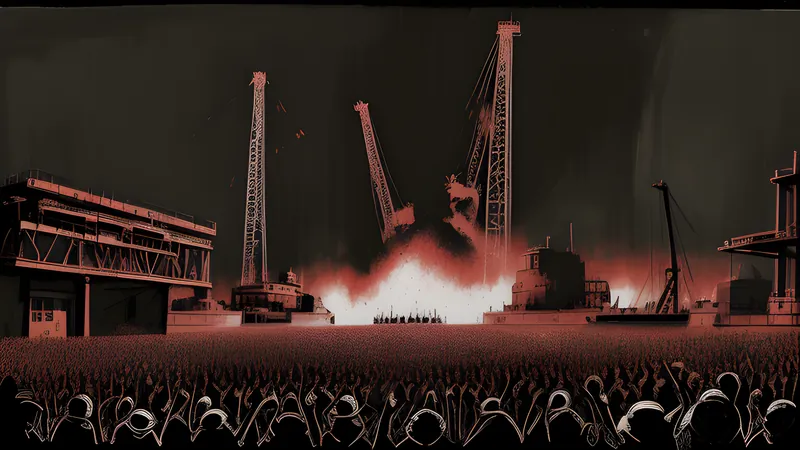
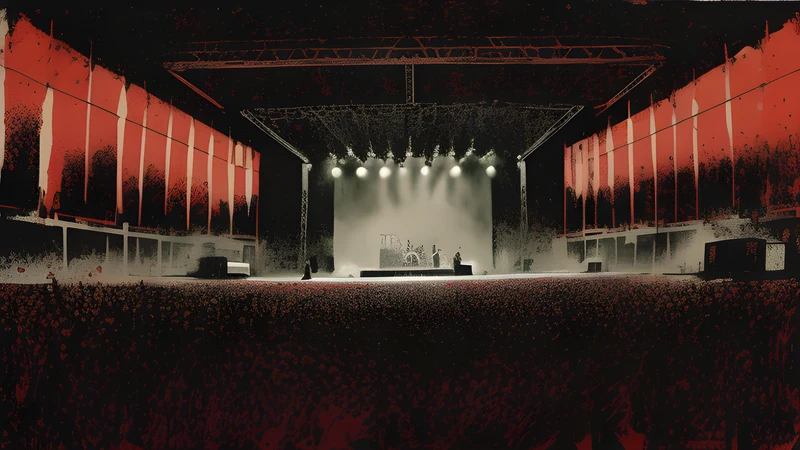
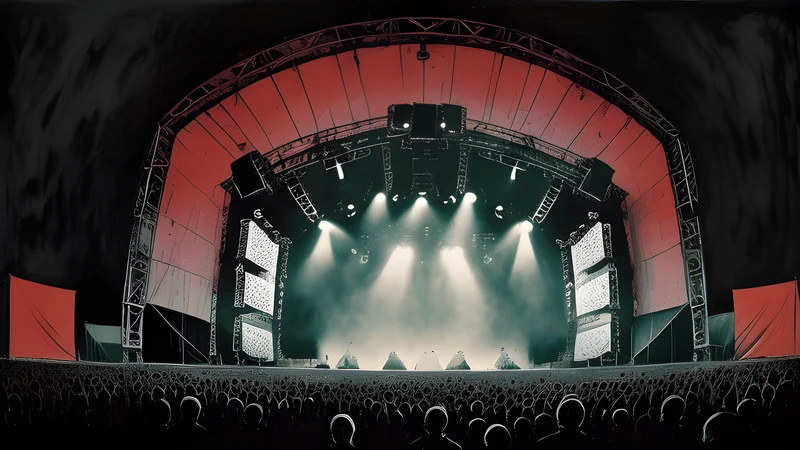
The scale is genuinely difficult to convey to anyone who has not stood in it. At full stretch Download puts something north of a hundred thousand people on the site across the weekend, with a main-stage crowd that stretches back so far the people at the rear are watching the screens as much as the stage. That is a different kind of experience from the intimate festivals I usually champion. It is closer to a civic event, a temporary city with its own weather, its own economy and its own folklore, and part of the appeal is precisely the overwhelming scale of belonging that comes from being one small figure in a crowd that size all roaring at the same riff.
The headliner problem
A festival this big lives and dies by the top of its bill, and Download operates at the sharp end of the most difficult booking problem in music: there are only so many bands on Earth capable of headlining to a hundred thousand people. The genuine metal headliners, the ones who can close Donington without argument, number maybe a dozen, and several of them are ageing or retiring. Metallica, Iron Maiden, the various incarnations of the classic-rock aristocracy, Slipknot, Rammstein, a short list of others. Download rotates them relentlessly, and the perennial complaint from the crowd is that the same handful of names keep coming back because there is genuinely nobody else at that altitude.
That squeeze is the whole subject of the festival pecking order and how the headline slot gets set, and Download is the clearest case study in Europe of what happens when demand for a slot vastly outstrips the supply of bands who can fill it. The festival’s answer has been to invest heavily in building the next tier, giving genuine mid-afternoon and sub-headline berths to the bands who might one day carry the top line. It is a long game and an honest one, and it is the only sustainable answer to a problem that will only sharpen as the founding generation of stadium metal finally hangs it up. The retirement of an act like Black Sabbath does not just end a band; it removes one of the small number of names capable of anchoring a festival this size.
A racetrack that became a shrine
The geography matters more than people credit. Donington Park is first a motor-racing circuit, a historic one, host to Grand Prix and touring-car history, and the festival lays its stages and campsites across the infield and surrounding farmland for a few days each summer before handing the tarmac back to the cars. That dual identity gives the place an odd, borrowed grandeur. You camp in fields that spend the rest of the year as overflow paddock, you walk past grandstands built for spectators of a different sport, and the main arena sits in ground that has watched crowds gather for the better part of a century. Few festival sites carry that much accumulated history in the soil.
Getting there is its own rite. Donington sits near Castle Donington in the East Midlands, close enough to East Midlands Airport that the flightpath runs over the campsite, and the annual migration of leather-clad pilgrims along the M1 and A42 is a familiar June sight. The site’s central location is half the reason it works as a national gathering: it is roughly equidistant from most of the country’s population, the natural meeting point for a scene scattered across Britain. A metalhead from Glasgow and one from Brighton both treat Donington as neutral ground, and that accessibility is quietly one of the festival’s greatest structural advantages.
Donington in the rain
You cannot write honestly about Download without writing about the mud. Donington in June has produced some of the most infamous quagmires in British festival history, most notoriously in 2012 and 2016 when biblical rain turned the campsites and walkways into a swamp that swallowed wellies whole. Cars had to be towed out by tractor. The mud became the story, the shared trauma, the thing the survivors wear as a badge. There is a grim pride in a British metal crowd about enduring the weather, a stubborn refusal to let a washout ruin the weekend, and Download has become the national theatre for that particular strain of bloody-mindedness.
The organisers have poured money into drainage, trackway and infrastructure over the years, and the modern festival copes with rain far better than its early editions did. But the site is what it is, an exposed expanse of Leicestershire farmland next to a racetrack, and the weather remains the one headliner nobody can book around. Part of the reason the crowd bonds so hard is precisely this shared adversity. A weekend spent collectively defeating the mud produces a camaraderie that a sunny festival never quite matches.
The corporate question
Download sits inside the Live Nation and Festival Republic machine, the corporate structure that now owns most of the big British festivals, and it carries all the tensions that come with that. The cashless wristbands, the sponsor branding, the steadily climbing ticket prices, the sense that a beloved institution is also a line on a multinational’s balance sheet. I have written at length about why every festival now feels the same once the consolidation sets in, and Download is not immune to the flattening. The independent British metal alternative, Bloodstock, exists largely as a reaction against exactly this, a smaller, fan-run festival for people who want their metal without the corporate gloss.
And yet Download survives the criticism because of what the site is. The corporate ownership cannot manufacture the history, the Monsters of Rock ghosts, the fact that a British metal fan’s first Donington is a genuine rite of passage handed down from older siblings and parents. That inherited meaning is the festival’s real asset, and it is the one thing Live Nation bought that it could never have built. The branding is new. The pilgrimage is old.
The Download family
There is a phrase the regulars use without irony: the Download family. It sounds like marketing, and the festival has certainly monetised it, but underneath the branding there is something real. Download’s camping culture has developed its own folklore over two decades, the flags rising over the tents each identifying a crew or a hometown or an in-joke, the same groups returning to the same patch of field year after year, the traditions passed between strangers who only meet in this one place each June. The flags in particular have become an art form, absurd and heartfelt, a forest of banners bearing memes, tributes and the names of mates who could not make it this year.
That continuity is the emotional engine of the whole event. A festival that runs on the same ground for over twenty years accumulates a generational depth that a newer event simply cannot fake. Parents who went to Monsters of Rock bring children who now bring children of their own. First Doningtons are remembered like first gigs, marked and mythologised. The corporate owners understand exactly how valuable this loyalty is, which is why so much of the festival’s messaging leans on belonging rather than lineup. The bands change every year. The sense of coming home does not.
The four-day expansion of recent years, adding a Wednesday arrival and an extra day of programming on smaller stages, was a direct response to that loyalty: the crowd wanted more time on the site, more reason to make the pilgrimage worthwhile, and the festival obliged by stretching the weekend into something closer to a short holiday.
What it means to go
For all the scale and all the corporate machinery, the core of Download remains simple. It is the weekend a British metalhead marks on the calendar a year out, the field where the whole tribe gathers at once, the place you finally see the enormous bands that only ever play the enormous stages. It is loud beyond reason, frequently soaked, occasionally overwhelming, and for the crowd who make the trip every June it is home in a way no other festival on the calendar can claim. Donington was a legend before Download arrived. Download’s achievement was to keep the legend alive, at a scale the original could never have imagined, and to hand it intact to a generation who never saw Monsters of Rock but understand exactly why the ground matters.
Related Content