Download: The Spiritual Home of British Metal at Donington
How a motor-racing circuit became the sacred ground of UK rock, twice
Contents
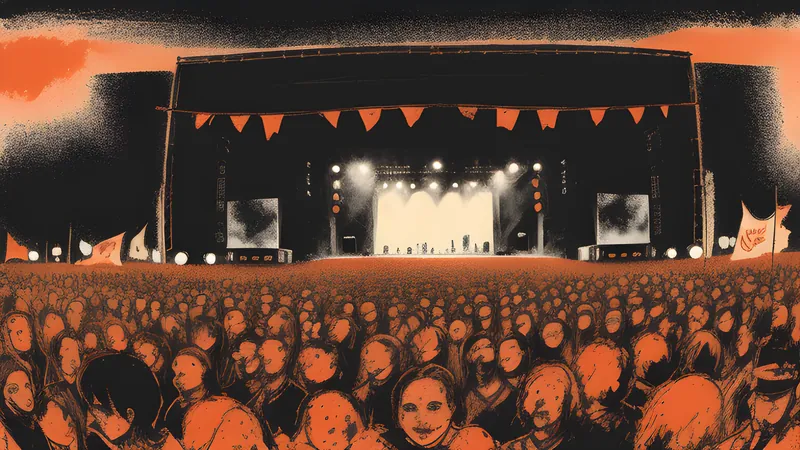
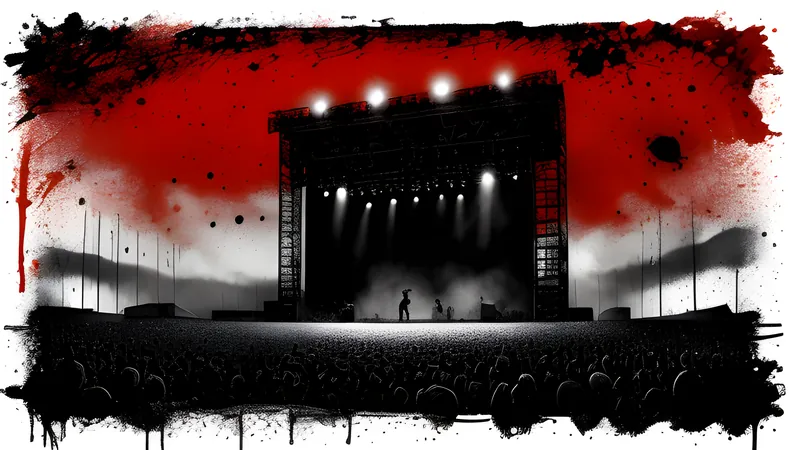
Donington Park is a motor-racing circuit in Leicestershire, a ribbon of tarmac in the English Midlands that spends most of the year hosting touring cars and bike championships. For one weekend every June the infield fills with tents and the whole place becomes the most important patch of ground in British metal. Download Festival is what happens there now, and it carries a weight that no new festival could manufacture, because the ground itself has been sacred to loud music since 1980.
I have never made it to Download. It falls in June, tangled up with my own home festivals, and England is a ferry and a long drive away from Copenhagen for a weekend I usually spend closer to home. But you cannot write about European metal festivals and skip Donington, because it is the site the whole modern circuit measured itself against. This is a read from the record — the lineage, the mud, the disaster in its history, and why a racetrack in the Midlands became a place British metalheads talk about the way pilgrims talk about a shrine.
Monsters of Rock: the ground gets consecrated
The story starts in 1980, not 2003. Donington hosted the first Monsters of Rock festival that August, a one-day hard-rock event headlined by Rainbow, and it ran almost every year through 1996. That run is the foundation of everything. Monsters of Rock was where a generation of British fans saw the giants of the era — the festival became a rite of passage, the place you went to stand in a field and watch the biggest hard-rock bands on earth on a single enormous stage.
Monsters of Rock also carries the darkest chapter in the site’s history, and it should be told plainly rather than mythologised. In 1988, during Guns N’ Roses’ set in front of a vast crowd, two young fans were crushed to death in the surge at the front. It was a catastrophe that changed how British festivals thought about crowd safety, and it is part of why the modern event is engineered the way it is. Any honest history of Donington has to hold that alongside the celebration.
By the mid-nineties British hard rock was in retreat, grunge and Britpop had rearranged the landscape, and Monsters of Rock ran out of road. The 1996 edition was the last. For a few years the ground went quiet.
Download inherits the throne
The revival came in 2003. A promoter called Stuart Galbraith, with Andy Copping booking the bands, launched a new festival on the same site and gave it a name that pinned it to its moment — Download, a nod to the arrival of digital music at the exact instant the industry was panicking about it. The first edition was a two-day event; it expanded to three days in 2005 and has run as a three-day camping festival ever since.
Download did something clever with its inheritance. It did not pretend to be new. It leaned hard on the Monsters of Rock lineage, positioning itself as the continuation of Donington’s sacred history, and British fans accepted the claim because the ground was the same. Standing in the same field where your father saw Iron Maiden two decades earlier carries an emotional charge that money cannot buy and that a festival on a fresh site can never replicate. That continuity is Download’s single biggest asset.
Andy Copping’s booking has kept the festival at the top of the UK pile ever since. Download has hosted more or less every band that matters in mainstream metal and hard rock, headlined by the genre’s biggest names year after year, and it has become the default British answer to the question of where the summer’s marquee metal show happens. Capacity now runs to around 120,000, with attendances of 75,000 to 80,000 in recent years, making it comfortably the UK’s largest rock festival.
The festival also expanded its ambitions outward. Download exported the brand to editions in Australia and continental Europe, testing whether the Donington formula could travel, and while the mainland ventures came and went, the appetite for the name showed how much equity the original had built. The core event at Donington remained the flagship throughout, because the export editions could copy the booking and the branding but never the ground itself. That is the recurring lesson of the whole Download story: the lineup is portable, the history is not.
The mud, and the English weather
You cannot write about Download without the mud. Donington in June is at the mercy of English weather, and English June weather is a coin-toss that frequently lands on rain. Certain editions have become legendary for the state of the site — churned, boot-swallowing, apocalyptic mud that fans wear as a badge of survival. It has become part of the festival’s identity, the thing that separates the committed from the tourists. Wellington boots are not a fashion choice at Download; they are load-bearing infrastructure.
That grimness is, perversely, part of the appeal. A festival that tests you a little means more than one that coddles you. The shared ordeal of a wet Donington binds a crowd together in a way a sunny weekend never quite manages, and the stories that survive longest are the muddy ones. It is a very British form of enjoyment — pleasure taken partly in the suffering.
The secret sets and the ritual weekend
Part of what keeps Download embedded in the British calendar is the ritual furniture it has built around itself over two decades. The festival became famous for its “secret sets” — unannounced surprise appearances slotted into the bill, where a huge band turns up under a joke pseudonym and the field fills with people who worked out the rumour on the internet the night before. That guessing game has become part of the pre-festival culture, the sort of shared anticipation that binds a crowd before a note is played.
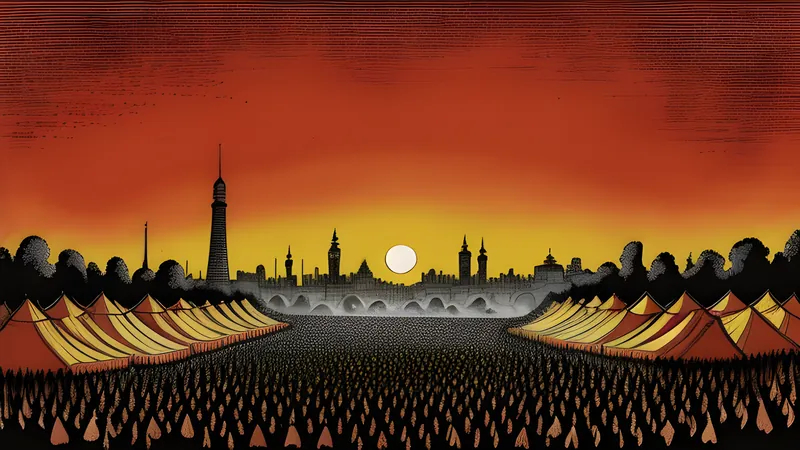
The three-day camping format also turns Download into a full pilgrimage rather than a day out. Fans arrive early, build a temporary village of tents and flags, and settle in for the weekend, and the campsite culture — the arena walks, the flag poles, the traditions that repeat year after year — is as much the point as any single headliner. For a lot of British metalheads, Download is the fixed annual event around which the summer is organised, the thing you book time off work for months in advance and meet the same friends at every June.
That regularity is a large part of why the site stays sacred. A festival becomes holy ground partly through repetition — the same field, the same weekend, the same rituals, layered up over years until the place is thick with your own history as well as the genre’s. Donington has that for British fans in a way almost nowhere else does, because the ground has been hosting the same annual gathering, under one name or another, for over four decades.
Where Download sits on the map
For a mainland European metalhead, Download is the UK’s flagship, the island’s equivalent of the great continental festivals. It occupies the same tier as Graspop in Belgium and the German giants — a huge, mainstream, headliner-driven event that anchors its national scene. What sets Download apart is that weight of history. Wacken has grown into an institution over three decades; Donington has been sacred ground for over four, and Download simply inherited the altar.
Britain being Britain, the festival also spawned a reaction. The rise of the fiercely independent Bloodstock was in part a response to Download’s corporate scale and mainstream booking — a smaller, purer, fan-run alternative for people who felt the big event had drifted from the underground. That tension between the giant and the independent is one of the healthiest things about the UK scene, and Download is the giant it defines itself against.
The sacred racetrack
What makes Donington endure is the thing that cannot be exported. Festivals come and go, lineups blur into each other, and I have written before about why every festival now feels the same once you have done a few summers of overlapping bills. Download’s defence against that sameness is its address. It is not a field that could be anywhere; it is this field, the one where Monsters of Rock ran for sixteen years, where the disaster happened, where British metal has gathered since before half the current crowd was born.
That is why I keep meaning to go and keep not going. A festival you can reach in an afternoon from Copenhagen will usually win over a ferry crossing and a weekend of Midlands rain. But Download is on the list of things every metalhead should stand in at least once, precisely because the ground remembers. One June I will take the boot-swallowing mud and the long drive and stand in the infield of a racetrack that has been holy for over forty years, and I will understand what the British have been telling me all along.
Related Content