Dødsing: Norway's Extreme Sport of the Bellyflop
A public swimming pool in Oslo, a ten-metre platform, and a jump named after death
Contents
Every August, a crowd gathers at Frognerbadet, Oslo’s grand open-air public pool, to watch grown adults throw themselves off a ten-metre platform in a horizontal starfish position, hold that shape as long as they possibly can, and only fold themselves into a survivable landing at the last instant before the water. The Norwegians call it dødsing — “death diving” — and they mean the name literally. It is judged, it has a world championship, and it is, against every instinct I have as someone who cannot watch a diving board without wincing, one of the most purely entertaining sports in Europe.
I write this as a Copenhagen-based observer who has followed the sport from the outside rather than from the ten-metre platform myself, and that distance feels appropriate — dødsing is a very specifically Norwegian invention, tied to one pool, one city, and one man’s sense of humour.
The physics of doing everything wrong on purpose
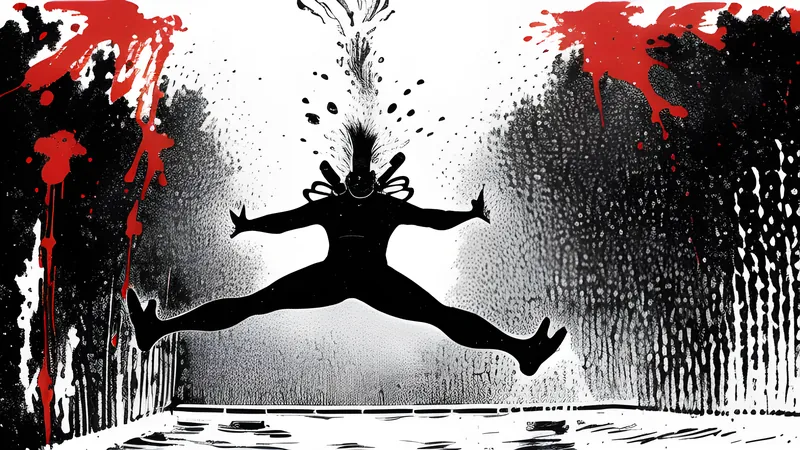
Diving, as a discipline, spends a century of technique on entering the water as cleanly as possible: pointed toes, straight lines, minimal splash. Dødsing inverts every one of those instincts. A competitor climbs a platform as high as ten metres, launches into the air, and spends the flight holding a rigid, stretched-out, belly-down or back-down position — arms out, legs straight, chest exposed to the fall — for as long as nerve allows. Only in the final fraction of a second before impact does the diver snap into a pike or curled shape, so that hands, feet, knees or elbows meet the water first and absorb the landing instead of the stomach or spine.
Get the timing wrong in either direction and the sport’s name stops being a joke. Curl too early and you lose height, difficulty, and the visual drama the crowd came for. Curl too late, or not enough, and the flat surfaces of the body — belly, chest, back — take the full force of a fall from ten metres, which is exactly the injury the manoeuvre exists to avoid. The entire discipline is a negotiation with that one moment, repeated dive after dive, in front of a crowd that has come specifically to watch the negotiation happen live.
Judges score on a handful of criteria: the run-up and takeoff, the flight itself — height, extension, how long the rigid shape holds — and the landing, plus an overall impression mark that rewards the diver who makes the whole sequence look controlled rather than merely survived. There are two broad disciplines. Classic dødsing keeps the body in that stretched, rigid line the whole way down, changing shape only at the very last moment. Freestyle dødsing allows flips, twists and spins worked into the fall before the diver straightens out for the landing, trading some of classic’s raw nerve for gymnastic difficulty.
Invented, more or less, by one man at one pool
The sport traces to 1972 and a Frognerbadet regular named Erling Bruno Hovden, who is generally credited as the inventor of the modern dødsing style at the pool. Frognerbadet itself is one of Oslo’s great civic institutions — a large open-air complex with lawns and diving towers that has been a fixture of Norwegian summer for generations, the kind of place where an entire city’s swimming culture gets formed. It is exactly the sort of venue where a slightly reckless bit of showing off among regulars could plausibly calcify, over years, into an actual discipline with rules.
That is more or less what happened. What began as one man’s party trick off the high board became a recognisable style that other Frognerbadet regulars picked up and refined, and by 1998 the pool was hosting informal competitions built around it — divers testing each other’s nerve and technique in front of an audience that had started showing up specifically to watch. The step from “the thing the regulars do” to “the thing with a scoreboard” is a familiar one in the history of odd sports, and dødsing took it a decade before it went fully official.
The gap between one man’s trick and a rulebook
That gap deserves a moment’s attention, because it explains why dødsing feels so unmanufactured next to most modern extreme sports. Nobody sat down with a clean sheet of paper and designed a discipline around the worst possible way to hit water. It accreted, the way the strongest folk customs always do: one diver did something reckless and looked good doing it, other regulars at the pool tried to match it, the informal pecking order sharpened into an actual style, and only after a quarter of a century of that slow refinement did anyone bother to write rules down and put a trophy on the table. The 1998 informal competitions were the hinge point — the moment dødsing stopped being something a handful of Frognerbadet regulars did for each other’s amusement and became something an audience turned out to watch on purpose.
From pool joke to world championship
The Døds World Championship — the first properly organised, branded competition — held its debut event in Oslo in 2008, and it has run there every August since, still at Frognerbadet, still built around the same rigid-fall, last-second-fold shape Hovden more or less improvised in 1972. By its second decade the championship had grown from a local curiosity into a genuine draw, pulling entrants and spectators well beyond the pool’s regular crowd, and doing so almost entirely on word of mouth and the sheer, simple spectacle of watching someone commit to falling ten metres in the worst possible position for as long as they can bear it.
Part of what makes the championship work as a spectator event is how legible it is. You do not need to understand judging criteria to feel your stomach drop when a diver holds the flat position a half-second longer than looks sensible. The tension is universal in a way most extreme sports are not — everyone in the crowd has, at some point in their life, misjudged a jump into water and remembers exactly how it felt to land wrong. Dødsing turns that shared, slightly painful memory into a discipline, judges it, and hands out a trophy for doing it best.
Judged, but not tamed
For a sport built on maximum visible risk, dødsing has kept its scoring refreshingly plain. There is no attempt to dress the danger up in the language of Olympic diving’s degree-of-difficulty tables; the run-up, the flight, the landing and the overall impression are marked by eye, by judges who have generally spent years around the sport themselves and know exactly how long a flat position ought to be held before it stops being brave and starts being reckless even by dødsing’s standards. Divers compete in separate men’s and women’s fields, and the championship draws entrants from well beyond Oslo — the sport has spread to swimming clubs elsewhere in Norway over the years, each producing its own local circuit of divers who treat the Frognerbadet event as the one weekend a year that actually matters.
Safety sits alongside the spectacle rather than against it: lifeguards and medical staff are a standing presence at the pool for the event, as they are for any competition built around repeated falls from ten metres, and the sport’s own culture polices technique hard, because a diver who folds too late is not just losing points, they are risking an injury the whole discipline exists to engineer around. That tension — maximum nerve, minimum recklessness — is the real skill dødsing is testing, far more than raw height or acrobatics.
A very Norwegian kind of extreme sport
Norway has a long relationship with cold water, high platforms and casual physical risk as a normal part of summer — the country’s public bathing culture takes jumping from height into open water for granted in a way that would raise eyebrows further south. Dødsing sits comfortably in that tradition: unglamorous equipment, no wetsuits or padding, a public pool rather than a purpose-built arena, and a prize that is mostly reputation. It shares that unbothered, homegrown quality with Slinningsbålet, the small Norwegian town of Ålesund’s summer bonfire tower, built by hand over months and burned in a single night for a crowd that turns out year after year regardless of any outside attention. Both are the product of a community deciding, without asking anyone’s permission, that a piece of local daring deserves to become an annual event.
I have covered the stranger end of European spectacle for years now — the wife-carrying obstacle course in Finland, a bog-trench swim in Wales — and dødsing belongs unmistakably in that company: an event built entirely from nerve, gravity and a community’s willingness to keep score on something a more cautious culture would have quietly banned. I have not stood on that ten-metre platform, and this is a cultural read rather than a diary entry, but the appeal needs no embellishment. A person falls through the air in the exact position built to hurt the most, and holds it, and then — at the very last possible moment — doesn’t. That flinch, delayed on purpose, is the whole sport.
Related Content