Docks and Markthalle: Hamburg's Reeperbahn Rock Rooms
A cinema on the Reeperbahn and a market hall by the station — two of Hamburg's essential mid-size stages
Contents
Hamburg is the gateway to loud music in northern Germany, and any Copenhagen metalhead heading south learns its geography fast, because the road to Wacken runs through it. For most of us the city is the last big stop before the fields — you fly or train into Hamburg, and if the timing is kind you catch a show before the buses head north. Two mid-size rooms carry a lot of that weight: Docks, the ex-cinema on the Reeperbahn in the heart of the St. Pauli entertainment district, and Markthalle, the concert hall wedged inside a century-old market building over by the main station. They are the pair worth knowing, and between them they cover most of what a touring rock or metal band plays when it hits Hamburg below arena size.
They sit in different corners of the city and have different characters, which is exactly why a good Hamburg guide needs both. One is pure red-light-district theatre; the other is a solid, unglamorous workhorse. Take them in turn.
Docks: the cinema on the Reeperbahn
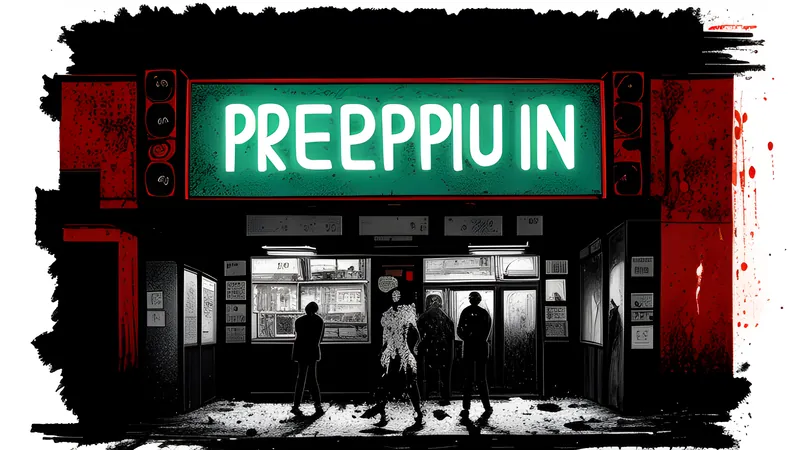
Docks is on Spielbudenplatz, the square that runs alongside the Reeperbahn — the notorious neon strip through St. Pauli that is Hamburg’s red-light and nightlife heart, the same streets where a very young Beatles served their apprenticeship in the early 1960s. That address is the whole flavour of the place. You come to Docks through the tackiest, most gloriously disreputable square kilometre in Germany, past the bars and the clubs and the touts, and the venue sits there among it, a rock room embedded in the middle of the carnival.
The building has been in the entertainment business since the turn of the twentieth century. It opened around 1900 as a cinema, part of the Spielbudenplatz’s long history as a strip of amusements and attractions. By the mid-1980s it had been renamed Knopf’s Music Hall, after Eberhard Knopf, the showman whose business had occupied the site, and in 1988 it took its current shape as Docks, a live-music venue holding somewhere between roughly twelve and fifteen hundred people depending on the configuration. Since then it has hosted a heavyweight roll of touring acts — the list of names that have played the room over the decades reads like a cross-section of rock history, from metal titans to punk originators to the odd blues legend.
The room itself is a big, dark, rectangular hall with a balcony — a proper mid-size rock box that takes volume well and suits the loud, physical bookings the Reeperbahn draws. There is a smaller, ornate sister room in the same building, the Prinzenbar, a jewel-box of a space with old rococo-style decoration that handles the intimate shows and club nights; it is one of the prettiest little venues in the city and worth catching a gig in if the booking suits. Between the two, the site runs a broad programme, but the main hall is the reason it matters: a serious room for serious loud music, in the least serious neighbourhood imaginable.
Where to stand in the big hall is the usual balcony-versus-floor calculus. The balcony gives you a clean elevated sightline and a rail; the floor down the front is for the committed, and on a heavy night it goes off. The great asset of Docks is not really the room’s acoustics — it is the location. You walk out of a loud show straight into the neon and the noise of the Reeperbahn, and the night simply continues without a taxi rank or a trudge, because you are already in the middle of everything.
Markthalle: rock in a market building
Markthalle is the other pole of Hamburg’s mid-size scene, and geographically it is the opposite of Docks — over on Klosterwall, in the Hammerbrook area near the main railway station, well away from the Reeperbahn’s neon. The distinction matters, and I will be honest about it rather than lump both rooms into St. Pauli for the sake of a tidy story: Docks is the red-light-district room, Markthalle is the station-side one, and the character of a night out follows the address.
The building is a genuine piece of Hamburg architecture. It was designed by Fritz Schumacher — the city’s celebrated municipal architect, whose brick buildings define swathes of Hamburg — and built in 1913 as a market hall. The concert venue came out of renovations in the mid-1970s that repurposed part of the old market structure for cultural use, and the first concert took place on 30 January 1977. The main hall holds around a thousand, which puts it a notch below Docks in scale and squarely in the sweet spot for a band that wants a real crowd without the impersonality of a bigger room.
The roll-call here is remarkable for a room this size. Over the decades Markthalle has hosted acts on the way up who would go on to fill stadiums — Nirvana, Guns N’ Roses, U2, AC/DC and the Police all played the hall in earlier phases of their careers, alongside a stream of blues, hip-hop and rock names that ran from B.B. King to Run-DMC. That is the particular magic of a good mid-size room: catch a band here and there is a real chance you are watching a future arena act in the one window when you can still see the whites of their eyes. The hall has a second, smaller space attached for the tighter bookings, so like Docks it runs a two-room programme across a week.
As a room, Markthalle is honest and workmanlike — a solid brick concert hall that does its job without theatrics, the kind of dependable mid-size venue every city needs and few cities value properly. It will never have the disreputable glamour of the Reeperbahn address, and it does not try to. It has the bookings and the history instead.
The crowd, and the city around them
German rock crowds are a joy to play to and to stand in — knowledgeable, committed, unpretentious, and genuinely there for the music. Hamburg’s have the extra edge of a port city with a long, proud, slightly rough musical history, from the Beatles’ Reeperbahn nights through decades of punk, metal and hardcore. On a heavy bill at either room the front gets physical in the good, orderly German way — hard but not hostile — and the knowledge in the crowd is deep. These are people who came for the band and know the catalogue.
Both venues are easy to reach and, crucially, easy to leave: Hamburg’s transit is excellent, Docks is in the thick of St. Pauli with the U-Bahn and S-Bahn close, and Markthalle is a short walk from the main station itself, which is about as convenient as a venue gets for the getaway after the encore.
Where they sit, and why they matter to a Dane
For a Copenhagen punter, Hamburg is the natural first stop south — a few hours by train, the gateway to the whole German scene, and the staging post for the great pilgrimage to Wacken, the metal festival in the Schleswig-Holstein fields a bus-ride to the north. Break the Wacken journey with a night at Docks or Markthalle and you get the best of both: a proper club show in the city, then the festival in the countryside. It is one of the great routes in northern European loud music.
Germany’s other essential rock room sits a train ride to the east: if Hamburg’s pair are the port city’s workhorses, Berlin’s SO36 is the capital’s punk cathedral — a very different beast, but part of the same national circuit a touring band works its way along. And for the specific pleasure of a legendary act at mid-size scale, remember that these are exactly the kind of rooms where a young Metallica once played to a few hundred people before the world caught up — the sort of history explored in Metallica’s long Danish accent.
The verdict
Docks and Markthalle are the two rooms that hold up Hamburg’s mid-size live scene, and a proper night in the city usually means one of them. Docks is the theatrical choice: a big ex-cinema hall on the Reeperbahn, embedded in the neon chaos of St. Pauli, with a jewel-box sister room downstairs and a location that keeps the night going the moment the set ends. Markthalle is the dependable one: a solid thousand-capacity concert hall in a 1913 market building by the station, with a booking history — Nirvana, U2, AC/DC on the way up — that shames rooms twice its size.
Come for a touring rock or metal act, pick your room by neighbourhood as much as by band, get up to the balcony at Docks or down the front at Markthalle, and remember that Hamburg is the door to the whole northern-German scene. For a Dane on the road to the fields, it is the best first stop there is — a city that gave the world one of rock’s great apprenticeships and still keeps two of the north’s essential stages busy every week of the year.
Related Content