Distortion: The Street Party That Ate Nørrebro
How a Copenhagen art prank became a five-day civic argument with a sound system
Contents
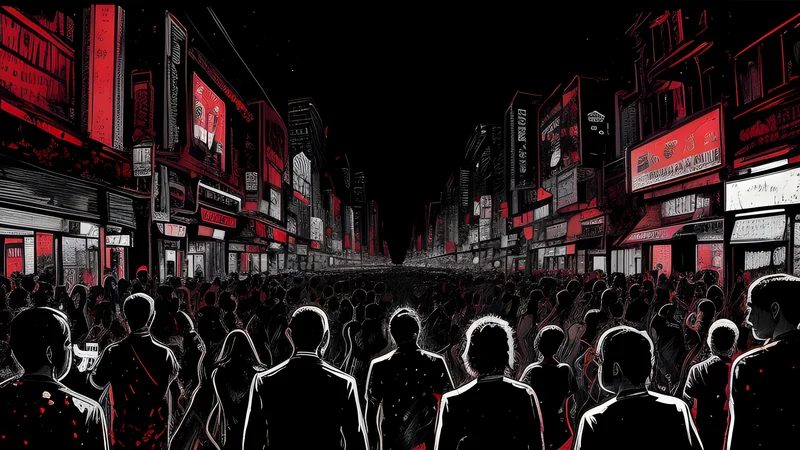
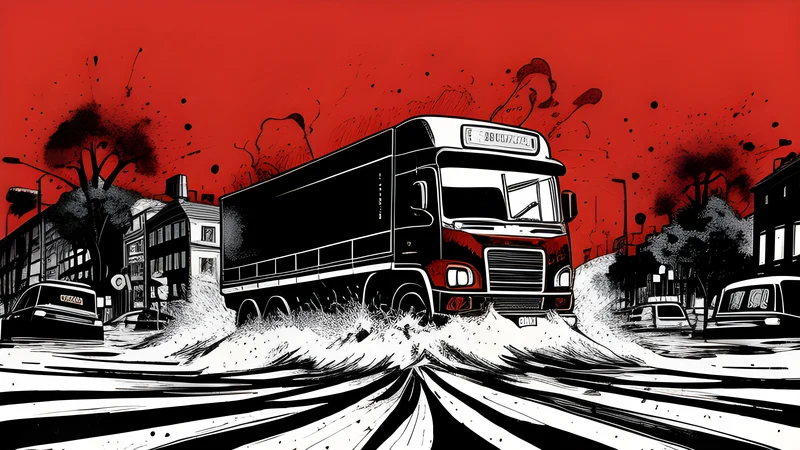
There is a particular Wednesday afternoon in early June when Nørrebro stops being a neighbourhood and becomes a circulatory system. The blood is people. The pumps are flatbed lorries with sound rigs bolted to them, crawling down Stefansgade and Jægersborggade at the speed of a funeral procession, and the pressure keeps building until the side streets are so full you move by tide rather than by choice. This is Distortion, and for a stretch of days it is the loudest civic experiment in Denmark.
I have lived within cycling distance of it since 2011, which means I have watched the thing mutate from something a few thousand people knew about into a monster that draws crowds the city struggles to count. The official story is tidy enough: Distortion began in 1998 as a small event dreamed up by Thomas Fleurquin, a Belgian-born impresario who wanted to drag Copenhagen’s club culture out of the clubs and into the street. The unofficial story is messier, funnier and a lot more contested, and that mess is the actual subject here.
From art happening to civic monster
Distortion’s DNA is closer to a happening than a music festival. Fleurquin’s early editions were scrappy, semi-legal, art-school affairs, the kind of thing that spreads by word of mouth and rumour rather than by billboard. The premise stayed constant while everything around it swelled: take the private, ticketed, after-dark world of the nightclub and make it public, free and diurnal, in a street where people live. That single reversal is the whole idea, and it is more radical than it sounds. Copenhagen’s nightlife is otherwise very orderly, licensed and contained. Distortion punches a hole in that order once a year and dares the city to cope.
The format that regulars now take for granted, five days rolling through different districts, hardened over the 2000s and 2010s as the crowds grew from a manageable few thousand into a number that requires crowd-management plans and police liaison. Each edition became a negotiation, and each year Fleurquin’s team had to prove again that the thing could be staged without the city drowning in glass and complaints. The event’s own history is a chronicle of that argument: permits granted and withdrawn, routes moved, end times pulled forward, funding scares survived. A festival that looks like pure hedonism from the street is, behind the scenes, one of the most heavily administered parties in Europe.
The shape of the week
Distortion runs to a rhythm that regulars know in their bones. The street parties are the daytime engine, and they migrate. One day belongs to Nørrebro, the next to Vesterbro, each a free open-air party that turns a designated stretch of road into a sweating, beer-slick corridor of sound. The lorries are the stars. Each one is a mobile stage rented by a bar, a collective or a promoter, and the good ones curate a proper journey through house and techno while the bad ones just point a wall of subs at you and hope. You learn to read a truck the way you read a venue.
Then, when the sun goes, the whole apparatus folds up and moves indoors and out to the harbour. The night programme historically clustered around Refshaleøen, the old industrial island where Distortion Ø set up in warehouses and yards, a ticketed counterweight to the free street chaos. That split is the genius of the format. The street is anarchic and unpaid; the night is curated and gated; the two feed each other, and a good year lets you ride the current from a lorry on Stefansgade at four in the afternoon to a concrete room on the water at four in the morning.
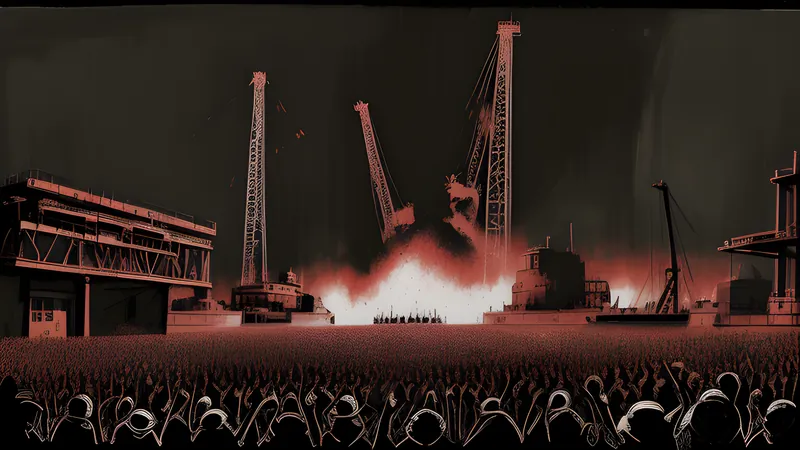
The harbour finale matters more than casual visitors realise. Refshaleøen is where Copenhagen parks its biggest temporary events, a flat industrial expanse with the sea on one side and the city skyline glittering across the water, and Distortion Ø used that backdrop to stage the sort of large-scale electronic bookings the free streets never could. It is also where the festival makes its money, the ticketed engine that keeps the unpaid street party financially possible. Understanding that cross-subsidy is the key to understanding why Distortion guards its harbour nights so carefully.
There is an economy under all this that rewards attention. A lorry costs real money to hire, permit, staff and stock, so each one is a small business gambling that its bar’s crowd will follow it into the street. The collectives that do it well build reputations that carry from year to year, and regulars track their favourite trucks the way football fans track a manager. That grassroots, promoter-led structure is why the street programme feels so uneven and so alive at once: nobody is imposing a house style from above, and every hundred metres of tarmac is somebody’s individual bet on what Copenhagen wants to dance to.
If you want the indoor, air-conditioned version of Copenhagen’s electronic appetite, the city keeps that alive year-round in the rooms I have written up over at Strøm’s electronic sprawl. Distortion is the opposite instinct, the same music dragged blinking into daylight and pointed at a residential street.
The litter wars
Here is the thing nobody puts on the poster. By Thursday morning, the streets Distortion has visited look like the aftermath of a small, cheerful war. Broken glass in a glittering carpet, a low tide of crushed cans, and the smell, the unmistakable ammonia reek of a hundred thousand people who could not find a toilet. For years this was the central drama of the whole event, and it turned neighbours who quite liked a party into a genuine opposition.
The organisers have spent the better part of a decade trying to defuse that anger. Deposit schemes on cups, armies of cleaners moving in behind the crowd, glass bans, more toilets, tighter end times. Some of it works. The city and the police have leaned on the festival hard, and each edition now arrives wrapped in more rules than the last. A cynic reads that as the slow strangulation of a wild thing. I read it as the price of survival, and I would rather have a slightly tamed Distortion than a dead one.
The tension is real and worth sitting with. A free street party at this scale is a gift to a city and a burden on the specific hundred metres of it that hosts the lorries. The people whose front doors open onto Stefansgade did not sign up to host a rave, and their complaints are legitimate. Distortion’s long-term problem was never the music. It was the arithmetic of putting an unbounded crowd onto bounded streets and asking residents to absorb the overflow.
What it feels like from inside
Strip away the civics and the sheer sensory fact of it remains overwhelming. You are packed shoulder to shoulder in a street you cycle down every ordinary day, the buildings throwing the bass back at you so the whole canyon of the street pulses, and there is a specific Copenhagen democracy to the crowd. Teenagers, pensioners leaning out of windows, tourists who wandered in by accident, the entire social spectrum of the city compressed into one grinning, shuffling mass.
The music itself sits mostly in the four-to-the-floor family, house and techno with a strong local accent, and the quality swings wildly from truck to truck. That is the deal. Distortion is a marketplace of sound systems rather than a curated festival where every stage clears a bar, and part of the sport is drifting until you find the lorry playing the set that fits the hour. When you find it, standing in a public street with a few thousand strangers all locked to the same groove, the feeling is closer to the communal rush of a good pit than anything a nightclub can manufacture. I have chased that same collective surrender in the harbour warehouses and, in a different key, in the crowd rituals I picked apart in what the mosh pit is actually for.
The eternal survival question
Every spring the same rumour circulates: this is the year Distortion dies. The permits are impossible, the neighbours have won, the police have finally had enough, the funding has collapsed. And every year it lurches back to life in some adjusted form, a little more regulated, a little more expensive at the ticketed end, the free street heart still beating.
That precariousness is the honest headline. Distortion exists on sufferance, renegotiated annually with a city that half loves it and half wishes it would move somewhere else. It has weathered financial scares, permit fights and the general drift of Copenhagen towards a more managed, more monetised version of itself. The wonder is that a five-day free street rave survives at all in a European capital in 2025, when the pressure on public space and the appetite for control both point the other way.
The event also built an international profile along the way, drawing curious visitors from across Europe who had heard that Copenhagen threw its best party in the middle of the road. That reputation cuts both ways. It brings money and energy and a genuine sense that the city is doing something no other capital dares, and it also swells the crowd past the point the streets were ever meant to hold. The organisers have responded by trimming the programme in recent years, dropping some districts, concentrating the free parties, pushing more of the weight onto the ticketed harbour nights. The result is a leaner Distortion that has made its peace with limits, and the trade is worth naming plainly: a little less sprawl in exchange for a lot more chance of surviving to the next June.
For a first-timer I would give plain advice. Come for the street parties, because the free daytime chaos is the true face of the thing and the part no other city quite replicates. Wear boots you can hose down. Eat before you arrive, because the food situation is a scrum. Keep your expectations of any individual lorry low and your willingness to wander high. And take a moment, somewhere in the middle of the crush, to appreciate that you are standing in the eye of an argument the city has been having with itself for a quarter of a century, an argument conducted at 128 beats per minute.
If you want the neighbourhood the rest of the year, Nørrebro’s after-dark character lives on in rooms like Rust, the club that keeps booking the weird, where the same restless taste that powers Distortion runs on a normal Friday. Distortion is that instinct with the volume set to civic emergency, and Copenhagen is, on balance, better for having it.
Related Content