Den Grå Hal: Christiania's Cathedral of Noise
The biggest room in the Freetown, an 1891 riding hall that swallows sound whole
Contents
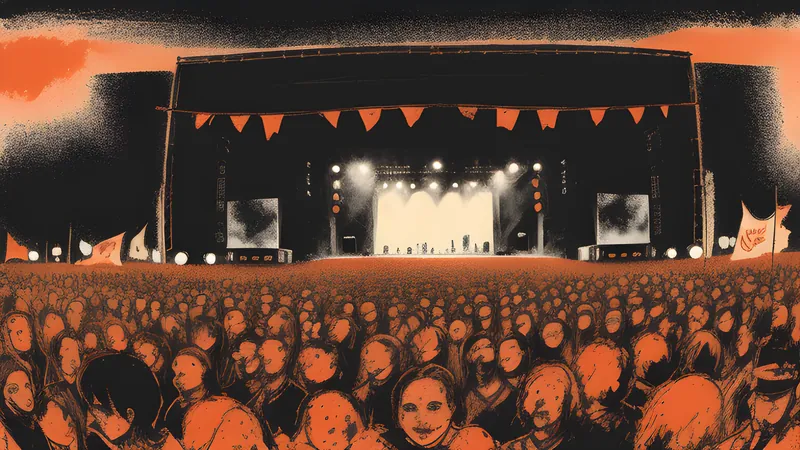
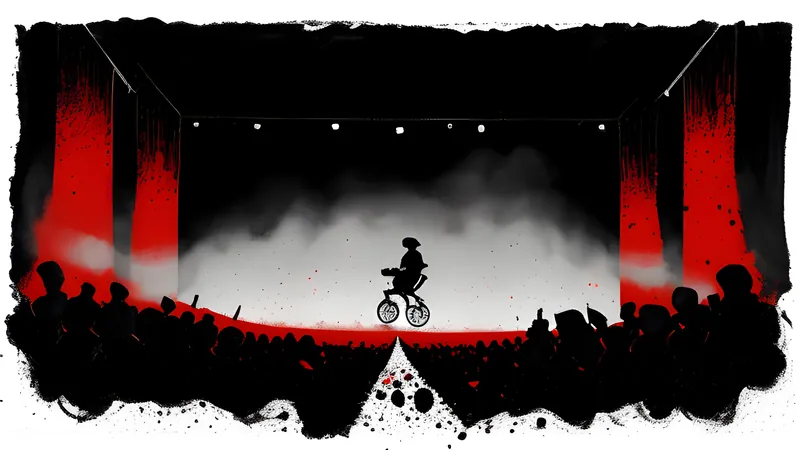
You walk in from a dirt track lined with graffiti and woodsmoke, past the low timber shacks and the bicycle wrecks, and then the ground opens up into something the size of an aircraft hangar with the reverence of a church. That is the trick of Den Grå Hal. The Grey Hall. It sits at the middle of Freetown Christiania like a great grey lung, 47 metres long by 19 wide, the roof trusses vanishing sixteen metres up into a gloom the lights never quite reach. When a band the size of the room gets going in here — and this place has held the likes of Bob Dylan, Metallica, Portishead, the Smashing Pumpkins, Faithless — the noise doesn’t so much fill the hall as haunt it. It’s the biggest space in the whole free city, the most atmospheric room in Copenhagen, and one of the strangest places you will ever stand for a gig.
A riding hall that never forgot what it was
The building went up in 1891 as a riding hall for the Bådsmandsstræde barracks, the army post that occupied this stretch of Christianshavn’s ramparts. That is the whole key to the place. It was built for cavalry horses to be schooled indoors in a Danish winter, which means it was built to a scale and a plainness that no concert architect would ever choose. Brick and grey render, a vast unbroken floor, a roof pitched high enough for a mounted rider to work a horse under it. Everything that makes it a peculiar music venue is a leftover of that first purpose.
When the soldiers left and the squatters moved into the abandoned barracks in 1971, the hall became the free town’s great shared room. It has been Christiania’s largest common area since 1972, and it has done every job a community throws at a big empty space: theatre, art shows, meetings, rallies, the enormous Christmas market that fills it every December, and — above all — concerts. The place has kept its bones. Nobody came in and softened it into a purpose-built rock box with a nice foyer and cup holders. You are watching a band in a 130-year-old horse shed, and the room reminds you of that every few minutes.
The sound, and the fight the room puts up
Let me be honest about the acoustics, because a cathedral of noise is exactly what it says: glorious and a bit lawless. A hall this tall, this hard-surfaced, with that much air trapped above your head is an echo chamber by design. Sixteen metres of empty volume up in the trusses is sixteen metres for the low end to slop around in. On a bad night — a support act with a rushed line check, an under-powered rig, a sound engineer who hasn’t wrestled this specific beast before — the bass turns to soup and the vocals smear into the brick. I’ve heard mixes in here that arrived at the back of the room as one long grey roar.
Get the right band and the right engineer, though, and the size becomes the whole point. A big, physical rock act that plays to the room instead of against it — heavy, deliberate, letting notes ring out and using the natural decay — sounds colossal in here. The reverb that ruins a fussy indie band’s clarity turns a wall of guitars into weather. Metal and hardcore and big anthemic rock are the natural tenants; this is a place built to be loud in. If you’re coming for something delicate and detailed, temper your hopes and stand close. If you’re coming to feel a kick drum in your sternum under a roof the size of a barn, few rooms in the city do it better.
Where you stand matters more here than in a tidy modern venue. The sweet spot is dead centre, maybe two-thirds of the way back from the stage, far enough that the PA has fused into one coherent sound and not so far that the room’s own echo overtakes it. Get too near the side walls and the reflections gang up on you. Go right to the very back and you’re listening to the hall as much as the band. The floor is flat — this was a riding arena, laid out for horses and never re-raked for an audience — so sightlines are a democratic scrum. There’s no rake, no gentle slope tipping the crowd towards the stage. If you’re short, arrive early and work your way forward, because once a couple of thousand people are packed in, tall punters at the front become a mountain range. The upside of a flat floor is the pit: nothing built-in gets in the way of a proper heaving crowd.
The scale, the crowd, and standing in the Freetown
Capacity depends on who you ask and how the night’s laid out — call it a couple of thousand standing when it’s rammed, with figures around 1,500 to 1,700 quoted for a full house. What that number doesn’t tell you is how the volume of the room plays with the size of the crowd. Even a healthy turnout can look sparse under that ceiling, and there’s a particular magic to a hall that’s genuinely full: the heat rises, the grey walls sweat, and the space that felt cavernous and cold on the way in turns close and human.
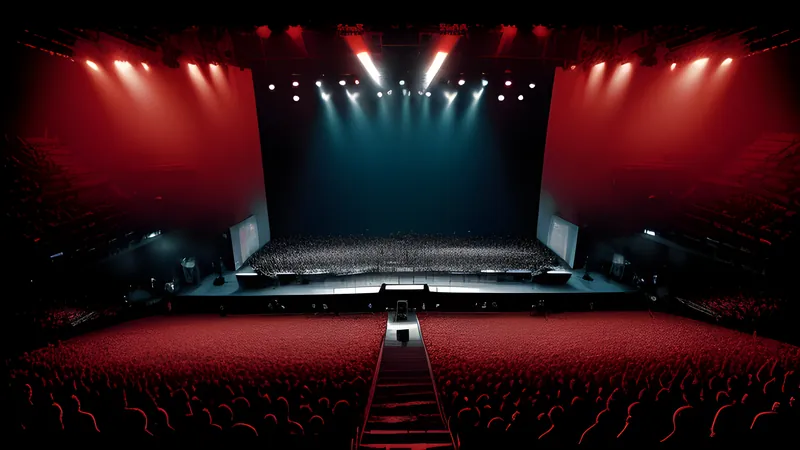
The crowd is Christiania’s crowd, which is to say gloriously mixed and gloriously unbothered. This is the free town, so the audience skews older-and-younger-at-once — grey-ponytailed originals who’ve been coming since the barracks were still warm, next to a hardcore kid down from Nørrebro for the support band. Nobody is here to be seen. There’s no dress code, no VIP cordon, no sense that anyone important is watching. It’s one of the least corporate atmospheres you’ll find at this scale, and after a run of glossy arena shows it can feel like a plunge into cold clean water. For the flip side of that coin — the giant, efficient, sponsor-branded machine — the Royal Arena out in Ørestad is the exact opposite experience: comfortable, professional, and about as far from a squatted horse shed as a room in this city gets.
Den Grå Hal also has a little sibling a few minutes’ walk away. Loppen, up in the old Loppebygningen, is the small sweatbox to the Grey Hall’s grand cavern — a few hundred people, low ceiling, breath on the back of your neck. The two of them together are Christiania’s whole live-music range in one square: the intimate box and the great grey lung. If a touring band is doing two Copenhagen nights, there’s a decent chance one lands in each.
Getting there, and the etiquette that actually matters
Christiania sits on Christianshavn, and the easy route is the Metro to Christianshavn station, then a five-minute walk along Prinsessegade to the main entrance. From there you’re on foot into the Freetown, following the crowd and the noise towards the hall. Give yourself more time than the map suggests. The paths are unlit dirt tracks in places, the signage is minimal-to-nonexistent, and the free town is not laid out for a punter in a hurry. Bring cash; some bars in here still prefer it, and phone signal can be patchy in the older buildings.
Now the important part, and I mean it: respect the place, because you are a guest in someone’s home. Christiania has its own rules and they are not decoration. On and around the main drag — the stretch people call Pusher Street — photography is a hard no. Don’t take photos, don’t film, don’t wave your phone around; the signs are up for a reason and the reason is people’s liberty. More broadly, the whole free town runs on a don’t-be-a-clown social contract: keep your wits, don’t gawp, don’t treat the residents as scenery. The Freetown has had a hard, contested history with the authorities, and the least a visitor can do is walk through it like a human being rather than a tourist on safari. Do that and you’ll have no trouble whatsoever — the place is warm to anyone who arrives with a bit of grace.
The bar, the December light, and who it’s for
The bar situation is pure Christiania: functional, unfussy, run by the collective rather than a catering multinational. Expect beer poured without ceremony and prices that won’t mug you the way an arena bar will. Don’t come for a cocktail menu or a craft-ale flight; come for a cold one served fast so you can get back to the floor. It has the honest charm of a room where the drinks are an afterthought to the music, which is how it should be.
And if you can only picture this hall one way, picture it in December. Every year the Grey Hall becomes the Freetown’s Christmas market — stalls and craft and food packed under those enormous trusses, the whole cavern strung with lights, the grey walls glowing for a few weeks before the community’s own Christmas Eve gathering fills it again. It’s the same room that shakes to a metal band in October, wearing entirely different clothes. That flexibility is the truest thing about the place: it was built empty, for horses, and a century later it will be whatever the free town needs it to be that week.
So who is Den Grå Hal for? It’s for anyone who wants their live music with texture, history and a bit of grit under the fingernails. Come here for a big, loud, physical band and a crowd that doesn’t care what you’re wearing, and you’ll have one of the great nights this city offers. Come expecting audiophile clarity, comfortable seating and easy access, and you’ll spend the evening fighting the room. Pick your band well, stand in the middle, treat the Freetown with respect, and let the great grey space do the rest. There’s nowhere else quite like it in Copenhagen, and that is precisely the point.
Related Content