Deftones on Tour: The Loudest Band That Learned to Float
How a Sacramento five-piece turned crushing weight into something that hovers

Contents
There is a moment that happens at every Deftones show, and if you have seen the band more than once you start waiting for it the way you wait for a wave you already know is coming. The guitar drops to a low, detuned churn that you feel in your sternum before you hear it, the drums land like someone dropping a wardrobe down a stairwell — and then, on top of all that mass, Chino Moreno starts to sing, and the whole thing lifts. The weight is still there. The floor is still shaking. But something in the melody pulls the song up off the ground and holds it there, suspended, heavy and airborne at the same time. Deftones have spent thirty years chasing that exact sensation, and live, when it lands, there is nothing else in loud music quite like it.
Sacramento, and the band that refused the box
Deftones formed in Sacramento in 1988 — Moreno on vocals, Stephen Carpenter on guitar, Abe Cunningham on drums, and Chi Cheng on bass, with Frank Delgado eventually folding in on keys and turntables to complete the sound. They came up in the same late-nineties window that produced nu-metal, got filed under it by lazy record-shop logic, and quietly spent the next two decades proving the label a poor fit. The baggy shorts and the rapped verses that defined that scene were never really Carpenter’s guitar or Moreno’s voice. What Deftones were actually doing was welding the crushing low end of metal to the blurred, reverbed atmospherics of shoegaze and dream-pop — the Cocteau Twins and My Bloody Valentine smuggled into a band heavy enough to headline a metal festival.
The records track that ambition getting bolder. Adrenaline (1995) is the sound of a young band that mainly wants to hit you. Around the Fur (1997) sharpens the songwriting and the dynamics. Then comes White Pony (2000), the album that changed what people expected of them and remains, for a lot of listeners, the high-water mark of the whole art-metal idea — “Change (In the House of Flies)” and “Digital Bath” showing that a band could be genuinely beautiful and genuinely brutal inside the same four minutes. They won a Grammy for “Elite” off that record’s orbit, which felt almost beside the point; the achievement was the album’s atmosphere, the way it made heaviness feel like weather rather than aggression.
They kept going, and kept refusing to repeat themselves. The self-titled Deftones (2003), Saturday Night Wrist (2006), then the run that rebuilt them — Diamond Eyes (2010), Koi No Yokan (2012), Gore (2016) — and Ohms (2020), a late-career record with the focus of a band that has finally worked out exactly what it is. In 2025 came Private Music, still restless, still pushing the same two forces against each other. Very few bands of their generation have a discography this consistent, and fewer still can play across all of it in a single set without the old songs sounding like a different band.
The engine room: eight strings and a wardrobe down the stairs
Understand the Deftones live sound and you have to start with Stephen Carpenter’s guitar, because the low end is the foundation everything else floats on. Carpenter is one of the players most responsible for popularising the eight-string guitar in heavy music — extending the range down past where a normal guitar bottoms out, into a register that is almost more felt than heard. That extra low string is why a Deftones riff at full volume in a big room does something physical to your chest. It is not just loud. It occupies the bottom of the frequency spectrum so completely that everything above it — the vocals, the keys, the cymbals — seems to hang in the space it leaves.
Abe Cunningham is the other half of that foundation, and he is a genuinely great rock drummer in a way that gets underrated because the band’s atmosphere gets all the press. He hits hard, he swings when the song needs it, and crucially he understands dynamics — he knows when to drop to almost nothing so the quiet parts actually feel quiet, which is what makes the loud parts detonate. A Deftones song is often a study in contrast, a whispered verse and a collapsing chorus, and none of that works without a rhythm section willing to play the empty spaces as deliberately as the full ones.
And then there is Frank Delgado, tucked to the side with his keyboards and samples, doing the least visible and most essential job on the stage. Delgado is the reason the band shimmers. His washes of sound fill the gap between Carpenter’s granite low end and Moreno’s voice, adding the reverbed haze that turns a heavy band into an atmospheric one. Live, you often do not consciously notice what he is doing — until you imagine the song without it and realise he is the entire ceiling.
Chino Moreno, and the art of the drift
Front and centre is the reason people fall in love with this band. Moreno is one of the most distinctive vocalists in heavy music, and his gift is range in the fullest sense: he can scream himself raw, and moments later he can croon a melody so tender it sounds like a different singer entirely. Onstage he moves like the songs — coiled and still through the quiet passages, then flinging himself around when the weight comes down. He is the human embodiment of the band’s whole dynamic, the calm and the violence living in the same body.
What makes him rare is that the melodic voice is not a garnish on top of the heaviness. It is the point of it. Plenty of heavy singers can do the pretty bit as a breather before the next scream. Moreno does the opposite — he lets the beauty carry the emotional weight and uses the screaming as punctuation. Live, that means the moments people wait for are frequently the softest ones: the second his voice opens up over Carpenter’s churn, and the whole crowd, ten thousand people deep, goes quiet enough that you can hear them breathe. For a band this loud, the silences they can command over a festival field are the real trick.
That dynamic is why Deftones became a cult live act rather than merely a successful one. A cult forms around a band that gives you an experience you cannot get elsewhere, and the Deftones experience — the crush and the float in the same song, night after night, delivered with total conviction — is genuinely singular. You can love a hundred heavy bands and still not have anything else that scratches this particular itch. That is what turns casual listeners into people who will travel for it, the same devotion you see around Tool at the Royal Arena, where a crowd shows up for a specific altered state that only one band delivers.
The shadow in the room: Chi Cheng
You cannot write honestly about this band without Chi Cheng. The original bassist was badly injured in a car accident in November 2008 and never recovered, spending years in a minimally conscious state before he died in April 2013. His absence changed the band — Sergio Vega, formerly of Quicksand, stepped in and held the low end down for over a decade — but Cheng’s presence lingers over the whole story. He was, by every account, the heart of the band’s live energy in its early years, the one bouncing around the stage while the others held their positions.
The band’s decision to keep going was hard-won; for a while it was not obvious they would. Diamond Eyes was written and recorded after the accident, in place of an album Cheng had played on that the band shelved, and you can hear the shadow in it — a record made by people processing something they could not fix. That it turned out to be one of their best is part of what makes Deftones’ longevity feel earned rather than lucky. They have kept the machine running through genuine loss, and the songs carry it.
Live in Europe, and the Danish welcome
Deftones have been touring Europe and Scandinavia for the better part of three decades, and the reception in this part of the world has always run warmer than their US chart positions would suggest. There is something about the Nordic appetite for heaviness with atmosphere — the same instinct that keeps Meshuggah filling rooms up here — that makes Deftones’ particular blend land hard with a Danish crowd. Loud, yes, but loud with beauty in it; the kind of heaviness that has weather in it as well as violence.
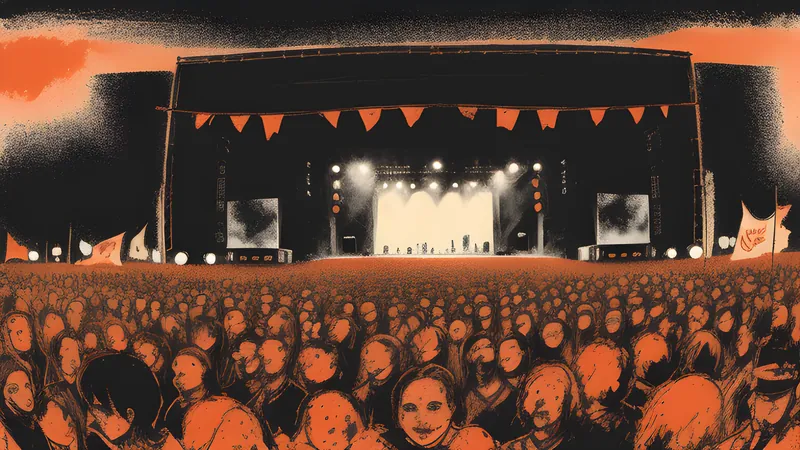
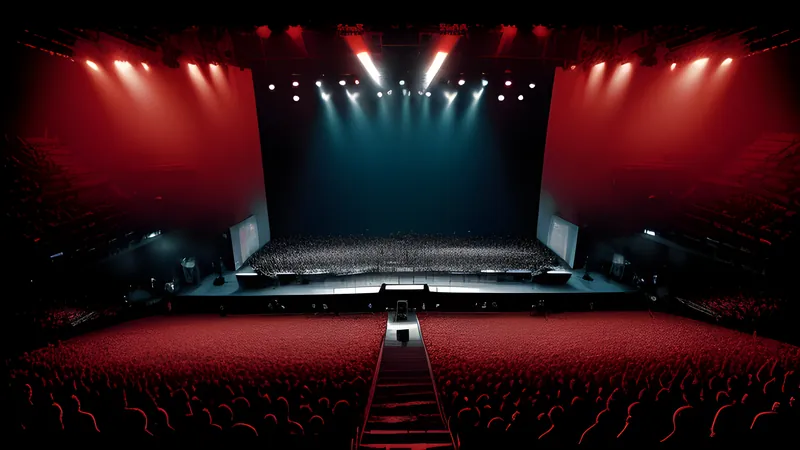
Watch them in a big Copenhagen room and the architecture of the set reveals itself. They front-load nothing; they let the show breathe, sequencing the crushers and the ballads so the dynamics stack across ninety minutes the way they do inside a single song. The eight-string songs arrive like tectonic events, Cunningham’s drums rearranging your ribcage, and then Moreno pulls it all skyward and the room exhales. Big rooms suit them — the low end needs the air, and a proper PA in a hall like the Royal Arena gives Carpenter’s bottom string somewhere to live. In a small club Deftones are ferocious; in an arena they become something closer to an event, the float reaching all the way to the back wall.
The thing that keeps people coming back is that Deftones never coast on the catalogue. A band with a discography this deep could turn into a nostalgia act, cruising on White Pony and collecting the applause. Instead they still play the new records like they believe in them, still treat the quiet passages as the most important parts of the night, still chase that one sensation — the wardrobe down the stairs and the melody hovering above it — as if they only discovered it last week. Thirty-odd years in, they remain the loudest band that learned to float, and there is nobody else doing it half as well.
Related Content