Debaser: Stockholm's Waterside Rock Institution
Named after a Pixies song, marooned under a bridge on Södermalm, and still swinging

Contents
Debaser is the only major rock venue I can think of that is named after a Pixies song, and it has spent its whole life living up to the reference. “Debaser” is the opening track on the Pixies’ 1989 album Doolittle — a loud, lurching, wonderful piece of noise about slicing eyeballs — and a Stockholm club that chooses that as its name is telling you exactly what it intends to be before you have bought a ticket. For a couple of decades now, Debaser has been the beating heart of the Swedish capital’s guitar-music scene, a place with impeccable taste, a chip on its shoulder about the mainstream, and an ongoing saga of closures, relocations and survivals that reads like a soap opera about property prices.
The story is worth telling because the venue’s history is really the history of the room itself moving around the city, chased by developers and rescued by stubbornness. To understand Debaser you have to understand that there has been more than one of it, and that the one everybody misses is not the one that survived.
The lost room at Slussen
The original Debaser opened in 2002 down at Slussen, the great tangle of locks, bridges and traffic ramps where Lake Mälaren meets the Baltic and where the island of Södermalm connects to the old town. It was a superb accident of a location — a venue tucked into the concrete underbelly of a mid-century transport interchange, right on the water, with all the romance that a rock club gains from being slightly hard to find and slightly wrong for the setting. For eleven years it was the room: the place where touring indie, punk and alternative acts played Stockholm, the club that defined the city’s underground for a generation of Swedish music fans.
Then Stockholm decided to demolish the entire Slussen interchange and rebuild it, and Debaser’s home went with it. The Slussen room closed in September 2013 and was pulled down amid loud protests, which is the correct response when a city bulldozes a beloved music venue to pour more concrete. That original room is the one older Stockholmers get misty about — the true, first, irreplaceable Debaser. Everything since has been the club proving it could outlive its own address.
Debaser Strand, the survivor by the water
The move had actually been hedged in advance. Even before Slussen fell, Debaser had opened new fronts across Södermalm — a big room at Medborgarplatsen, and a waterside club out west at Hornstulls strand that took the doors on 25 July 2013. Medborgarplatsen has since closed. The waterside room, Debaser Strand, is the survivor, and it is the Debaser you can walk into today.
Strand sits exactly where a rock club should sit: down by the water at Hornstull, on the western tip of Södermalm, half-tucked under the road bridge that carries traffic off the island. That under-a-bridge, edge-of-the-water positioning gives it an atmosphere the newer, cleaner venues in town simply cannot buy. You arrive along the waterfront, the club glowing under the concrete span, the lights of the city smeared across the surface of the channel, and you are already in the right frame of mind before you hear a note. Södermalm is Stockholm’s answer to the arty inner-city district every capital has — the island where the record shops, the vintage stores and the good bars cluster — and Strand is its loud, late-night anchor.
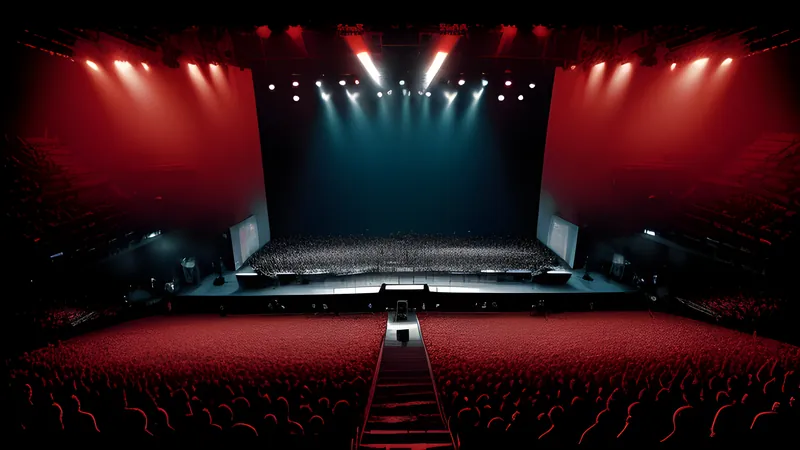
The main room holds in the region of seven to eight hundred, which puts it in the same happy weight class as the great Nordic mid-size clubs: big enough for a real touring show, small enough that the band and the crowd stay in the same conversation. There is a smaller bar space attached for club nights and the tighter bookings, so the venue runs a genuinely broad programme across a week — indie and rock gigs, DJ nights, the full spread of what a Södermalm crowd wants. That flexibility is part of how it has survived where the bigger, single-purpose room at Medborgarplatsen could not.
The sound, the sightlines, the crowd
The main hall is a flat-floored standing room with a stage set at a sensible height, so the sightline maths is the usual honest arithmetic of a club this size: your view is a function of your height and the height of whoever is in front of you. The room takes volume well and suits the guitar music it was built for — this is a club with a genetic memory of the Pixies, and it sounds best when something loud and hook-driven is coming off the stage. Push delicate acoustic material through it and you might find the room a touch unforgiving; bring a proper rock band and it locks in.
Where to stand is the standard club calculus. A third of the way back and off the centre line gives you the best trade of sound and self-preservation. The front is for the committed. The edges and the bar end are for the nights when you would rather watch and talk than get pressed into the barrier. On a busy show the bar-to-floor journey becomes an exercise in patience, so make your peace with your spot early.
The crowd is Södermalm to the core: knowledgeable, faintly cooler-than-thou, dressed with intent, and — under the studied indifference — deeply invested in the music. Swedish crowds can read as cool at the start of a set and then come apart entirely for the song they love, which is its own kind of theatre. Nobody is here by accident. Debaser’s whole identity is curatorial, so if a band is booked here, a certain slice of Stockholm has already decided they are worth caring about.
It is worth dwelling on how unusual that curatorial identity is, because it is the thing that has kept the club alive through every relocation. Plenty of venues are just rooms for hire, taking whatever a promoter puts in front of them and trusting the ticket sales to sort it out. Debaser has always behaved more like a record label with a stage: it has a taste, a lineage, a sense of which bands belong under its roof, and that consistency is why a name over a demolished door still means something to Swedish music fans. When the Slussen room fell, the club did not just lose a building — it kept its audience because the audience was loyal to the idea, and the idea walked across the island to Hornstull and set up again by the water. Few venues could have survived being knocked down. Debaser did it because it was always more than the address, and the crowd knew it.
The programme reflects that. On any given week you might find a touring international indie act, a rising Swedish band on their first proper city headline, a heavier alternative bill, and a club night that runs into the small hours, all under the same name and the same sensibility. That range keeps the room busy in a way single-genre venues never manage, and it means the place stays woven into the everyday life of the district rather than lighting up only for the occasional big show.
Getting there, and where it sits
Hornstull has its own metro station on the red line, a short walk from the club, so the whole city is reachable and — the part that matters after the encore — you can get home. Södermalm is the most walkable, bar-dense part of Stockholm, so the night rarely ends when the set does. Strand is also right on the water, which means the summer version of a Debaser night, with the light refusing to fade over the channel and the crowd spilling towards the waterfront, is one of the better things Nordic live music offers.
For a Copenhagen punter, Stockholm is a short flight or a long, scenic train, and Debaser is the natural anchor for a night in the city — the Swedish entry in the same class of storied northern rooms as Helsinki’s Tavastia and Oslo’s Rockefeller. If you want the closest thing to it back home, the comparison that fits is Pumpehuset in Copenhagen — another mid-size, guitar-first city-centre club with a strong booking hand and a repurposed, slightly improbable home.
The verdict
Debaser is a club that has been demolished, relocated and half-closed and somehow keeps its identity intact, which tells you the identity was never really about the address. It is about the taste, the noise and the name over the door — a Pixies song, worn as a permanent statement of intent. The Slussen room is gone and mourned; the waterside Strand carries the flame, and it is a genuinely excellent place to see a band: right by the water, tucked under a bridge, sized for a real show, and pointed squarely at the loud guitar music it was named after.
Come for a touring indie or rock act, arrive early enough to catch the support and the waterfront, stake out a spot a third back before it fills, and let the room do what it was built to do. Stockholm has fancier, newer, better-behaved venues. It does not have one with more soul or a better story, and on the right night, under the bridge with the city smeared across the water, Debaser is still the best room in town.
Related Content