Damnation Festival: Britain's Indoor Extreme-Metal Day
How a message-board dare became the best-run extreme-metal day in the UK
Contents
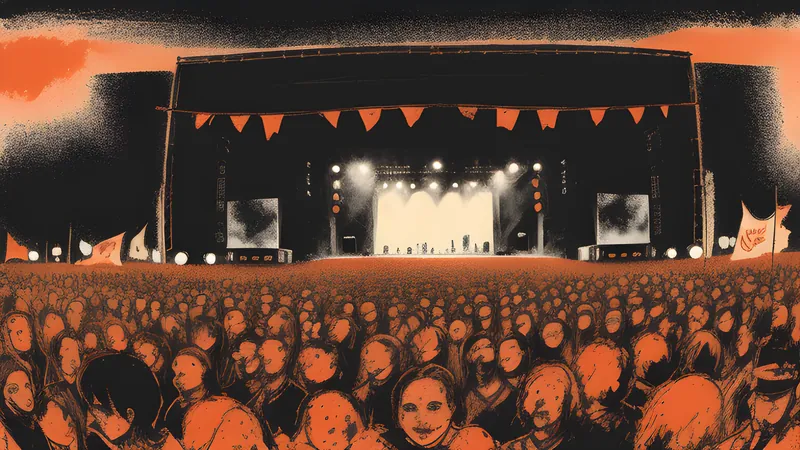
Most extreme metal in northern Europe happens outdoors in summer, in a field, in daylight, covered in dust. Damnation Festival does the opposite: one dark November day, indoors, in the north of England, with forty-odd of the heaviest bands in Europe crammed onto a handful of stages under one roof. From my basecamp in Copenhagen it has always looked like one of the smartest ideas in the British metal calendar — a festival that took the format everyone assumed had to be a sprawling summer campout and shrank it into a single, brilliant, weatherproof day.
I have never made it across the North Sea for Damnation, so I write this as an admirer working from the record rather than a witness with mud on his boots. But the record is rich, because Damnation is the kind of festival that inspires devotion, and its story — a message-board dare that grew into a British institution — is one of the better festival-origin tales going. It deserves the attention of any European metalhead, even one who only knows it by reputation.
A festival that started as a dare
The beginning is almost too good. In 2004 a Manchester metal fan named Gavin McInally floated an idea to a group of friends he knew from the Download Festival online forum: what if they put on their own gig? About ten of them took the bait, and out of that message-board dare came the first Damnation Festival, staged on 16 October 2005 at Jilly’s Rockworld in Manchester. Fifteen bands played across two stages, headlined by Raging Speedhorn and the great Swedish death-metal institution Entombed — a lineup that tells you the festival’s taste was serious and its ambition was real from day one.
McInally, alongside Paul Farrington, kept it going, and the thing grew out of its origins the way the best grassroots festivals do — slowly, by word of mouth, on the strength of consistently excellent bookings rather than marketing spend. It outgrew Jilly’s after the first couple of years, and in 2007 moved east to the University of Leeds, which would be its home for well over a decade. The student union setting was perfect for it: a warren of rooms and halls of different sizes, all under one roof, ideal for running several stages of heavy music in parallel through a single long day.
That is the format Damnation made its own. One day, indoors, multiple stages, a lineup that stretches from the underground up to genuine headline names, and a crowd that has come specifically to hear the extreme end of the spectrum — death metal, black metal, doom, hardcore, sludge, the loud and the ugly and the interesting. It became known as the biggest indoor extreme-metal festival in Europe, a title it wears with justified pride, and it did it from a student union in Leeds with a team that had started as forum friends.
Why the indoor day format is genius
I want to dwell on the format, because it is the thing that makes Damnation special and it is the thing a Nordic festival-goer notices immediately. The big European metal festivals — Wacken, Bloodstock, the summer giants — are multi-day outdoor campouts, and they are wonderful, but they are also an enormous commitment of time, money, weather-tolerance and physical stamina. Damnation strips all of that away. It is one day. You turn up, you see a staggering amount of great heavy music, you sleep in a bed that night, and it never rains on you because there is a roof.
For the bands and the underground that is a gift. An indoor day festival can platform the heavier, weirder, less commercial acts that would struggle to justify an outdoor headline slot, because the whole event is built around them rather than around a stadium-sized closing act. The parallel-stages layout means constant hard choices — you cannot see everything, and Damnation regulars will happily tell you about the clashes that still haunt them years later — but it also means density. There is more good music per hour at a well-run indoor day festival than at almost any campout, because nobody is padding the bill to fill three days.
There is a practical charm to it as well. A single-day festival is the most accessible way into heavy music there is: no tent, no week off work, no financial commitment the size of a holiday. A student in Leeds or a worker in Manchester can save up for one ticket, see a bill that would headline a whole summer weekend elsewhere, and be home the same night. That low barrier keeps the crowd young and the scene renewing itself, which is exactly what an underground genre needs to survive.
It also builds a particular kind of crowd. A one-day extreme-metal festival in Leeds in November is not a bucket-list tourist event; it is a gathering of people who really mean it, who have travelled from across Britain and beyond specifically for this, in the cold and the dark, to stand in a crowded hall and get flattened by bands they love. That self-selection gives Damnation a reputation for one of the warmest, most knowledgeable, most genuinely-into-it audiences in UK metal. When people talk about Damnation, they talk about the fans as much as the lineups, which is always the sign of a healthy festival.
The move to Manchester
By the early 2020s Damnation had outgrown Leeds, and in 2022 it made the big jump. The 17th edition, held on 5 November 2022, moved to the Bowlers Exhibition Centre — the BEC Arena — on the western edge of Manchester, a much larger venue than the old student union could ever be. It was a significant moment: the festival that had started at Jilly’s in Manchester back in 2005 had come home to the city, bigger and more ambitious, with the room to grow into a three-stage event of real scale and eventually to stretch beyond its single-day roots.
There is always a risk in a move like that. Part of Damnation’s charm was the intimacy and the slightly chaotic charm of the Leeds student union, and shifting to a large exhibition centre could easily have sanded off the character that made it beloved. From the outside, the early signs were that the festival carried its identity with it — the bookings stayed serious, the underground focus stayed intact, and the loyal crowd made the trip. Growth is dangerous for a festival built on grassroots devotion, and I will be watching from Copenhagen to see whether Damnation keeps its soul at the larger scale, but a festival run by people who started it as a labour of love has a better chance than most.
Where it sits in the European picture
From a Danish vantage point, Damnation fills a slot that the Nordic scene does not really have. We have our summer festivals and our brilliant loud rooms, but the specific British institution of the one-day indoor multi-stage extreme-metal festival is a format the UK does exceptionally well, and Damnation is its crown jewel. It sits in the same broad ecosystem as Bloodstock, Britain’s great independent outdoor metal festival, and as the mainstream monster of Download — but it occupies a niche neither of those touch, serving the harder, more underground end of the spectrum in a format built entirely around it.
That specificity is exactly why it matters. In a European festival landscape where the big events increasingly converge on the same touring headliners and the same production templates — a homogenisation I have grumbled about at length in why every festival now feels the same — Damnation stays unmistakably itself. It has a format nobody else quite copies, a genre focus it refuses to dilute, an origin story rooted in fandom rather than finance, and a crowd that treats it as theirs. Those are the things that keep a festival alive and loved for the long haul, and Damnation has all of them.
The lesson for the rest of us
I like Damnation from afar for the same reason I like the best of the loud-music world up close: it is run by people who care more about the music than the margins, and it shows in everything from the bookings to the loyalty of the crowd. A festival that grew out of ten mates on a forum in 2004 and became the premier indoor extreme-metal event on the continent is a reminder that the grassroots still work, that devotion still scales, and that you do not need a private-equity fund behind you to build something that lasts.
One day, indoors, in the north of England, in the dark of November — it should not work as well as it does, and that it works so beautifully is a tribute to the people who built it and the fans who keep coming back. One of these autumns I will finally cross the water and stand in that hall myself, and I fully expect to understand in five minutes what its regulars have been trying to tell me for years. Until then, Damnation gets my respect from Copenhagen, offered gladly and entirely on the strength of the record.
Related Content