Damnation Festival: Britain's One-Day Metal Ritual
The indoor day-festival that curates the extreme underground better than anyone
Contents
The great festival lie is that more is better. More days, more stages, more bands, more mud, more money, until the whole thing sprawls into an endurance test where you spend more time walking and queuing than watching music. Damnation Festival is the sharpest rebuke to that logic in British metal, a festival that fits its entire ambition into a single indoor day and, by doing so, delivers one of the most concentrated, well-curated and genuinely enjoyable events on the calendar. It is the anti-sprawl, and it has spent nearly two decades proving that constraint is a creative advantage.
Damnation began in 2005 and built its reputation at the University of Leeds student union, an indoor complex of rooms that let the festival run multiple stages under one roof through a single long day and night. From the start it staked out a specific territory, the extreme and underground end of heavy music, and it curated that territory with a credibility that larger festivals could never match. Over the years Damnation became the connoisseur’s British metal festival, the one that booked the bands the purists actually cared about, and its influence far outstrips its one-day footprint.
The case for one day
There is a real argument buried in Damnation’s format, and it is worth taking seriously. A single indoor day solves most of the problems that plague large outdoor festivals at a stroke. There is no camping, no weather, no mud, no trek across a field between stages, no three-day accumulation of exhaustion and squalor. You arrive in the morning, you spend the day moving between rooms in a warm dry building, you see an intense concentration of excellent bands, and you sleep in a real bed. For a certain kind of fan, and I count myself firmly among them, that is close to the ideal way to consume live metal.
The indoor setting does more than provide comfort. It concentrates the experience, packing the whole festival into a single building where the energy compounds rather than dissipating across acres of open ground. The sound is contained and controllable in a way an outdoor stage never is, the crowds move between stages in minutes, and the whole event has a density and an intensity that a sprawling site cannot replicate. Damnation proves that a festival’s quality has almost nothing to do with its size, and that a tightly curated day can leave you more satisfied than a bloated weekend.
The curation is the product
What truly sets Damnation apart is the taste behind the booking. This is a festival programmed by people with a deep, credible knowledge of the extreme-metal underground, and the lineups reflect a genuine editorial point of view rather than a scramble for the biggest available names. Black metal, death metal, doom, sludge, post-metal, crust and hardcore all find a home, and the festival has a particular gift for balancing the underground legends against the vital new bands, so a Damnation bill is both a history lesson and a preview of where the music is heading.
That editorial credibility is a scarce and valuable thing. Most festivals book to a spreadsheet, chasing the acts that will shift the most tickets, and the result is a homogenised bill that could belong to any event. Damnation books to a worldview, and the payoff is trust: fans buy tickets before the lineup is even announced because they have learned that the curators will deliver something worth their time. The post-metal and atmospheric end of the programming has always been a particular strength, the territory of bands in the lineage of Cult of Luna, the Swedish post-metal monolith, whose cathedral-scale heaviness plays perfectly to a crowd that came to be immersed rather than merely entertained.
The clash problem
No honest account of Damnation can skip its central frustration, which is the direct consequence of its greatest strength. When you compress a superb lineup into a single day across multiple stages, you create brutal clashes, and every Damnation veteran has a story about the two bands they desperately wanted to see who were scheduled against each other. The festival’s density guarantees impossible choices, and there is no second day to catch the band you missed. You commit, you sacrifice, and you live with the regret.
This is the price of the format, and it is worth naming plainly for anyone planning their first visit. The strategy is to study the schedule in advance, decide your non-negotiable sets, and accept that you will miss things you would have loved. The compensation is that the clashes are a symptom of abundance, of a bill so strong that every time slot presents a genuine dilemma, and a festival where the choices are painful is a festival that has done its job. It is a far better problem to have than the reverse.
The move that grew it
Damnation’s story took a decisive turn in 2022, when the festival outgrew its long-time Leeds home and relocated to a larger venue, moving to Bowlers Exhibition Centre in Manchester to expand its capacity and ambition. This was a significant gamble, because so much of the festival’s character was bound up in the intimacy and the specific rooms of its original site, and a move risked diluting the very thing that made it special. Longtime attendees watched the change nervously, and the debate about what was gained and what was lost is one the community is still having.
The move reflects a real tension that every successful independent festival eventually faces. Growth brings the resources to book bigger bands and improve the production, and it threatens the intimacy and the curatorial focus that built the loyalty in the first place. Damnation’s challenge is to scale up without becoming the kind of generic, size-obsessed festival it always defined itself against, and the early evidence suggests the curators understand exactly what they must protect. The venue changed; the editorial worldview that is the actual product did not.
Where it sits in British metal
Damnation occupies a specific and important niche in the British festival ecosystem, and understanding that ecosystem helps explain its value. Britain has a rich spread of loud-music festivals, from the huge and mainstream to the small and specialised, and Damnation sits at the connoisseur end, the extreme-metal counterpart to the more accessible independent events. It shares an audience and an ethos with Bloodstock, the independent British metal festival, while going harder and more underground, and it complements the more eclectic, cross-genre approach of gatherings like ArcTangent’s math-rock weekend.
What unites this family of independent British festivals is a refusal to be swallowed by the corporate machine that dominates the biggest events, and Damnation is one of its proudest examples. It has stayed true to a specific vision of heavy music for nearly twenty years, weathered a major relocation, and kept the trust of an audience that is famously hard to please. In a live-music landscape increasingly shaped by scale and spectacle, a one-day festival that succeeds purely on the quality of its curation is a genuinely encouraging thing.
The atmosphere inside
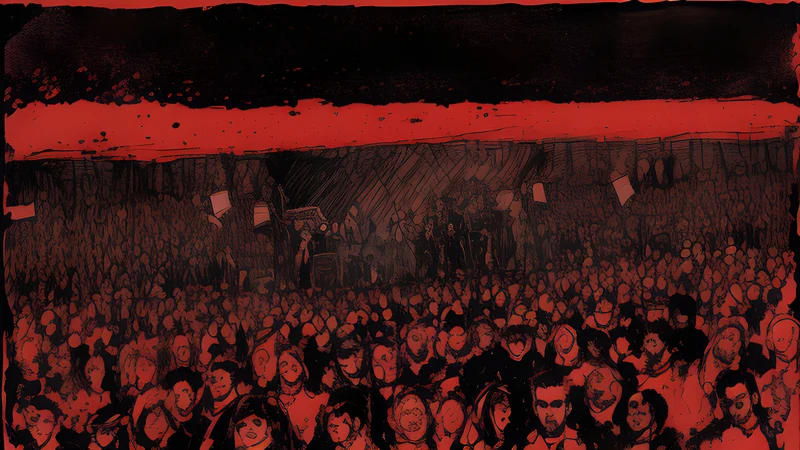
The one-day indoor format produces a specific atmosphere that regulars prize. Because everyone is in the same building for the same long stretch, the festival develops a communal intensity as the day wears on, the crowd growing sweatier and more committed with each set until the headline slots arrive in a building thick with accumulated energy. There is no drifting back to a distant tent to sleep, no thinning of the crowd as people give up; the audience stays concentrated and present, and the bands feed off it. By the final bands of the night the place has the charged, slightly delirious feel of a room that has been going hard for twelve hours and intends to finish the job.
The crowd itself is the extreme-metal faithful at their most engaged, an audience that travels from across Britain and beyond specifically for this bill, which means the room is full of people who know the deep cuts and came to hear them. That knowledge changes the temperature of a show, because a band playing to an audience that recognises an obscure track from three albums back gets a response that a casual festival crowd could never give. Damnation is a gathering of specialists, and the sets land harder for it.
A festival for the deep fan
Damnation has always understood that its real constituency is the serious listener, the person who follows the extreme underground closely and wants a festival that respects that depth. The programming rewards knowledge, slotting the influential-but-obscure alongside the emerging, and treating the audience as fluent rather than needing to be spoon-fed the obvious names. For a fan who has spent years digging into black metal or post-metal or sludge, a Damnation lineup reads like a personal wishlist assembled by someone who shares your taste, and that recognition is a large part of the loyalty the festival commands.
That focus on the deep fan is also what protects Damnation from the homogenisation that flattens larger events. A festival chasing the mainstream has to book for the lowest common denominator, and the result is a bill that offends nobody and excites no one. Damnation books for the people who care most, and by aiming at the committed core rather than the casual passer-by it produces lineups with genuine character and edge. It is a festival that trusts its audience to be sophisticated, and that trust is repaid in ticket sales and devotion year after year.
Worth the day
For a Copenhagen metalhead, Damnation is exactly the kind of event that justifies a short trip, precisely because its format is so efficient. A single day means you can fly in, see a concentrated dose of the best extreme metal Britain has to offer, and be home almost before a longer festival would have finished setting up. The absence of camping and weather removes the misery that puts so many people off outdoor festivals, and the indoor intensity delivers a purer version of the live-metal experience.
The deeper reason to care about Damnation is what it represents. It is proof that the one-day, indoor, curation-first model works, that a festival can thrive for two decades on taste rather than scale, and that there is still a large and devoted audience for the extreme underground done properly. Damnation is Britain’s annual reminder that less can be more, delivered at crushing volume, and it has earned every bit of the loyalty it commands.
Related Content