Cult of Luna: Post-Metal as a Slow-Moving Storm
How seven men from a frozen university town in northern Sweden turned patience into the heaviest thing in the room
Contents
Most heavy bands hit you in the first ten seconds. Cult of Luna spend those ten seconds tuning down and letting a single chord ring out, and then they make you wait four more minutes before the payoff lands like a collapsing building. They are the great practitioners of delayed gratification in loud music, and once the delay works on you, nothing else quite scratches the same itch.
A cold town, a hardcore scene, and a decision to slow down
Cult of Luna come from Umeå, a university city in the north of Sweden where the winters are long and the daylight in December barely bothers to show up. That matters. Umeå in the 1990s ran an intense, politically charged hardcore and straight-edge scene — the same scene that produced Refused, the band who blew up the hardcore template with The Shape of Punk to Come in 1998. Cult of Luna grew straight out of that soil: guitarist and driving force Johannes Persson and vocalist Klas Rydberg formed the band in 1998, in the wreckage of a hardcore outfit called Eclipse.
What they did with the aggression was the interesting part. Rather than play faster and shorter, the Umeå kids slowed everything down to a crawl and stretched the songs out to eight, ten, twelve minutes. The rage stayed; the tempo halved. It’s a counter-intuitive move that only works if a band has the discipline to hold a groove and the arrangements to justify the length, and Cult of Luna had both from early on.
They also grew. Where a hardcore band is three or four people, Cult of Luna swelled to a small collective — up to seven members at their peak, with two drummers at times, plus keyboards, samples and electronics layered under the guitars. That density is the whole point. When the big chord finally arrives, it isn’t one guitar and a snare; it’s a wall of sound engineered by half a dozen people all leaning on it at once.
The post-metal lineage, and where Cult of Luna sit in it
To understand Cult of Luna you have to understand the small genre they belong to. Post-metal — the term is loose and plenty of bands hate it — traces back to two American acts: Neurosis, the Oakland outfit who turned crust punk into slow, ritualistic dread through the 1990s, and Isis, the Boston band who added ambient texture and released Oceanic in 2002. Between them they drew the blueprint: extreme heaviness married to the build-and-release dynamics of post-rock, songs structured like weather systems rather than pop.
Cult of Luna took that blueprint and made it colder and more architectural. Where Neurosis feel earthy and shamanic, the Swedes feel industrial and glacial — Umeå winter translated into sound. Their 2013 album Vertikal was inspired partly by Fritz Lang’s Metropolis, all pistons and machinery and vast concrete spaces, and it’s the record that crystallised their identity: rhythmic, mechanical, patient to the point of cruelty, then overwhelming.
The run of albums that built their reputation is worth knowing. Salvation arrived in 2004, Somewhere Along the Highway in 2006 — the one most fans point to as the emotional peak, a bleak, beautiful record about isolation and distance. Eternal Kingdom followed in 2008, then a hiatus, then Vertikal in 2013 marked their return. In 2016 they did something genuinely surprising: Mariner, a full collaboration with American vocalist Julie Christmas, whose unhinged, keening voice cut across their monolithic slabs and gave the band a jolt of chaos they’d never had. A Dawn to Fear in 2019 and The Long Road North in 2022 kept the run going without a dip in quality, which for a band two decades deep is its own small miracle.
Why the live show is the real argument
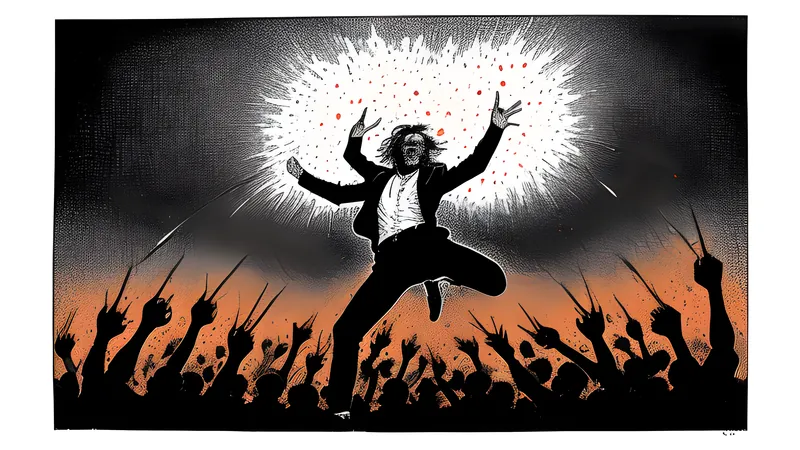
Recorded, Cult of Luna are impressive. Live, they’re something closer to a physical event. This is a band that understands a room the way a doom or drone act does — that the low end isn’t only heard, it’s felt in the sternum and the back teeth, and that a long quiet passage exists to make the loud one hurt.
I’ve caught them in a dark Copenhagen room where the whole floor went silent during the ambient stretches, everyone waiting, and then physically rocked back when the band dropped the weight in. That’s the trick they’ve spent twenty-odd years perfecting: the crowd stops being an audience and becomes a barometer, rising and falling with the pressure. When it works, it’s one of the most complete things live music does. When you’re not in the mood for patience, it can feel like watching paint dry with amplifiers — and the honest truth is that Cult of Luna are a band you have to meet halfway. They will not chase you.
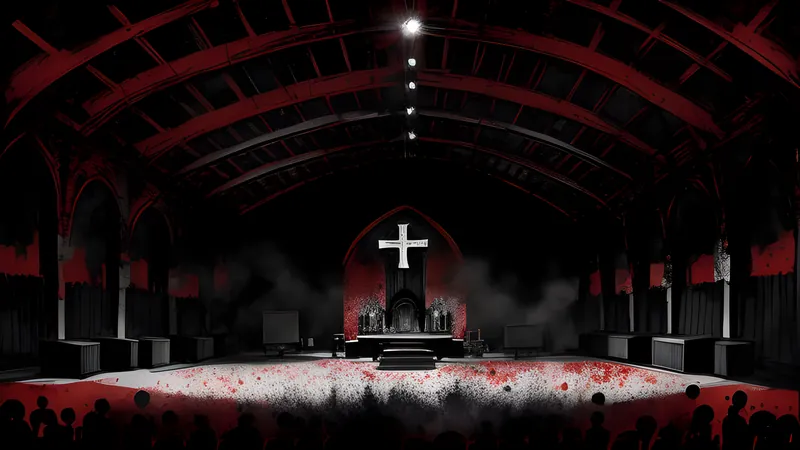
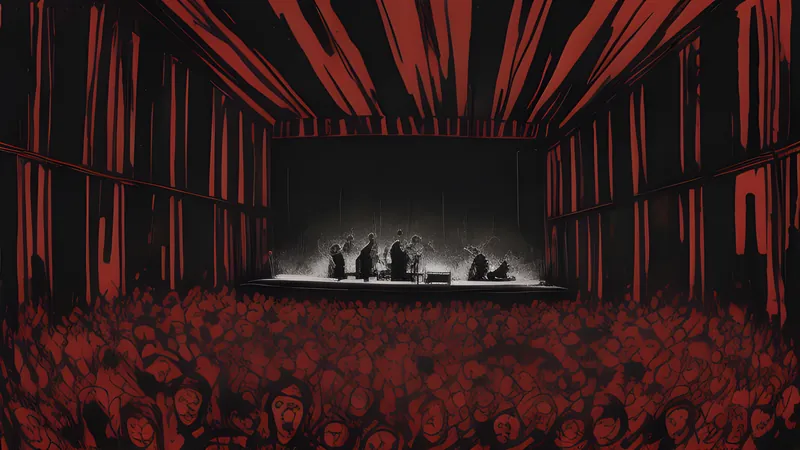
Their visual presentation matches the sound: minimal, backlit, often silhouetted against slow-moving projections, the seven of them arranged like machinery rather than rock stars mugging for the front row. There’s no banter to speak of, no “how you doing tonight” — the set is one long piece of theatre with the house lights kept firmly down.
The Roadburn connection, and finding your people
If there’s a spiritual home for this kind of music in Europe, it’s Roadburn in the Netherlands, the annual gathering in Tilburg that has become the world’s most important festival for doom, sludge, drone and the whole slow-and-heavy family. Cult of Luna are exactly the sort of band Roadburn was built to platform — too patient and too weird for a mainstream metal bill, revered by the specific crowd that lives for this stuff. Persson has deep ties to that curated, artist-led festival world, and if you want to see the band among their true congregation, that’s the ecosystem to look in.
Closer to home, the Danish rooms suit them. A band that trades in dynamics needs a space with real acoustics, which is why a properly designed room like VEGA in Copenhagen flatters them so much more than a boomy shed — every layer of that seven-piece wall stays legible instead of collapsing into mud. The difference a good room makes to a band this texturally dense is enormous; in the wrong space, half of what makes Cult of Luna Cult of Luna simply disappears into the low-frequency porridge.
The Mariner gamble, and knowing when to break your own rules
The best evidence that Cult of Luna are more than a one-trick monolith is Mariner, their 2016 collaboration with the American singer Julie Christmas. Everything about the band up to that point was controlled, architectural, male, monolithic — a machine that never let its guard down. Christmas is the opposite: a small, ferocious vocalist whose voice lurches from a childlike coo to a full-throated shriek within a single line, wildly unpredictable, impossible to tame. On paper it should have been a disaster.
Instead it produced one of the best records either party ever made. Christmas’s chaos scribbled all over the band’s clean concrete lines, and the contrast lit up both — her instability made their control feel like restraint rather than coldness, and their vastness gave her mania something enormous to climb. A conceptual journey through space, the album pushed the band somewhere they’d never have reached alone, and it proved a point about their discipline: a group this rigid could still take a genuine risk when the right collaborator turned up. Bands who never deviate from a formula rarely make anything this alive fifteen years in.
That willingness to complicate their own template runs through the rest of the catalogue too. Persson keeps side projects and offshoots running, and the parent band’s records rarely repeat themselves — Vertikal’s mechanical austerity is a different animal from the warmer, more expansive A Dawn to Fear, which in turn differs from the frostbitten The Long Road North. For a band whose reputation rests on doing one very specific thing extremely well, they’ve been quietly restless underneath, testing how much they can add — electronics, guest voices, longer form, more space — without losing the essential gravity that makes them Cult of Luna. The slow-moving storm keeps changing shape while it moves.
The case for patience
We live in a moment engineered for the opposite of what this band offers. Everything is a hook in the first three seconds, a drop, a chorus, skip, next. Cult of Luna are a standing argument against all of it — proof that a payoff you had to earn hits harder than one handed to you free. A twelve-minute song that spends nine minutes building is a bet that you’ll stay, and the reward for staying is a kind of catharsis that the quick hit can’t touch.
That’s the durable insight buried in this band’s whole approach. They come from a hardcore scene that valued intensity above all, and they figured out that intensity isn’t a matter of speed — it’s a matter of contrast, of holding tension until the release is unbearable. A small, cold town in the Swedish north taught seven people to be that patient, and the rest of the post-metal world has been chasing the standard ever since. If you’ve never given a band this much of your time, start with Somewhere Along the Highway, put it on loud, and don’t touch skip. The storm arrives when it arrives. That’s the deal, and it’s a good one.
Related Content