The Cotswold Olimpicks: Shin-Kicking and the World's Oldest Games
A Gloucestershire hilltop, a claim on the Olympic idea older than the modern Games, and two men kicking each other's shins until one falls over
Contents
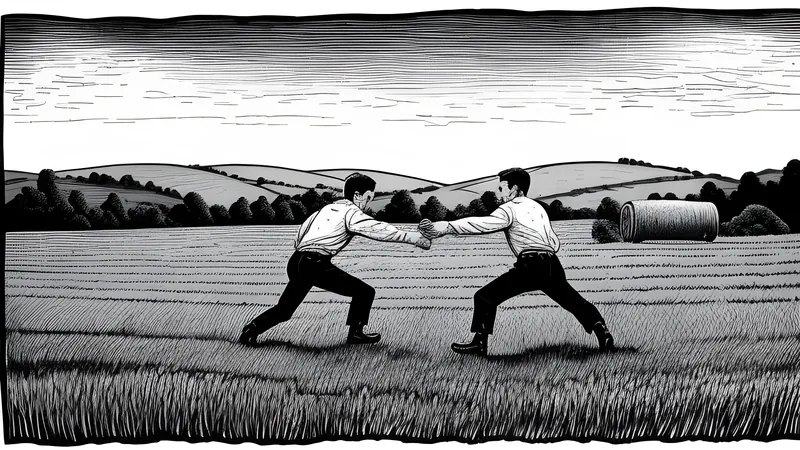
On a hill above Chipping Campden in Gloucestershire, once a year, two men grip each other by the collar, plant their feet, and kick each other in the shins until one of them falls over. There is a referee. There is a world championship. There is straw stuffed down the trousers as the only permitted protection, and there is a crowd on the slope roaring them on. This is the headline event of Robert Dover’s Cotswold Olimpick Games, an English folk gathering that has been running, on and off, since around 1612 — which gives it a straight-faced claim to being older than the modern Olympics by the better part of three centuries.
I write from Copenhagen, and I have not kicked, nor been kicked, on Dover’s Hill; this is a cultural read from across the North Sea, a Dane’s admiration for the specific genius of English rural daftness. But I’ve spent years documenting the strange gatherings of Europe, and the Cotswold Olimpicks are a jewel of the form — genuinely old, genuinely peculiar, and genuinely still going, with a shin-kicking world championship at the centre of it that nobody could have invented on purpose.
Robert Dover and the year 1612
The Games have a founder, a date and a story, which already sets them apart from the murkier folk customs where nobody can tell you where the cheese-rolling came from. Robert Dover was a lawyer — accounts usually say around 1575 to 1652 — living in the Cotswolds in the reign of James I, and it was he who organised, formalised and gave his name to an annual “Olimpick” games on the hill above Chipping Campden, from about 1612. The date matters and the spelling matters: this is deep in the seventeenth century, and Dover reached self-consciously back past the England of his own day to the ancient Greek idea of games, dressing his hilltop sports day in classical ambition and calling it Olimpick with a period flourish.
It was a real cultural act, not just a village fête. Dover’s Games were celebrated enough in their time that a collection of poems, Annalia Dubrensia, was published in 1636 by a string of writers — including some genuine literary names of the age — praising Dover and his hilltop festival. That’s an extraordinary footprint for a rural sports day. It tells you the Cotswold Olimpicks were understood, even four hundred years ago, as something more than a knees-up: a deliberate revival of the classical games idea, staged in an English meadow, celebrated in print. The modern International Olympic movement has itself acknowledged Dover’s Games as a forerunner of the Olympic idea — which is a remarkable thing for a hill in Gloucestershire to be able to say.
Why they stopped, and why they came back
Like most old English customs, the Games have a jagged history rather than an unbroken line, and the honest version is the more interesting one. They ran through the seventeenth century, were interrupted by the upheavals of the Civil War and the Puritan mood that took a dim view of that sort of exuberant public sport, revived at the Restoration, and rolled on in various forms into the nineteenth century. By the 1800s they had swollen and roughened — the event drew big, drunken, sometimes disorderly crowds off the back of railway excursions, and in a Victorian tidying-up mood the Games were suppressed around the middle of the century, closed down as more trouble than they were worth.
And then, as these things do, they came back. There were revivals tied to national celebrations, and the modern continuous run of the Games dates from the mid-twentieth century, organised by a local society that keeps the whole thing going. Britain being Britain, there was a particular flourish around 2012, when the country hosted the modern Olympics in London and the Cotswold event — the older, sillier, shin-kicking “Olimpick” with an i — got a well-earned moment of national attention as the ancient country cousin of the global spectacle. There is something perfect about that pairing: the vast, corporate, security-fenced London Games and, a couple of hours west, a hillside where the marquee event is still two blokes kicking each other in the legs. The Cotswolds got there first, by about four hundred years, and never once needed a sponsor.
When it happens, and the hill it happens on
The Games are held on the Friday evening after the Spring Bank Holiday — so late May or early June, the same corner of the calendar that gives Gloucestershire its other great folly, the cheese-rolling on Cooper’s Hill a few days earlier. The two events are near neighbours in both geography and spirit, and if you were a connoisseur of English hillside madness you could, in a single Bank Holiday week, watch people hurl themselves down a near-vertical slope after a Double Gloucester and then, days later, watch two more kick lumps out of each other’s shins on a different hill. Gloucestershire in late spring is, frankly, not to be trusted.
The venue is Dover’s Hill, a natural escarpment and grassy amphitheatre above Chipping Campden, with long views out over the Vale of Evesham — the land now looked after by the National Trust, which rather nicely means the hilltop where a seventeenth-century lawyer staged his classical games is a protected place you can walk any day of the year. The natural bowl of the hillside makes a ready-made grandstand, the crowd settling on the slope above the roped events below, and the whole thing has the feel of a village fête that happens to be four centuries old.
Shin-kicking, explained with the seriousness it deserves
Now, the shin-kicking. The World Shin-Kicking Championship is the event everyone comes for, and it is exactly as advertised and somehow more dignified than it sounds. Two competitors face off, take hold of each other by the collar or the shoulders — the grip is part of the sport, giving you the leverage to stay upright and the purchase to strike — and set about kicking each other in the shins while trying to throw the opponent to the ground. A bout is won by putting your opponent down; it’s run as knockout rounds under a referee (traditionally called a “stickler,” which is where the everyday word for a fussy rule-follower comes from), and there’s a champion crowned at the end.
The only concession to safety is straw. Competitors stuff their trouser legs with straw as padding, and in the old, harder days of the sport, before it was cleaned up, the tales run to men hardening their shins in advance and wearing boots with a wicked edge — a genuinely brutal business that put people out of action. The modern championship is a gentler affair, padded and refereed and played with a grin, though make no mistake, it still hurts, and the competitors still hobble. What I love about it is the deadpan technical seriousness underneath the absurdity: there’s real technique to the grip, the balance, the timing of a kick to unsettle rather than merely to hurt. It’s a proper wrestling sport that happens to involve kicking your opponent in the shins, and the people who win it have plainly practised.
I’ll keep to the Encore honesty line here, the way the desk demands: I wasn’t on the hill, so I won’t hand you a scene of a particular final or name a champion I watched fall. What the record makes clear is the shape of it — the collar-grip, the straw, the stickler, the knockout bouts, the winner — and the shape is glorious enough without embroidery.
Tug of war, the bonfire, and the torchlit walk home
Shin-kicking is the star, but the Games are a whole evening. Around it run the sort of events a seventeenth-century sports day and a modern country fête can happily share: tug of war, running and jumping contests, a spread of traditional country sports and daftness, and the general business of a big crowd on a warm hilltop with the light going long into the evening. It has the texture of the best folk gatherings, where the marquee spectacle is surrounded by a dozen smaller things people are having a go at.
And then the ending, which is the part that turns a sports day into something older and better. As the evening closes, the Games traditionally finish with a bonfire on the hill and a torchlit procession — the crowd walking down off Dover’s Hill and back into Chipping Campden by firelight, often folding straight into the town’s own Scuttlebrook Wake festivities the next day. Fire and a night walk down a hill: that’s the bit that connects the Cotswold Olimpicks to the deep vein of British calendar custom I keep circling back to. The torch-and-fire ending rhymes with the flaming barrels of Ottery St Mary in Devon and the fire-festival mood you find right across the islands — the sense that a proper gathering ends with the community carrying flame through the dark together.
Why the old, daft games matter
Set the Cotswold Olimpicks beside their cousins and you see the family clearly. The cheese-rolling at Cooper’s Hill is pure reckless gravity; the bog-snorkelling World Championships in Wales is cold Welsh deadpan, a peat trench and a pair of flippers played for the world title; the tar barrels of Ottery St Mary are flame carried through a Devon crowd. Every one of them is the sort of thing no committee handed a blank sheet would ever approve, and every one survives because it was inherited rather than invented, because stopping it would feel like tearing a page out of the place’s own character.
The Cotswold Olimpicks have the added distinction of that founding date and that classical ambition — a real man in 1612 looking back to ancient Greece and deciding his Gloucestershire hill deserved games of its own, and being taken seriously enough that poets put it in a book. Four hundred years on, the modern Olympics are a planetary industry of stadiums and sponsors and drug-testing labs, and the older Olimpick still runs on a National Trust hilltop with straw down its trousers. I know which one I’d rather stand on a slope and watch. Give me the hill above Chipping Campden, the long evening light, the crowd on the grass, and two people gripping each other’s collars for the world shin-kicking title — and the fire and the torchlit walk home when it’s done. The Games got there first. They’re still the truer article.
Related Content