Corpse Paint: A Short History of the Painted Face
From vaudeville shock to the black-metal uniform
Contents
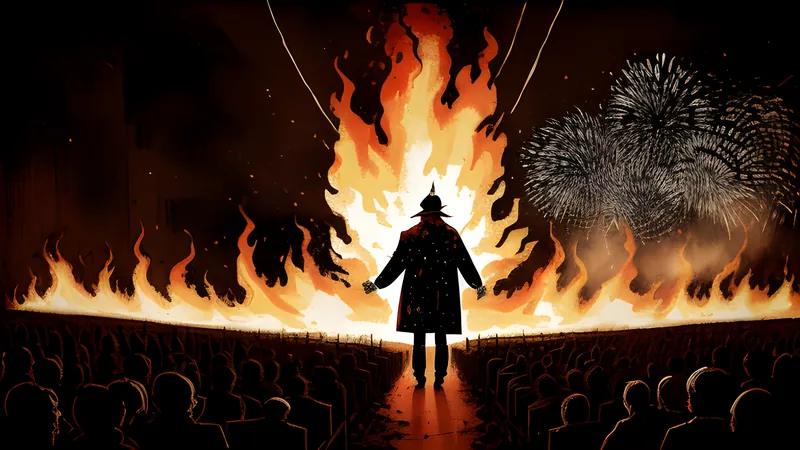
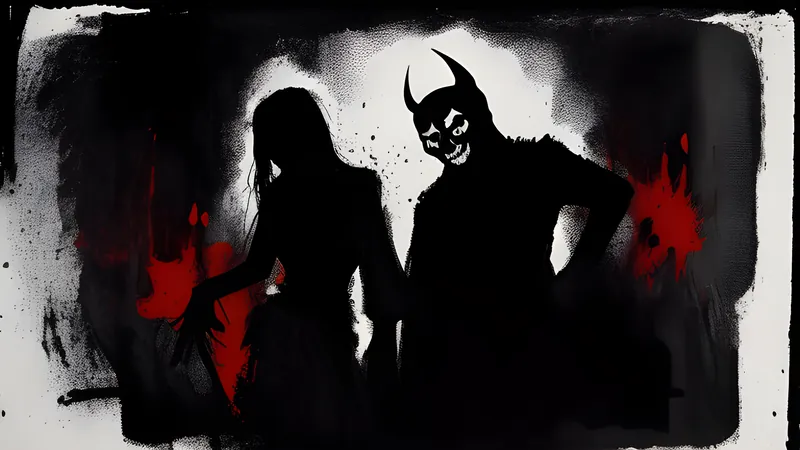
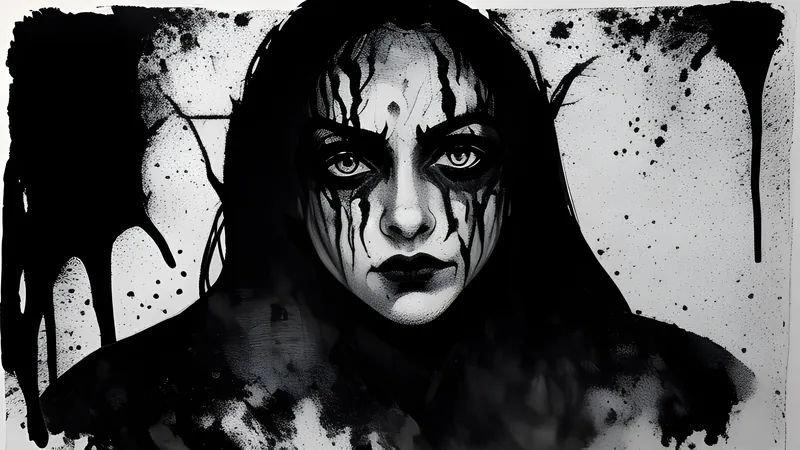
White greasepaint over the whole face, black sunk into the eye sockets and streaked down from the mouth, the living man rearranged into a skull. You have seen it a thousand times on a T-shirt and it has stopped meaning anything, which is exactly the problem worth unpicking. The painted face is one of the oldest tricks in loud music and one of the few that still land a punch when the lights drop.
I have watched a lot of bands walk onstage under white paint in the rooms around Copenhagen, from the sweat-fogged cellar of Loppen up to the big black box of Den Grå Hal, and the effect divides cleanly. Half the time it is a costume that a man is wearing. The other half it is a face that has replaced a face, and the difference between those two things is the whole history of the form.
Before it was scary it was showbiz
The mask did not arrive with metal. It arrived with vaudeville, greasepaint, and the long theatrical tradition of the painted grotesque, and the first rock acts to reach for it were pure entertainers. Arthur Brown, the English singer whose 1968 single “Fire” put a flaming helmet on the charts, performed with his face painted like a demon and understood exactly what he was doing: theatre, borrowed from the stage, aimed at a pop audience.
Alice Cooper took the same idea and industrialised it. The ragged black eye make-up, the guillotine, the boa constrictor, all of it was Detroit shock-rock built to sell tickets, and Cooper never pretended otherwise. He was a showman playing a character called Alice, and when the show ended the character went in a drawer. KISS then scaled that logic to the size of a stadium. Each member got a comic-book persona and a face design to match, the whole band a marketing department in Kabuki paint, and the make-up became a licensing empire before it became anything else.
So the painted face started life as commerce and spectacle. It said look at me, I am a performance. That is worth remembering, because what happened next was a deliberate refusal of everything Cooper and KISS stood for.
The Brazilians drew the map
The visual language that metal actually kept did not come from America. In July 1987 the Brazilian band Sarcófago released their debut album I.N.R.I., and the cover photograph — four young men in black-and-white face paint, bullet belts, spiked gauntlets, glaring out of the murk — is widely treated as the first fully-formed statement of what black metal would look like. It was extreme, ugly, and completely uninterested in charming anyone. The drummer, credited as D.D. Crazy, was also hammering out some of the earliest recorded blast beats on that same record, so a lot of the genre’s grammar arrives in one violent package.
Sarcófago mattered because their paint carried a different message from Cooper’s. This was not a persona you could take off and file away. It read as a corpse, a threat, a rejection of the living. The theatre was still theatre, but it had learned to hide the fact that it was theatre, and that concealment is the trick the next scene perfected.
Dead, and the word itself
The man who fixed the vocabulary was Swedish. Per Yngve Ohlin, who called himself Dead, saw the Sarcófago photographs and decided the paint should stop being make-up and start being a death mask. When he joined the Norwegian band Mayhem in 1988 he brought a specific and disturbing approach: green-tinged, meant to mimic decomposition, applied to look like a body that had been in the ground rather than a rock star at the mirror. He is generally credited with coining the term corpse paint itself. He buried his stage clothes so they would rot and reek. He was, by every account, entirely sincere, and that sincerity is the darkest and most important part of the story.
Dead died by his own hand in 1991, and the events that followed inside the Norwegian scene — the church burnings, the 1993 killing of Mayhem’s Euronymous by his bandmate Varg Vikernes — are documented criminal history and should be treated as such, with no glamour attached. I have written at more length about how that scene curdled in the Norwegian black metal piece. What concerns us here is narrower: by the early 1990s corpse paint had been welded to a set of ideas, and the paint carried those ideas whether the wearer meant them or not.
That is the codification. Immortal, Darkthrone, Emperor, Gorgoroth, Marduk — a whole cohort of Norwegian and Swedish bands standardised the look until it became a genre uniform. And here is the paradox. A mask invented to say I am no ordinary man became so common that it now says I am an ordinary black-metal band. The uniform did its job so well that it erased the shock it was built to deliver.
What the mask actually does
Strip away the history and a plain mechanical question remains: why paint a face at all? Having stood in enough front rows to feel it work and feel it fail, I think there are three separate jobs, and most bands only manage one.
The first is erasure. Full white paint flattens the specific human features — the slightly weak chin, the friendly eyes, the ordinary bloke who queued for a coffee an hour earlier — and turns a person into an archetype. A good corpse-paint face is anonymous and total. You cannot read a mood off it, which is deliberate, because a readable human face is warm and warmth is the enemy of dread.
The second is distance. Kabuki theatre, Venetian carnival, the whitened clowns of Commedia dell’arte — the painted face has long lifted a performer out of the everyday and into ritual space, and metal is drinking from that same well. The paint tells the room that what happens onstage is a rite, and you are to watch it as one. When it works the temperature of the crowd genuinely changes.
The third is armour. This is the one nobody admits. Paint is a hiding place. A shy, sensitive person can do enormous, ridiculous, frightening things from behind a mask that they could never do with their own face exposed, and a great deal of extreme performance is powered by exactly that permission. The paint is a licence to be someone else for forty-five minutes.
The look also spread far past its origin, which is part of why it wore out. By the 2000s corpse paint had leaked out of the strict black-metal underground into the mainstream theatrical end of the genre — Dimmu Borgir’s arena-sized symphonic spectacle, Behemoth’s elaborate ritual staging, Watain carrying the smell of it back toward genuine menace. Each generation had to reckon with the fact that the shock kept eroding, that a look invented to horrify had become a signifier you could buy at a merch stand. The scene developed its own tiresome arguments about who was “kvlt” enough to wear it and who was a poseur playing dress-up, which is what happens to any symbol once it becomes common enough to police.
When it works and when it is a Halloween costume
The failure mode is easy to spot from the pit. It fails when the man is visibly wearing it — when you can see the greasepaint sitting on the skin like a product, when the eyes behind it are pleased with themselves, when the paint is a decoration applied to a normal stage act rather than a transformation of it. At that point it reads as fancy dress, and a room full of people who have seen a thousand corpse-painted T-shirts will clock the fakery in about four seconds.
It works when the wearer commits so hard that the paint stops being a layer. King Diamond, the Danish singer whose black-and-white face has been a fixture since the early 1980s, is the local master of this, and I have gone into his particular theatre in the piece on Mercyful Fate. His paint stops being a decoration sitting on top of a normal act. The performance is built inside it, the falsetto and the candelabra and the whole staged séance moving as one thing, so that taking the make-up away would be like taking the melody away.
Contrast that with a movement that went the opposite direction entirely. The Gothenburg bands I wrote about in the Gothenburg sound built a whole aesthetic out of refusing the mask — clean production, ordinary clothes, faces you could see — and it made a fascinating negative-space argument. Take the paint away and you had better have the songs, because now there is nothing between the audience and the human being, and the human being had better be worth watching.
That, in the end, is the honest test of the painted face. It is a magnificent amplifier and a merciless one. On a great band it turns four musicians into something that genuinely raises the hair on your arms. On a mediocre one it just shows you, in white and black and streaked grey, exactly how little there was underneath.
Related Content