Copenhell: Building Hell on a Harbour
How a rusted shipyard became the loudest week in Denmark
Contents
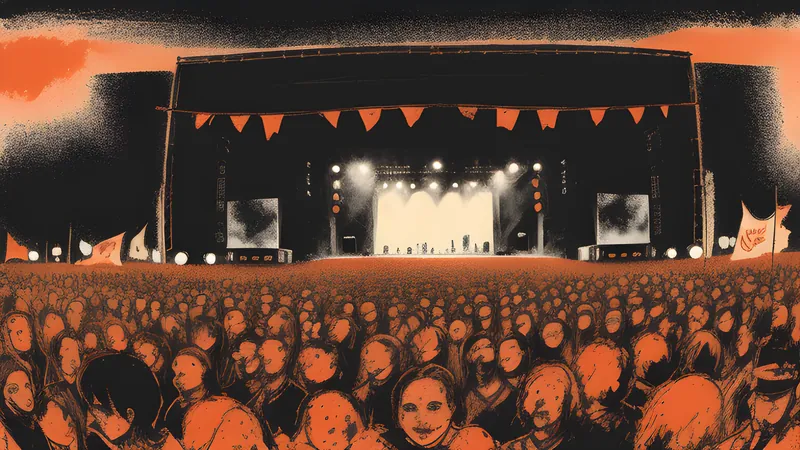
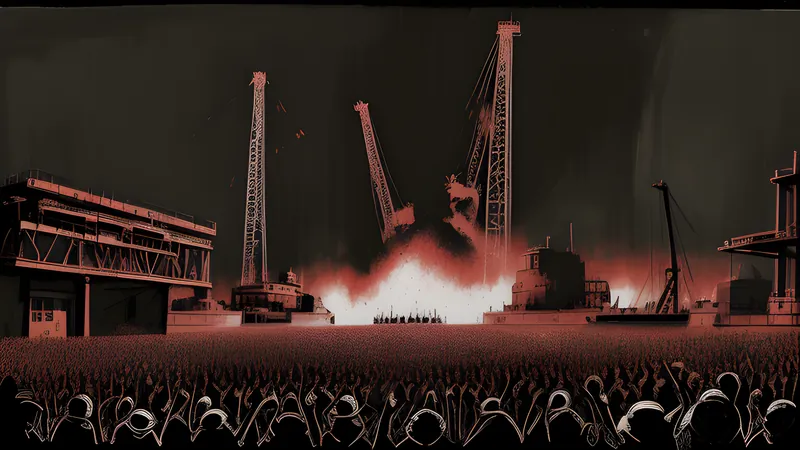
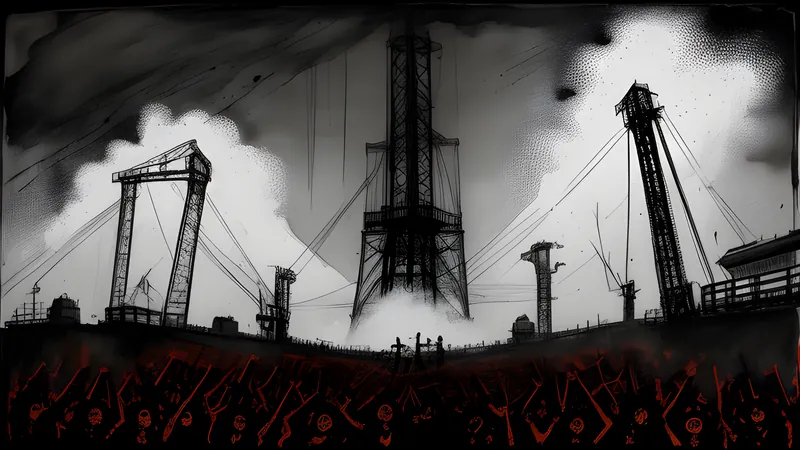
There is a moment on the walk out to Refshaleøen, somewhere past the last bus stop and the reclaimed-warehouse street-food hall, where the skyline stops being Copenhagen the postcard and starts being Copenhagen the working port. Gantry cranes stand against the water like the skeletons of something enormous. Concrete sheds sit with their windows knocked out. The ground is more gravel and old rail-track than grass. And then you hear it — a low, tectonic thud rolling across the harbour from a hangar that used to build ships — and you realise nobody had to decorate this festival to make it look like hell. The place did that all by itself, over a century, one rusting rivet at a time. Copenhell just plugged in and turned up.
The genius of a dead shipyard
Refshaleøen is a man-made spit of land on the eastern edge of Copenhagen’s harbour, and for the best part of a hundred years it was the home of Burmeister & Wain — B&W — one of the great Danish shipbuilders. When that industry collapsed the yard was left as a vast post-industrial carcass: warehouses, dry-dock scars, cranes, and the kind of open, contaminated, gloriously ugly ground that most cities either fence off or gentrify into glass flats.
Copenhell’s founders looked at all that rust and saw a stage set. Since the first edition in 2010 the festival has planted itself on exactly this ground, and the decision is close to a stroke of programming genius. A metal festival spends enormous effort trying to conjure atmosphere — the smoke, the skulls, the deliberately infernal iconography. Refshaleøen hands it over for free. The cranes loom without being asked to. The concrete sheds reverb like they were tuned for it. Walk between stages and you pass genuine industrial machinery going quietly to seed, and it all reads as production design because the aesthetic of heavy metal has always borrowed from exactly this world — the foundry, the workshop, the honest grime of things built by hand.
They leaned all the way in. The stages carry the theme without a wink: Helviti is the main stage, with Hades, Pandæmonium and Gehenna filling out the site as the festival grew. It could be naff. It absolutely should be naff. Somehow, standing on a real dead shipyard with 20,000 people in black t-shirts, it lands as sincere.
Getting out to the edge of the city
Half the character of Copenhell is that you have to travel to it while barely leaving town. Refshaleøen has no metro stop and never will; it is a spit sticking out into the water with one road on and off. Getting there is part of the ritual. Most people take a harbour bus or a shuttle from the city, and a huge share simply cycle — this being Copenhagen, the sight of a few thousand metalheads pedalling in formation across the bridges toward the festival, battle-jackets flapping, is one of the great small comedies of the European summer.
The upside of that geography is that Copenhell is genuinely in its city in a way most big festivals aren’t. Roskilde sits out on a plain west of town; Copenhell sits across the water from the Opera House, in full view of the skyline, a fifteen-minute ride from a proper hotel bed and a real shower. You can do the whole thing as a commuter — gig by day and night, home to sleep, back again — which quietly changes the whole texture of the crowd. This is a festival you can attend like an adult, if you want to.
The downside is that a spit of reclaimed land is exposed. The wind comes straight off the Øresund with nothing to break it, and mid-June in Denmark is a coin-toss between glorious northern light until eleven at night and horizontal Baltic drizzle that finds the gap in every waterproof you own. The ground, being old shipyard, turns from dust to grey slurry the instant it rains. Pack for both. Everyone who has done it more than once has learned this the wet way.
From a two-day punt to a fixture
Copenhell did not arrive fully formed. The first edition in 2010 was a modest two-day affair with a crowd in the low thousands, headlined by Megadeth and Deftones — respectable, but nobody’s idea of a European destination festival. What happened next is the interesting bit: it grew, steadily and without ever quite losing the plot, into one of the fixed points of the continental metal calendar.
The stages multiplied. The two-day format stretched — first to three days, then to the four-day monster it now is, running deep into June. And the headliners climbed the ladder from touring mid-card acts to the genuine apex of the genre. Over the years Copenhell has hosted the names you book a whole festival around: Metallica, Iron Maiden, Slipknot, Judas Priest, Slayer, Black Sabbath, Tool, plus Danish heroes Volbeat playing more or less to a home crowd. When Iron Maiden are announced at the top of your bill, you have stopped being a local curiosity and become a place bands route their summer around.
That climb is the story of the modern metal festival in miniature. There is a well-worn European circuit — Wacken in the German fields, Hellfest in western France, Roadburn for the doom faithful in the Netherlands — and Copenhell earned its place on that map by being the Nordic anchor. If you are a big touring metal band doing Europe in June, the Copenhagen harbour is now simply on the way.
The crowd, and the feeling
Danish festival crowds have a reputation, and Copenhell mostly earns the good half of it. This is a well-run, weirdly polite apocalypse. The pits are ferocious and the volume is a physical weather system, and yet the ambient mood is friendly to the point of being disarming — people apologise when they crash into you, then grin and do it again. There is a strong local contingent for whom this is the summer highlight, thickened each year by a growing international crowd who have clocked that a metal festival with clean water, working transport and a skyline view is a rare thing.
The food tells you where you are. Refshaleøen is also home to some of Copenhagen’s best street food, and Copenhell doesn’t fight that — you can eat genuinely well here, which after three days of festival catering elsewhere feels close to miraculous. There is a bar culture that is unmistakably Danish, all hygge somehow surviving inside a wall of down-tuned guitars. And there is the light: this far north in June the sky barely gets dark, so the headline sets play out under a strange bruised dusk that never quite commits to night. A band trying to summon darkness at half ten in the evening, floodlit by the sky itself, is one of the more surreal things Nordic geography does to heavy music.
What it costs — money, and creep
Here is where the honest part comes in. Copenhell is not the cheap punt it was in 2010, and pretending otherwise would insult anyone who has watched the ticket price march upward year on year. The festival is run under the Live Nation umbrella now, and it shows in the ways it always shows: sharper pricing, slicker sponsorship, the sense of a well-oiled machine where there used to be a scrappier operation. That is the trade every successful festival makes. You want Iron Maiden at the top of the bill; Iron Maiden costs money; the money comes from you.
Copenhagen itself does the rest of the damage. This is one of the most expensive cities in Europe, and a beer on the harbour reflects that with real conviction. Budget accordingly and the sting comes off; turn up expecting festival-field prices and you’ll spend the first afternoon in shock. The corporate polish is real and worth naming, but I’ll say this in its defence: the thing has scaled without hollowing out. The site is still a genuine dead shipyard, the theme is still played straight, and the crowd still feels like a scene rather than a demographic. Compare that with what happens to a lot of festivals at this size and Copenhell has held its nerve better than most. If you want to see the other model entirely — a festival that hands its profits to charity — its Danish sibling Roskilde is a fascinating counterweight, and the contrast between the two tells you almost everything about how festivals can be built.
Surviving four days on the rust
Practical, because the site demands it. Wear boots you don’t love, because the old shipyard ground will eat them. Bring layers for the harbour wind and full waterproofs for the Baltic’s mood swings, then bring sun cream anyway because the same weekend can serve you both. Hydrate like it’s a job — the northern sun is deceptively strong and the beer is deceptively expensive, so the water taps are your friend on every count.
Sort your transport before you’re tired. Cycling is the local move and by far the best one, but know your route back across the bridges before midnight fuzzes the details. If you’re staying in the city rather than at the on-site camping, you have the enormous luxury of a real bed — use it, and treat Copenhell as the rare big festival you can do without fully surrendering your dignity. And use the food. Refshaleøen’s street-food scene is a genuine asset; a proper meal between bands will keep you standing for the headliner in a way that a fourth sad festival burger never will.
For the days around it, remember the festival sits inside one of Europe’s great music cities. When Copenhell packs up, the noise doesn’t stop — Royal Arena handles the arena-scale tours and rooms like VEGA keep Copenhagen loud all year. A few extra days in town is never wasted.
The verdict
Copenhell is for the metalhead who wants the full genre catharsis without pretending to enjoy squalor. It is transcendent when the weather holds and a genuine legend is playing the Helviti stage under that impossible never-dark Nordic sky, cranes black against the water, 20,000 people moving as one organism on ground that spent a century building ships. It is the finest example going of a festival that let its location do the theming and got out of the way.
Skip it if your idea of metal requires mud, misery and a two-hour trudge from the car park to feel authentic — Copenhell is too well-run, too clean, too civic for that particular romance, and it won’t apologise for it. But if you want the loudest week in Denmark served on a rusted harbour with a real city at your back, book the flight. The shipyard has been waiting a hundred years to be this useful.
Related Content