Copenhell 2025: Is It Still a Metal Festival?
Slipknot, Billy Idol and The Prodigy walk into a shipyard — and the genre argument follows them in
Contents
Every June the argument comes back to the harbour like a tide, and in 2025 it arrived louder than the actual bands. Copenhell ran 18 to 21 June on the same rusted spit of reclaimed shipyard it always uses, out at Refshaleøen with the cranes standing black against the water. Slipknot topped the bill, which surprised nobody. But look down the poster and the eyebrows start to climb — Billy Idol, a snarling punk-pop survivor better known for sneering at MTV cameras than for double-kick drums; The Prodigy, a big-beat electronic act with barely a distorted guitar to their name; and Denmark’s own Dizzy Mizz Lizzy, a grunge-era power trio playing a fan-voted set of clean-toned alt-rock. Seventy-odd acts, and a decent slice of them would get thrown out of a purist’s record collection on sight. So the question that has been muttering around the beer tents for a few years now finally got asked out loud: is Copenhell still a metal festival, or has it quietly become a broad loud-music festival wearing metal’s leather jacket?
The poster that started the row
Let me lay out the exhibit before I argue about it. The 2025 headline tier was Slipknot on one night — masks, boiler suits, the full Iowa nightmare, and about as core-metal as a mainstage booking gets. Fine. Sacred. But Friday belonged to Billy Idol, sixty-nine years old and grinning like a man who has outlived every genre that tried to claim him, whose catalogue is pop-rock with a curled lip rather than anything a metalhead would file next to Slayer. And somewhere in the weekend The Prodigy detonated a set built on breakbeats and synth bass, a band whose entire lineage runs through rave and warehouse culture.
Then there’s Dizzy Mizz Lizzy, and this is the sly one. They’re a Copenhagen institution, a trio who were briefly the biggest thing in Danish rock in the mid-90s, and their sound is melodic alternative rock with a jazz-schooled bassist — accomplished, beloved, and about as heavy as a spring afternoon. Copenhell even ran a public vote on their setlist under a “By Request” banner, which is a lovely bit of home-crowd theatre and also, if you squint, the single least metal thing a metal festival has ever done. Fans picking the songs by ballot is festival-as-community-event. It is the opposite of the genre’s whole grim-refusal-to-compromise pose.
Add the deeper card — Dream Theater’s prog marathons, King Diamond’s falsetto horror-theatre, Kreator and In Flames keeping the extreme end honest, Powerwolf turning church organs into stadium camp — and you have a lineup that reaches from blast beats to Billy Idol’s Rebel Yell without blinking. That’s the spread. That’s the row.
The case that Copenhell sold out its own name
I’ll steelman the purists, because they aren’t idiots and their complaint has real weight. The word “Copenhell” is a promise. You call your festival hell, you dress a dead shipyard in the iconography of the underworld, you name your stages Helviti and Gehenna, and you are signing a contract with a very specific tribe. That tribe has watched this exact film before. A metal festival gets popular, a big promoter takes the wheel, and slowly the bookings drift toward whatever fills the most tickets — a legacy pop-punk name here, a nostalgia electronic act there — until one summer you look up and the mainstage is hosting acts your fourteen-year-old self would have sworn a blood oath against.
The fear has a name in Denmark, and it lives an hour’s drive away. Roskilde is the giant everyone measures against: a genuinely everything-festival where metal is one flavour among pop, hip-hop, dance and world music. Nobody at Copenhell wants to become a second Roskilde with slightly better corpse paint. And when the 2025 poster landed with Billy Idol and The Prodigy on it, the worry crystallised — is this the year the tent got so wide it stopped being a metal tent at all?
There’s a purity argument underneath that’s worth respecting. Metal earned its festivals the hard way, decades of being sneered at by the mainstream, building its own infrastructure because nobody else would book the bands. Wacken rose out of a German field on exactly that stubbornness; you can read how in Wacken. When a festival born of that defiance starts booking the very mainstream that once locked the genre out, some of the faithful feel the ground move. That’s not snobbery. That’s people who remember when the door was shut.
The case that this is exactly what keeps it alive
Now the other side, which happens to be the one I lean toward. Metal festivals have booked outsiders since forever, and the healthiest ones always did. Look at the actual history of the European circuit and the “pure” festival is mostly a fantasy. Even the German fields have hosted hard rock, punk, industrial and the odd baffling curveball for years. The genre has never been a sealed room; it grew by eating everything nearby — punk’s speed, prog’s ambition, electronic music’s low-end menace. The Prodigy, of all the 2025 bookings, are the least alien: a band whose aggression, volume and pit-inducing menace map onto metal’s physical experience almost perfectly, whatever the instruments underneath.
And Billy Idol? The man is a punk lifer with more genuine anti-authority mileage than half the nu-metal bands who’ll play the harbour this decade. Punk is metal’s sibling, raised in the same broke, angry house. Putting him on the Friday headline slot is a wider read of “loud music that means it” — and that read is generous, historically literate, and frankly more interesting than a bill of forty interchangeable melodic-death bands.
Dizzy Mizz Lizzy is the clincher for me, and here’s why. Booking a homegrown Danish trio and letting the crowd vote their setlist is Copenhell being a civic festival, a Copenhagen event as much as a metal one, planting a flag for local music in front of an international crowd. I wrote in the origin piece about how the festival’s masterstroke was letting a real dead shipyard do all the theming for free. The 2025 lineup is the same instinct pointed at the bookings — trust the place and the crowd to hold the identity, and you can afford to be adventurous with the poster. Denmark punches absurdly above its weight in heavy music, a story I got into in Little Country, Loud Export, and a festival that showcases that ecosystem rather than importing a generic international bill is doing the scene a favour.
What the harbour actually felt like
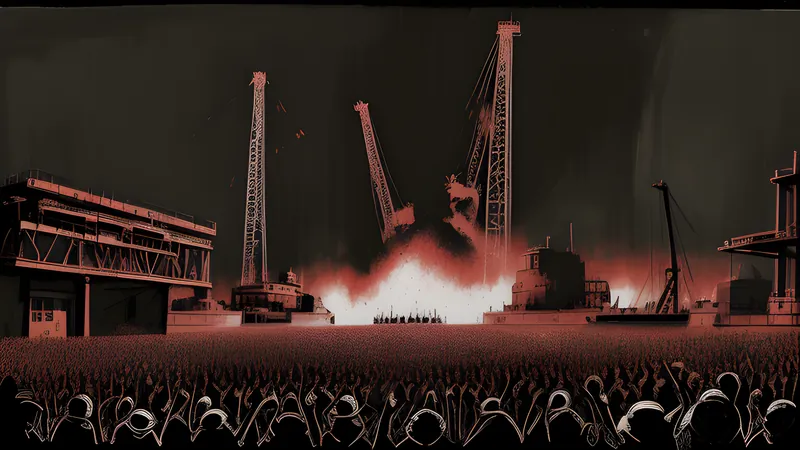
Persona texture, honestly flagged: I read this festival as a Copenhagen local who has walked out to Refshaleøen more than once, and the character of the place hasn’t shifted with the poster. The site is still the finest natural stage set in European festival-going — gantry cranes, concrete sheds, the Øresund wind coming straight off the water with nothing to break it. The stages still carry the underworld theme without a wink. The crowd still does that particular Danish thing where the pit is ferocious and the manners are impeccable, people apologising as they crash into you and then grinning and doing it again.
If anything, a wider lineup pulls a wider crowd, and that’s visible. There were people at the harbour in 2025 who came for Billy Idol and stayed for Kreator, which is precisely the cross-pollination a healthy scene needs — the punk fan who discovers thrash, the electronic head who clocks that a wall of downtuned guitar hits the same nerve as a bass drop. The gatekeeping instinct wants to seal that off. The festival’s instinct is to leave the gate open and see who wanders in. Over a weekend on the rust, the open gate wins every argument.
The economics haven’t softened, mind. Copenhell runs under the Live Nation umbrella and Copenhagen remains one of the most expensive cities in Europe; a harbour beer will still relieve you of a startling sum, and the four-day ticket is a serious outlay. That corporate polish is the real thing to keep an eye on — sharper pricing, slicker sponsorship, the machine-tooled feel that big-promoter scale always brings. If you want the anxiety about where all festivals are heading laid out in full, I did that in Why Every Festival Now Feels the Same. But I’d argue the diverse booking is the opposite of that homogenising drift. A festival that dares to headline a punk survivor, an electronic act and a fan-voted local trio in the same weekend is refusing to become a safe, sanded-down, identikit metal bill. The variety is the character.
The verdict on the genre question
So — is Copenhell still a metal festival? My honest read: yes, and the 2025 lineup is evidence for it rather than against. A genre so brittle it can’t survive Billy Idol playing down the road from Slipknot for one weekend was never as strong as its gatekeepers think. Metal has always been an omnivore, and the festivals that thrive are the ones confident enough to show it. The identity of Copenhell was never carried by the poster. It’s carried by the place, the volume, the never-dark Nordic sky over the Helviti stage, and a crowd that treats a rusted shipyard like a cathedral. Slipknot on the mainstage anchors it. The stranger bookings around them are the festival growing up without losing its nerve.
Would I hold the line somewhere? Sure. If a future edition tops the bill with a chart-pop act and no genuine heavy anchor, I’ll be first to say the tent finally collapsed. There’s a real point past which “broad loud music” stops meaning anything and the festival should just admit it’s a general summer event. Copenhell 2025 was nowhere near that line. It was a metal festival brave enough to book beyond metal, and it was better for it. If you want the purist experience with zero compromise, the doom faithful still have Roadburn and its uncut devotion. But if you want a festival that argues with itself in public and comes out the other side more alive, the harbour is exactly where you should be standing next June — with the 2026 edition already gathering, the argument, gloriously, is nowhere near settled.
Related Content