Copenhell 2024: Bigger, Broader, Louder
The year the harbour festival grew a hundred-band lineup and a wider church
Contents
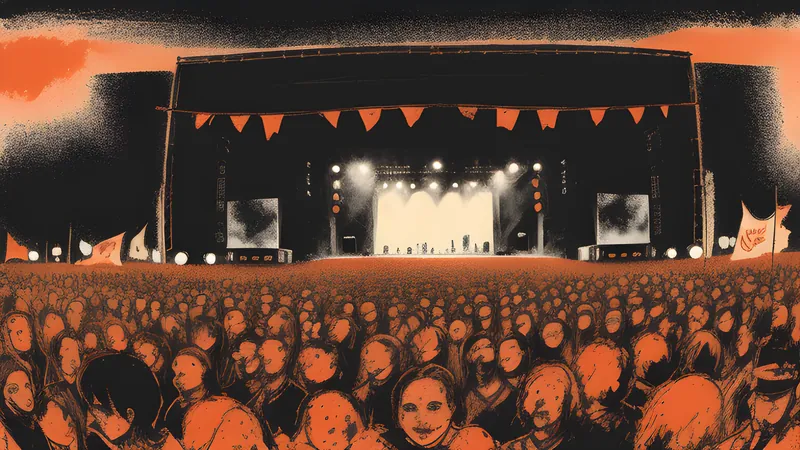
The programme for Copenhell 2024 landed like a phone book. You open the app to plan a single day and the clashes start almost immediately, because the festival that ran a two-day punt on a dead shipyard back in 2010 turned up this June — 19 to 22 — carrying north of a hundred acts across its stages, its camping village, its Biergarten and its side-corners. Tool at the top. Avenged Sevenfold and Limp Bizkit close behind. Machine Head, The Offspring, The Hives, Cradle of Filth, Mr. Bungle, Bruce Dickinson doing his solo turn, Tom Morello, Corey Taylor. That is not a metal festival lineup in the narrow 2010 sense. That is a small city of loud music parked on the edge of Copenhagen’s harbour, and the 2024 edition is the year the scale of the thing stopped being a subplot and became the headline.
A hundred bands and a wider church
The number is the story. Somewhere in the last few editions Copenhell crossed a line from “big Nordic metal festival” into the tier where the lineup is genuinely too large to see, and 2024 is where that becomes undeniable. A hundred-plus acts over four days means you are permanently choosing, permanently missing something, permanently hearing a set you love bleeding across the gravel from a stage you can’t get to in time. That is the texture of a festival at full machine scale, and Copenhagen’s harbour now runs it as smoothly as anywhere on the European circuit.
What that growth bought, beyond sheer volume, is breadth. The old Copenhell had a fairly tight genre spine — thrash, classic metal, the Danish heroes, a doom corner for the faithful. The 2024 bill spreads much further out. Tool headline as pure art-metal, the cerebral end of heavy, drawing a crowd that would happily skip half the rest of the site. Limp Bizkit arrive on the great nu-metal nostalgia wave that has swept festivals across the past few summers, turning a genre everyone spent two decades apologising for into a guaranteed field-filler. Avenged Sevenfold bring the arena-modern-metal audience. The Hives and The Offspring nod at the punk-and-alt flank. This is heavy music defined generously, and the harbour makes room for all of it.
Whether that width is a triumph or a dilution depends entirely on what you came for. If you want a festival that draws a hard line around “real” metal, the presence of a Limp Bizkit victory lap at the top of your weekend will read as a betrayal. If you accept that “heavy” has always been a broad, argumentative church, 2024 is Copenhell doing what successful festivals do to survive — booking the acts that actually move tickets in the year they’re moving them. The nu-metal revival is real, it is lucrative, and Copenhell rode it with no visible embarrassment.
The site holds, the ground still bites
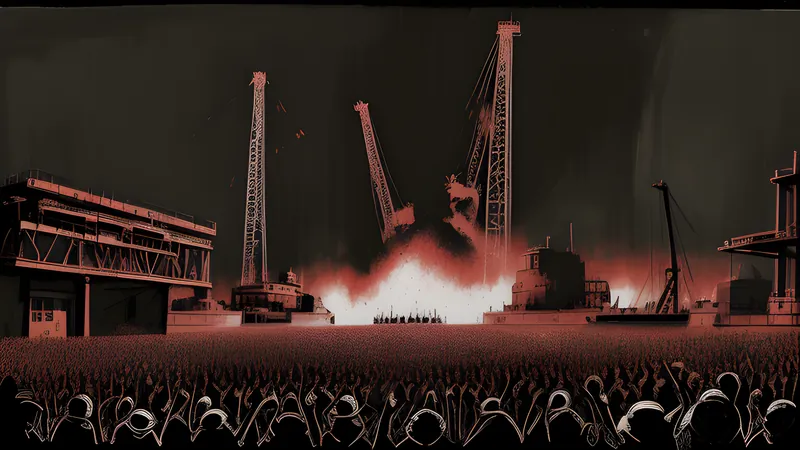
None of the growth has moved Copenhell off the thing that makes it itself: Refshaleøen, the man-made spit of reclaimed industrial land where Burmeister & Wain built ships for the best part of a century. The stages still carry the infernal theme without a wink — Helviti as the main stage, with Hades, Pandæmonium, Gehenna and the rest fanning out across ground that is more old rail-track and gravel than grass. The cranes still loom over the water without being asked to. I’ve written at length about why that dead shipyard is close to a stroke of programming genius in the original Copenhell piece; 2024 proves the site can absorb a far bigger festival without losing the atmosphere it gets for free.
The geography still shapes everything, including the ordeal of getting in. Refshaleøen has no metro stop and never will — it is a finger of land poking into the harbour with a single road on and off — so a hundred-band festival funnels its crowd through the same harbour buses, shuttles and, gloriously, bicycles that served the smaller version. The sight of a few thousand metalheads pedalling across the bridges in formation, battle-jackets flapping, remains one of the great small comedies of the European summer. At this scale, though, the pinch is real: more people, same single artery, and the walk from the last transport to the far stages is a proper hike. Budget the time.
And the ground still bites. A spit of exposed reclaimed land takes the wind straight off the Øresund with nothing to break it, and mid-June in Denmark swings between glorious northern light past eleven at night and a horizontal Baltic drizzle that turns old shipyard dust to grey slurry in minutes. Four days doubles your exposure to that coin-toss. Everyone who does Copenhell more than once learns to pack for both summers at once.
The crowd got bigger, and mostly kept its manners
Copenhell has long run what I think of as a weirdly polite apocalypse — ferocious pits, a volume you feel in your sternum, and an ambient mood so friendly it’s almost disarming. The question a hundred-band lineup raises is whether that survives the crowd size, because festivals often lose their manners exactly at the moment they gain their scale. In 2024 the good half of the reputation mostly held. The pits were as physical as ever and the site was fuller than I’ve felt it, and yet the Danish habit of apologising after they crash into you, then grinning and doing it again, was still doing its quiet work.
The broader lineup pulled a broader crowd, and you could read it on the ground. The nu-metal and modern-metal bookings brought a younger, more international contingent who have clocked that a heavy festival with clean water, working transport and a skyline view is a rare and civilised thing. Around them the old local core — for whom Copenhell is the fixed summer highlight — held its place. Two audiences overlapping on the same gravel, sometimes for the same band and sometimes politely swapping stages between them.
The food still tells you exactly where you are. Refshaleøen is home to some of Copenhagen’s best street food, and Copenhell leans on that rather than fighting it, so you can eat genuinely well between bands — which after four days of standing on rust matters more than it sounds. And the light does its unearthly thing regardless of how big the festival gets: this far north in June the sky barely commits to darkness, so Tool’s headline set plays out under a bruised never-quite-night dusk, floodlit by the sky itself. A band summoning darkness at half ten in the evening while the horizon glows behind them is one of the more surreal gifts Nordic geography hands to heavy music.
What the machine costs
Here is the honest reckoning, because a bigger festival is a more expensive one, and Copenhell 2024 will not pretend otherwise. Run under the Live Nation umbrella, it shows every sign of the full corporate operation — sharper pricing, slicker sponsorship, the feel of a well-oiled machine where a scrappier outfit used to be. That is the trade every festival makes on the way up. You want Tool and a hundred supporting acts; that costs an enormous amount of money; the money comes out of the ticket, the beer, the merch. Copenhagen itself finishes the job, being one of the priciest cities in Europe, so a harbour beer lands with real conviction and the whole weekend rewards anyone who budgeted like a grown-up.
The deeper question the 2024 edition raises is the one hanging over every festival at this size — the homogenising pull I dug into in Why Every Festival Now Feels the Same. When you scale to a hundred acts and book the exact revival waves that are filling fields everywhere else that summer, you risk becoming interchangeable, a venue-shaped container for whichever tour is hot. Copenhell’s defence is its address. The site is still a genuine dead shipyard, the theme is still played straight, the cranes are still real, and no amount of corporate polish can relocate the festival off ground that spent a century building ships. That physical specificity is the thing keeping it from dissolving into generic-big-festival, and in 2024 it’s doing a lot of load-bearing work.
For all my grumbling about the price and the polish, the growth has been managed with more nerve than most. Compare the arc across recent editions — the sharpening lineup of Copenhell 2023 and then this hundred-band expansion — and you see a festival scaling up while keeping its own face. If you want the opposite philosophy entirely, its Danish sibling Roskilde pours its profits into charity, and holding the two side by side tells you almost everything about how a big festival can choose to be built.
The verdict on the big year
Copenhell 2024 is the edition for the listener who wants heavy music in its widest, most generous definition and doesn’t mind paying big-machine prices for a big-machine festival. It’s transcendent when the weather holds and Tool are bending the never-dark sky over the Helviti stage, the cranes black against the water, tens of thousands moving as one organism on ground built for shipbuilding. The breadth is a genuine feature — you can spend four days here and construct a completely different festival from the person standing next to you.
Skip it, or at least brace for it, if the sight of a nu-metal nostalgia act closing a night on a metal bill offends your sense of the genre, or if you preferred the scrappier, cheaper, tighter Copenhell of a decade ago and can’t forgive it for growing up. The festival has become a large, polished, expensive operation, and it won’t apologise for that. When the harbour packs up, remember the city behind it keeps going — Royal Arena handles the arena tours that route through Copenhagen all year — so a few extra days in town is never wasted. But for the loudest, broadest week in Denmark, on a rusted spit with a real city at your back, 2024 was Copenhell at full size, and full size suits it more than it has any right to.
Related Content