Copenhell 2023: The Old Gods Return
The year Refshaleøen's metal harbour handed its main stage to the heritage-rock carousel
Contents
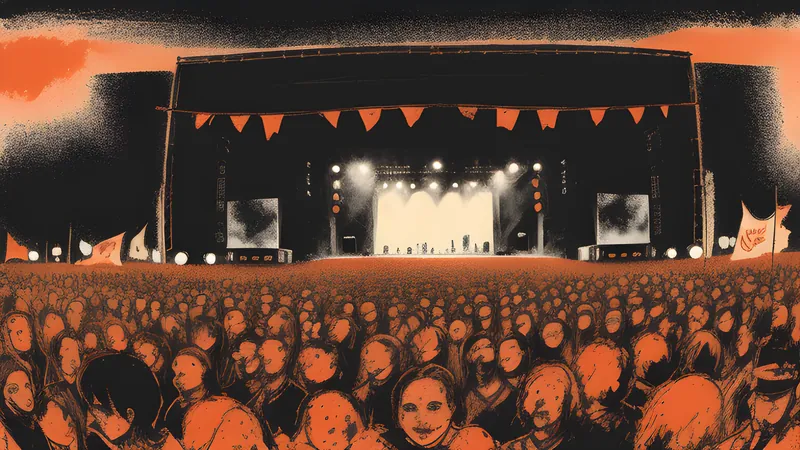
Refshaleøen is a spit of made land in Copenhagen harbour where they used to build ships, and for four days in the middle of June it becomes the loudest square kilometre in Scandinavia. I have walked in through that gate enough times now to know the feeling before it arrives: the cranes, the rust, the smell of harbour water and fried onions, the low pressure-drop in your chest as the first stage clears its throat. In 2023 the walk in felt the same. The bill at the top did not. Copenhell had gone and booked Guns N’ Roses, Mötley Crüe, Def Leppard and a version of Pantera — and a metal festival built on a very specific idea of itself had, for one edition, become something a good deal older and stranger.
This was the fourteenth Copenhell, running 14 to 17 June, and it is worth being honest about what it was: the year the reunion-tour machine parked its lorries on a harbour that had spent a decade insisting it stood for the heavy end. What follows is a read of that tension — what the place is, why the booking mattered, and what a festival looks like when it hands its biggest slots to the past.
The harbour that decided to be hell
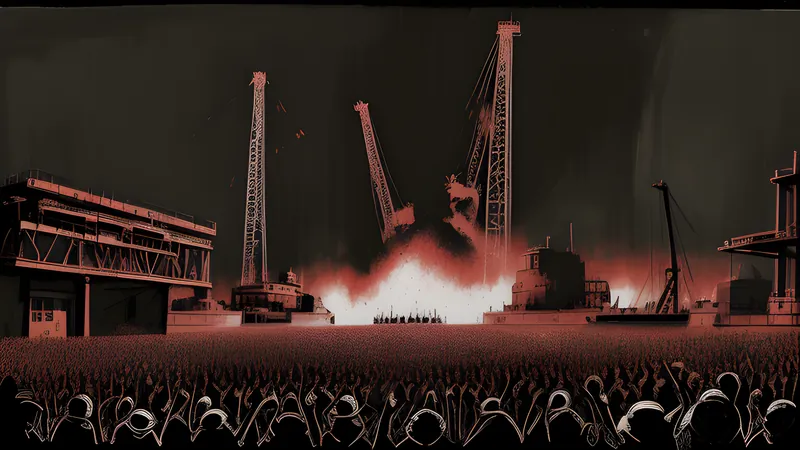
If you have never been, start with the full portrait of the site, because the geography is half the point. Copenhell has run on Refshaleøen since 2010, on the bones of the old B&W shipyard, and it is a Live Nation festival — corporate ownership, which the harbour’s grime does a good job of disguising until you look at the beer prices. The industrial dressing is not a costume bolted on. It is the actual leftover architecture of heavy work: gantries, a graving dock, a decommissioned crane the festival lights up like a totem. You could not design a better container for this music if you tried, and nobody did design it. It was just there, going to rust, until someone realised a shipyard is the correct shape for a metal festival.
The layout runs the stages down the water so that the biggest names close the night with the harbour behind them and the Copenhagen skyline across the channel. There is a mud problem when it rains and a dust problem when it doesn’t; 2023 leaned dry, which meant the fine grey grit of the yard got into everything — boots, teeth, the seams of the tent. Regulars know to pack for both. First-timers learn by Thursday.
The booking that changed the weather
Here is what shifted in 2023, and it shifted hard. For most of its life Copenhell has sold itself on the modern heavy canon — the Gojiras and Meshuggahs and Slipknots, the technical, the brutal, the young. The 2022 comeback edition, the first full run after the pandemic gap, was a release valve for exactly that crowd: two years of pent-up want, discharged into the harbour over four days.
2023 read differently from the moment the poster dropped. Guns N’ Roses at the top. Def Leppard and Mötley Crüe, touring together on their stadium package, dropped onto a metal festival’s main stage. A reunited Pantera — which is the polite word for it — with Phil Anselmo singing and Rex Brown on bass, the two surviving members, joined by Zakk Wylde and Charlie Benante standing in for the Abbott brothers, both dead. Kiss-era heritage rock, in other words, sharing a bill with the festival’s own base of Slipknot, Gojira, Meshuggah, Ghost.
That is not a small aesthetic wobble. That is a festival looking at the touring economy and deciding, for one year, to chase the biggest ticket-movers alive, most of whom are in their sixties and most of whom made their names before half the campsite was born. Architects and Nestor both fell off the bill to cancellation, which only sharpened the imbalance — the modern British metalcore slot gone, the classic-rock slot fully loaded.
The Pantera question, handled honestly
You cannot write about this edition and skate past the Pantera thing, so let me be careful with it, because this is where opinion and fact have to stay in separate lanes.
Fact: Dimebag Darrell Abbott was murdered on stage in 2004; his brother Vinnie Paul died in 2018. Fact: what toured in 2023 under the Pantera name was Anselmo and Brown with Wylde and Benante — a tribute in the shape of a reunion, blessed by the families and the estates. Everything past that is argument, and the argument ran hot all spring. Is it Pantera without the Abbotts? Is a stadium-sized memorial a cash-in or a wake? I have my view and I will give it to you as a view: Wylde is a generous enough player to honour the parts without impersonating Dime, and Benante hits like a man who grew up worshipping the records, and for the length of a set on a June evening in a shipyard it worked — as ritual, as a room full of people singing riffs at a hole where two brothers used to stand. Whether that should cost what a Pantera ticket now costs is a separate, colder question.
What I will not do is tell you a body count from the pit or a thing that happened in row three, because I did not measure it and neither did you, and the whole value of writing this desk depends on me not making that up. The set was documented; the emotion around it is a matter of public record and easy to read off the crowd. That is as far as the honest reporting goes.
What the heritage tilt costs, and what it buys
The reunion-tour economy is now a genuine force on European festival bills, and Copenhell 2023 was a case study in it. I have chewed on the general phenomenon at length — the way a legacy act’s live catalogue keeps touring after the thing that made it is gone, the séance economics of the reunion tour — and this edition was that essay made flesh, on a harbour, at volume.
The economics are brutal and simple. A heritage headliner sells tickets to two audiences at once: the lifers who were there the first time and will pay anything to be there for what might be the last, and the younger crowd who never got the chance and treat it as a bucket-list tick. That doubling is why promoters chase them, why the guarantees have gone stratospheric, and why a festival that trades on being heavy will still, when the sums are done, put four sixty-something rock bands above its own genre core. The money is real. So is the risk. When a festival’s biggest draws are all acts that could stop touring — or stop living — at any time, you are building your business on a carousel that is running down.
The wider drift is not unique to Copenhagen. I have argued that the big festivals are converging on the same handful of names because there are only so many acts left who can headline a field, and the legacy tier is a finite, ageing pool. Copenhell 2023 was Denmark’s turn to feed that machine. What it bought was a genuinely enormous weekend — near eighty artists across four days and four stages, a scale the festival had not run before. What it cost was a little of the thing that made Copenhell Copenhell: the sense that the harbour belonged to the modern heavy underground first and the nostalgia circuit second.
The crowd held the line
And yet — this is the part that surprised me — the crowd did not fracture the way the poster suggested it might. The base turned out for Slipknot and Gojira and Meshuggah with the usual ferocity, the pits opened on cue, and the leather-and-battle-vest lifers absorbed the Def Leppard set with more good humour than you would expect from people who nominally hate everything it stands for. Copenhell’s crowd has always been friendlier than its aesthetic — corpse paint and courtesy, mosh pits that stop dead to pick up a fallen stranger — and that culture is robust enough to hold a heritage-rock invasion without curdling. There is a version of this festival on paper that reads as a civil war between the trad-metal core and the classic-rock daytrippers. In the flesh it read as one big, dusty, cheerful congregation that happened to contain both.
Ghost sat interestingly in the middle of all this — a modern act built entirely from heritage-rock DNA, theatrical, catchy, aimed squarely at the exact overlap the whole bill was chasing. If you want a single band that explains why 2023 was booked the way it was, it was probably them.
Surviving it
Practical, because a festival read owes you this. Getting there is easy by Copenhagen standards: harbour buses and a long walk out onto the island, no car worth the bother, and the city itself a short hop back if you skip the on-site camping. The camping is functional and loud and close, which is the point; the food has crept upmarket over the years the way all Live Nation sites do, and the beer is priced like it knows you have nowhere else to buy it. Pack for dust and rain in the same bag. Bring earplugs and actually wear them — the harbour throws sound around hard and the closing acts do not hold back. Budget more than you think for four days, because the ancillary spend is where the corporate ownership makes its real money, well away from the ticket price.
If you want the counter-model — a big metal weekend run on a completely different philosophy — the German alternative is a village of under two thousand hosting eighty-odd thousand metalheads, community-woven where Copenhell is promoter-built. The two festivals are the two poles of how you can do this at scale, and seeing one sharpens what you think of the other.
Verdict
Copenhell 2023 was the year the old gods came to the harbour, and it was a hell of a spectacle — worth the ticket if you wanted to stand in a shipyard and watch the reunion economy at full tilt, with the modern heavy core still holding its own down the bill. For lifers of the trad-metal end it was a slightly compromised year: your festival, on loan to the nostalgia circuit for one summer. For everyone else it was maybe the last easy chance to see several of these acts standing up, and that is a real thing to weigh.
If Copenhell is one festival you do, the reunion-heavy editions are the loud, expensive, once-a-generation ones — go when the ghosts are in town and you have made your peace with what a séance costs. Go a leaner year if you want the harbour to sound like itself. Either way, wear the earplugs, and watch the crane light up over the water. Whatever they book, that never gets old.
Related Content