The Two Years Hell Stood Empty: Copenhell 2020–2021
Two cancelled Junes, a silent shipyard, and what happens to a scene when the noise just stops
Contents
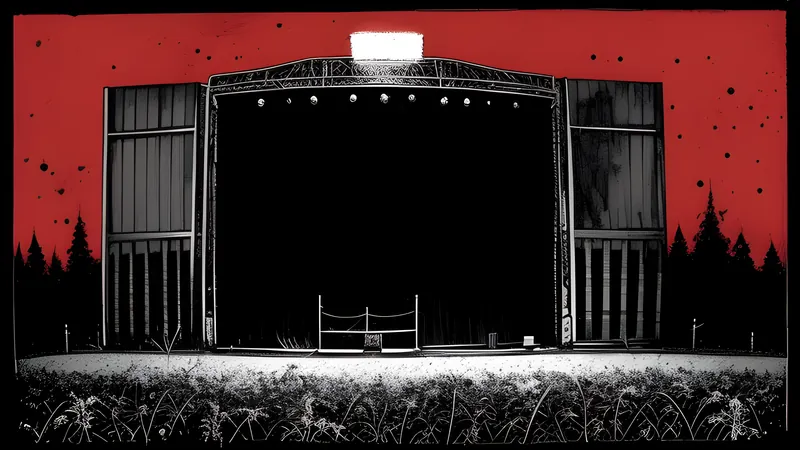
There is no gig to review here, and that absence is the whole point. For two Junes running, Copenhell did not happen. The gravel on Refshaleøen sat empty. The cranes stood over nothing. Two summers that should have been the loudest weekends of the Danish calendar passed in near-total silence, and this is a dispatch from the hole they left — the two years hell stood empty, and what a cancelled festival does to the scene that lives around it.
The dates that came and went
The facts are simple and grim. Copenhell 2020 was scheduled for the middle of June, the usual four-day shape on the old Copenhagen shipyard. It was cancelled in early April 2020, a few weeks after the pandemic shut Denmark down, when it became clear that no version of a festival packing tens of thousands of bodies onto a harbour spit was going to be legal or safe. Copenhell 2021 was pencilled in for the following June and met the same fate. Two editions, planned and then erased, tickets rolled forward, wristbands that refused to become real.
Live Nation, who run the festival, did the sensible administrative thing — pushed bookings forward, held the deposits, kept the machinery idling. But there is no administrative solution to the actual loss, which was not financial. It was the simple fact that for two years, the thing did not exist. You can reschedule a headliner. You cannot reschedule a June.
The uncertainty was its own slow torture. In early 2020 nobody knew whether this was a lost summer or a lost decade. Each cancellation came with a hopeful note about next year, and each next year had to be walked back in turn. Bands announced for the rolled-over editions quietly dropped off as their own touring plans collapsed. Ticket-holders sat on wristbands that kept being told they would be honoured at an event that kept not happening. The whole scene spent two years in a waiting room with no clock on the wall, and that not-knowing wore on people in a way a clean, single cancellation never would have.
A festival is a crowd, and the crowd was banned
Here is the thing that recorded music can never replace and streaming never came close to during those two years: a metal festival is a physical event before it is a musical one. The whole Copenhell proposition is bodies on hard ground — the pit, the wall of sound moving through your chest, the shared week of discomfort and sunburn and overpriced beer that turns a few thousand strangers into a temporary tribe. Take away the bodies and there is nothing left to reschedule. A festival with no crowd is just an empty field with cranes on it.
That is what made the silence specific. Other art forms adapted — films streamed, books sold, galleries did their virtual tours. Loud music, live and physical, had no substitute. There is no online version of standing shoulder to shoulder with forty thousand people while a headliner hits the first note and the whole shipyard roars back. Bands live-streamed sets from empty rooms and it was better than nothing, which is another way of saying it was nothing much. The point of this music is the room. During 2020 and 2021, the rooms were shut.
What the empty summers did to the scene
The damage ran deeper than two missing festivals, because a scene is an ecosystem and Copenhell sits at the top of a food chain. Underneath the festival is a year-round circuit of small Copenhagen rooms that keep loud music alive between Junes — the sweatbox at Loppen out in Christiania, the old-waterworks rock room at Pumpehuset, the best-sounding house in the city at VEGA. All of them went dark too. The clubs are where new bands cut their teeth, where the openers who eventually earn a Copenhell afternoon slot learn to hold a room. Shut the clubs for two years and you don’t just lose two years of gigs — you lose two years of bands getting good in public.
The people took the hit as hard as the venues. Sound engineers, tour crew, bar staff, the security teams, the local promoters — an entire working economy that exists to move loud air around a crowd, sitting idle. Some of them did not come back to the industry at all. A festival looks, from the crowd, like a spontaneous act of nature. It is actually a vast and fragile human operation, and two years of forced stillness thinned it out in ways the crowd only noticed later, when the queues moved slower and familiar faces behind the bars were gone.
There is a generational cost that is easy to miss too. A scene renews itself by a constant handover — teenagers walking into a small club for the first time, forming their first bad band in a garage, playing to eleven people on a Tuesday and slowly getting good. Two years of shut doors froze that handover. The kids who would have discovered live music at fifteen in 2020 instead spent those formative years in front of a screen. You cannot measure the bands that never formed or the lifelong gig-goers who never got hooked, but a scene that loses two years of new blood feels the gap a decade later, when a cohort that should be in the clubs simply is not there. The venues reopened. The missing years did not refill themselves.
The particular ache of Refshaleøen
I live in this city, and the strangeness of those two summers was hard to overstate. Copenhell is a genuinely urban festival — you can see it from across the harbour, you can cycle past the site. Most years, by mid-June, Refshaleøen is a low industrial rumble you can feel from the water, the whole east-harbour reorganised around the noise. In 2020 and 2021 you could ride out to the old shipyard on a June evening and hear the water slapping the concrete for nobody. The cranes that get dressed up as the gates of hell every summer just stood there being cranes. There is a specific melancholy to a festival site out of season, and it is worse when you know the season isn’t coming.
The Danish summer calendar has a shape, and loud music is part of its architecture. Roskilde went too, of course — the whole festival season collapsed, the big charity behemoth and the harbour metal festival alike. For a couple of years the summers had a hole in them exactly the size and shape of the thing that was supposed to fill them. You learned how much of your own year was quietly organised around a few loud weekends only once they were taken away.
For those of us who plan our summers around the festival grid, the effect was disorienting. June arrived and the body expected something the calendar refused to deliver — the pre-festival ritual of digging out the wellies and the earplugs, the group-chat logistics, the low hum of anticipation that builds for weeks. All of it just stopped, twice. You do not realise a festival is partly a clock, a way of marking the turn of the year, until the clock breaks. Two Junes ran on the calendar and nowhere else, and the strangeness of a silent midsummer in a city built around loud midsummers is hard to put into words for anyone who wasn’t standing in it.
The last full one, and the return
It helps to remember what got interrupted. The 2019 edition had been the healthiest Copenhell ever looked — a tenth-anniversary bill with Slipknot, Tool and Scorpions at the top, a deep undercard, a festival at full confidence. The plan was ordinary continuation into 2020. The machine was rolling. Then it stopped mid-stride, and the gap between that tenth edition and the next real one stretched to three years.
What made the wait bearable, in the end, was knowing something eventually had to give. Bands booked for the cancelled years didn’t evaporate — they got rolled forward, stacked up, dammed behind two years of impossible touring. When Copenhell finally reopened in June 2022, it came back with the strangest side-effect of the whole ordeal: a make-up bill built from a two-year backlog of headliners, Metallica and Maiden and Priest and Kiss all landing in one improbable weekend. That comeback, and the raw relief that came with it, is the story of Copenhell 2022: The Return — and it hit as hard as it did precisely because of the silence documented here.
Why the empty years matter
It would be easy to skip 2020 and 2021 in a festival’s history — two blank squares, nothing to report. But the silence was load-bearing. The two lost summers are the reason the 2022 return felt less like a festival and more like a scene getting its ground back. You cannot understand the emotion of that comeback without sitting first with the emptiness that preceded it: the shut clubs, the idled crews, the harbour water slapping the concrete for two Junes with nobody there to hear it.
The cranes stood over an empty gravel spit for two years. Then June came round again in 2022, and the sound returned all at once. This is the quiet chapter in between — the one with no bands and no crowd, the one that made the noise, when it finally came back, mean everything it did.
Related Content