Copenhell 2019: The Last One Before the Silence
Slipknot, Tool and Scorpions on the tenth edition — the last full Copenhell before two summers vanished
Contents
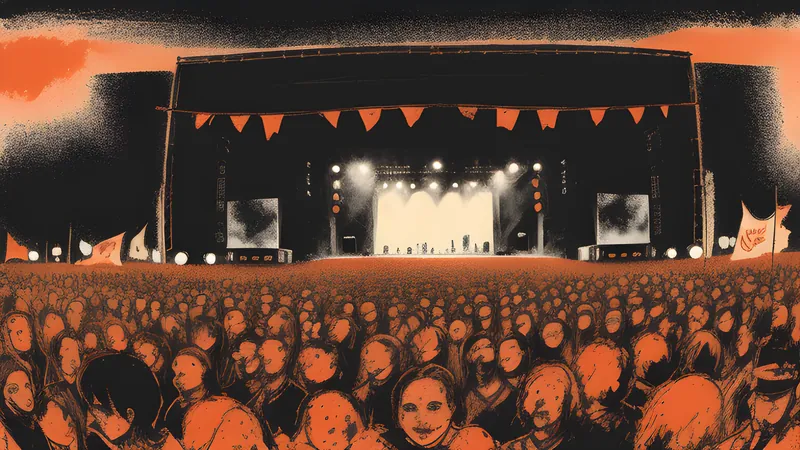
The tenth Copenhell landed in the middle of June 2019 and nobody in the crowd knew they were watching the end of an era. The festival ran its usual shape on Refshaleøen — a Wednesday warm-up feeding three main days that closed on Saturday 22 June — and it went in hard at the top, the way a festival does when it wants to mark a round number. Slipknot. Tool. Scorpions. A decade of building a metal festival on an old Copenhagen shipyard, capped with a bill that could stand next to anything in Europe. Then the gates shut on the Saturday night, and it would be three years before that ground made the same noise again.
Ten years of building hell
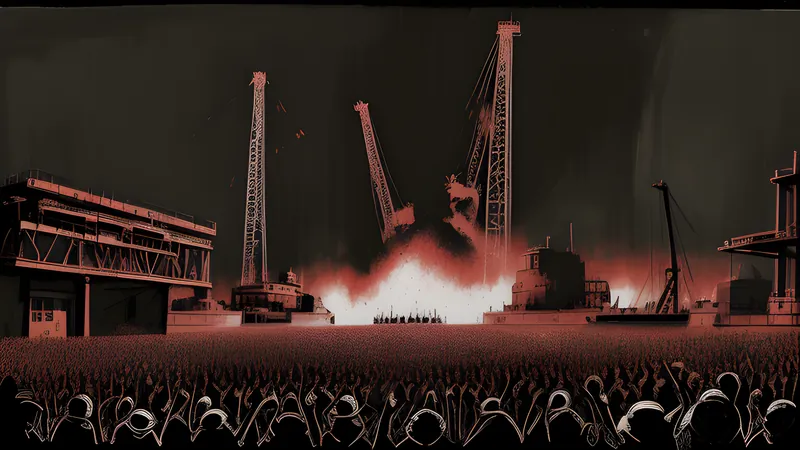
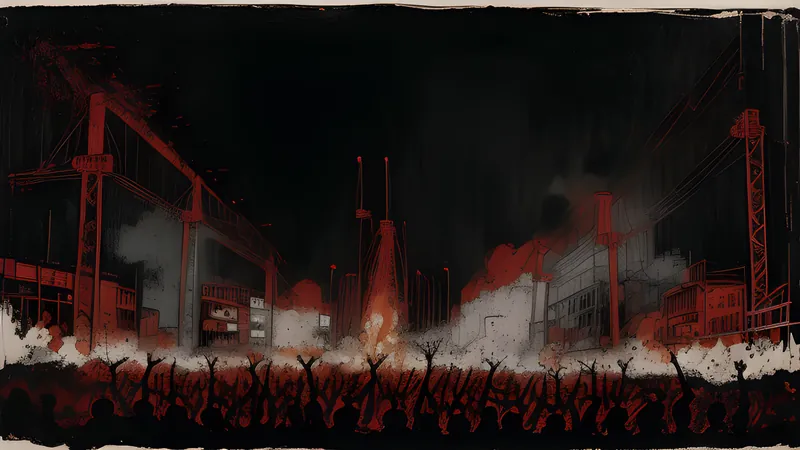
The anniversary hung over the weekend in a good way. Copenhell started small in 2010, a Danish gamble that a country better known for Roskilde’s broad-church liberalism could sustain a festival dedicated entirely to loud. By 2019 the answer was obvious. The festival had grown into a genuine European destination on a site that flatters heavy music better than almost any purpose-built field — the reclaimed Burmeister & Wain dockyard, all rusted cranes and industrial hulks, decorated with skulls and fire until the whole harbour spit reads like the last reel of a disaster film. Ten years in, the organisers had learned exactly how to use the place. For the full history of how that transformation happened, the Copenhell portrait is the foundation piece; this is the snapshot of the year it hit double digits.
The three at the top
Slipknot headlined as the mask-and-boilersuit machine they have refined into a stadium-grade spectacle, out ahead of the album that would arrive that August. A Slipknot set on the Helvíti stage is a controlled riot, and the Copenhell crowd — which skews younger and harder than a lot of European festivals — met it exactly the way it was built to be met. This is a festival that knows how to feed a pit, and the tenth-anniversary Friday delivered one. There is a machinery to a Slipknot show that reveals itself live in a way the records never quite capture: nine members moving as one percussive organism, the custom kits rising and spinning, the whole thing choreographed to within an inch of chaos and then let loose. On a shipyard rigged with real cranes and pyro, it is close to the platonic idea of what Copenhell is for.
Tool were the other modern headliner, and a very different animal — the cerebral, patient, visually obsessive Californians who make a festival crowd stand and stare as often as they make it move. Their sets are an act of concentration, all shifting time signatures and projected imagery, and dropping them onto a harbour full of restless metalheads is a gamble that pays off precisely because it is a gamble. On the tenth edition, in the year they finally broke a long album silence, having Tool on the poster was a statement about how serious Copenhell had become.
Tool are also famously strict about their crowd — the band’s aversion to phones and filming is well documented, and a Tool set is one of the few festival hours where you look out over a crowd watching with its eyes instead of through its screens. On a harbour that had spent a decade getting steadily more connected, that enforced attention landed like a small act of resistance. Whatever you think of the band’s twelve-minute build-ups and their air of self-seriousness, they command a field. Forty thousand people going quiet at once on an open shipyard is its own kind of loud.
And then Scorpions, the heritage anchor — the German hard-rock institution slotted in as the Saturday closer, the classic-rock spine for the older half of the crowd. Between the industrial menace of Slipknot, the art-rock density of Tool and the arena-anthem craft of Scorpions, the 2019 top line covered three entirely different ideas of what a headliner is. That range is the mark of a festival confident enough to trust its crowd across the whole spread.
It is worth appreciating how hard that spread is to pull off. A lot of festivals default to a single flavour at the top — three bands who all essentially do the same thing at slightly different volumes — because it is the safe way to sell a poster. Copenhell went the other direction on its tenth birthday and asked its crowd to swing from a boilersuit riot to a projected-visual trance to a stadium singalong across three nights. The bet only works if the audience is broad and loyal enough to show up for all three, and Copenhell’s is. That breadth is exactly the thing a decade of careful booking builds, and 2019 was the year it paid off most visibly.
Down the bill, where it counts
As ever, the weekend lived in the layers below the poster’s top edge. Rob Zombie brought the horror-carnival stagecraft. Halestorm carried the hard-rock crossover. Dimmu Borgir supplied the symphonic black-metal grandeur, and Eluveitie the folk-metal hurdy-gurdy churn that Copenhell crowds inexplicably adore in the afternoon sun. Demons & Wizards, Whitechapel and a deep bench of extreme acts kept the genuinely heavy flank fed.
The one worth marking, from a Danish chair, was down among the newer names: Alien Weaponry, the very young New Zealand band singing in te reo Māori, catching the festival on the way up. And the domestic contingent, the Danish and Nordic acts stacked through the early slots, doing the unglamorous work of proving the region still makes the next wave. A tenth-anniversary festival could have coasted on nostalgia. Copenhell 2019 still gave the openers the daylight and the stage, which is the tell of a festival that actually cares about the scene it sits inside rather than just harvesting it.
That Danish backbone is the thing worth understanding about Copenhell in any year. A country of under six million people has produced a heavy-music export record that outpaces its size — the eighties theatricality traced in King Diamond and Mercyful Fate, the arena-scale modern machine of Volbeat, the whole improbable phenomenon reckoned with in Little Country, Loud Export. Copenhell is where that lineage gets an annual home fixture, and the tenth edition kept feeding the pipeline even while three international headliners hogged the top of the poster. The early Danish slots on the 2019 bill were the openers who would, in an ordinary world, have graduated up the poster over the following couple of summers. The world turned out to be anything but ordinary.
What had shifted — and what was about to
Covering an edition means tracking the drift, and 2019’s drift was mostly upward and outward. The site was busier than the 2018 edition had been, the poster a notch more ambitious, the whole operation running with the smoothness of a festival that had done this nine times before. The prices kept climbing in the way Danish festival prices do; the token-bar economy stayed the standard advice to stop converting to your home currency around day two. The corporate machinery underneath had firmed up — this is a Live Nation festival now, run with the efficiency and the pricing that implies. None of that dented the weekend. It was the healthiest Copenhell had ever looked.
Which is the cruel part, in hindsight. Nobody standing on the gravel that June had any idea that the next Copenhell was three years away. The plan was ordinary continuation: 2020 booked for the following June, tickets moving, the machine rolling forward. Then the world shut, and the two editions that were supposed to follow this one simply did not happen.
The silence that followed
Copenhell 2020 was scheduled for mid-June and cancelled in early April 2020 as the pandemic closed everything. Copenhell 2021, pencilled in for the following June, went the same way. Two summers, the shipyard silent, the cranes standing over empty gravel. For a scene built entirely on the physical fact of bodies in a field, that was a specific and lasting kind of ache — the full weight of it is the subject of The Two Years Hell Stood Empty. The festival would not return until June 2022, and when it did it came back with a two-year backlog of headliners crammed into one absurd make-up bill, the story told in Copenhell 2022: The Return.
That is why the tenth edition reads differently now than it did at the time. In June 2019 it was simply a very good anniversary festival — Slipknot and Tool and Scorpions, a deep undercard, ten years of a Danish gamble paying off. Only afterwards did it become the last full Copenhell of the old world, the last normal June on the harbour before everything stopped. The people who were there got the last one before the silence, and they didn’t even know to be grateful for it. The cranes made their noise, three headliners closed out a decade, and then the harbour went quiet for a very long time.
Related Content