Copenhell 2018: Long Days on the Harbour
Ozzy on his farewell lap, a stacked undercard, and a festival growing into its own crowd
Contents
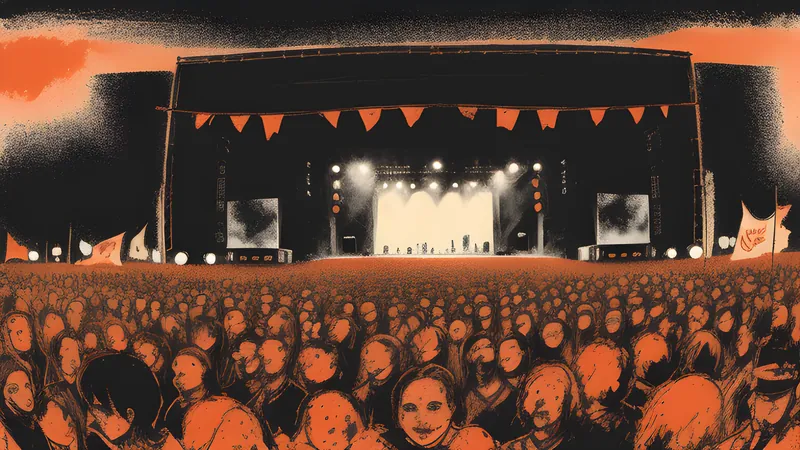
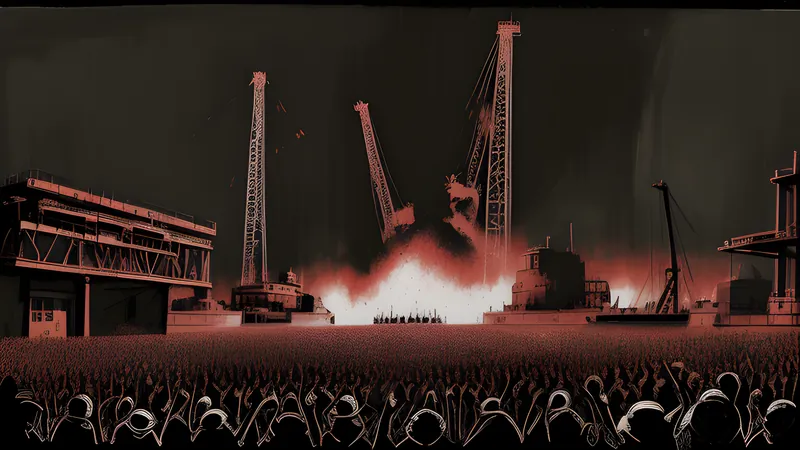
By its ninth edition Copenhell had stopped being a scrappy Danish upstart and started behaving like a fixture, and the 2018 bill was the year you could feel the change in your feet. The festival ran across the middle of June on Refshaleøen, the old Burmeister & Wain shipyard east of Copenhagen, with a Wednesday warm-up rolling into three main days that finished on Saturday 23 June. The cranes were where they always are. The gravel was the same grey grit it always is. What had grown was the crowd, the ambition of the poster, and the sense that this harbour spit could now land a genuine farewell-tour headliner and treat it as normal business.
Ozzy, on the long goodbye
The name at the top of the 2018 poster was Ozzy Osbourne, out on the road under the “No More Tours 2” banner — the farewell campaign that would stretch, in the way these things do, well past its own advertised ending. He played the Helvíti main stage on the Friday, Zakk Wylde beside him working the guitar theatrics, and a Danish crowd that had waited a long time for a proper Ozzy set on home gravel gave him the reception a departing legend is owed.
There is a specific weight to watching a man deliver the Sabbath canon on a stage ringed by real industrial cranes. Copenhell’s whole aesthetic is borrowed doom — a decommissioned dockyard already looks like the end of the world, so the organisers just hang skulls on what heavy industry left behind. Put the voice of “Iron Man” and “War Pigs” into that landscape and the setting does half the work before a note is played. The performance was what a late-period Ozzy set is: the songs carrying the night, the crowd supplying the volume, the whole thing running on a catalogue that half the bands on the smaller stages spent their sets quietly borrowing from.
Booking a farewell headliner is a particular kind of gamble, and Copenhell had reached the size where it could take that bet and shrug off the risk. A departing legend sells tickets to two crowds at once — the faithful who have followed the man for decades, and the younger heads who realise this is their one chance to see a founding figure while he is still on a stage. The festival got both. And there is a poignancy to a farewell set that a routine tour stop never carries: everyone in the field is doing the arithmetic of whether they will see this again, which sharpens the attention and quietens the phones. For a few songs, forty-odd thousand people were genuinely present rather than filming, which at a modern festival is its own small miracle.
The undercard that made the weekend
Copenhell has always understood that a festival lives or dies below the top line, and 2018 was deep. Ghost were mid-rise, a couple of years off the arena-filling peak they would soon reach, and their theatrical Swedish pomp landed on a Copenhell crowd that has a soft spot for a good bit of ritual staging. Nightwish brought the full symphonic-metal production. Avenged Sevenfold anchored the modern-mainstream end, and Alice in Chains carried the grunge-weight for the older heads who came up in the nineties.
Then there was the layer underneath, which is where a metal festival actually reveals itself. Deftones did the loud-and-textured thing they do better than almost anyone. Helloween ran the power-metal engine. Parkway Drive brought the metalcore surge that had been reshaping the festival’s younger crowd for a decade. W.A.S.P., Kreator, Arch Enemy, Satyricon and Sodom kept the genuinely extreme flank honest, and Steel Panther and Alestorm supplied the comedy the weekend needs so it doesn’t disappear up its own solemnity. You could spend a whole day at Copenhell 2018 without touching the main stage and still come away wrung out.
That depth is the quiet argument for why this festival works. A weak festival is a couple of huge names propped over a bill of filler, and the crowd drains to the main stage and stands around between headliners. Copenhell 2018 had the opposite problem, the good one: too much worth seeing at once, sets clashing across the site, the constant low-grade agony of choosing between Kreator’s thrash and something you’d never heard of two stages over that turned out to be the discovery of your weekend. The genuinely extreme acts mattered here more than they would at a broader-church event, because Copenhell’s crowd actually turns up for them in daylight. Satyricon and Sodom drew real crowds at hours when a more mainstream festival would have parked them in front of a field of empty grass.
What had shifted since last time
Because the point of covering an edition is the year-on-year drift, here it is. Copenhell 2017 had leaned on System of a Down at the top, with Slayer and Prophets of Rage and Five Finger Death Punch filling out the poster — a nu-metal-and-thrash weighting that pulled a particular crowd. The 2018 pivot to a classic-metal figurehead in Ozzy, propped up by the theatrical wing of Ghost and Nightwish, tilted the festival back toward heritage and spectacle. Both were strong years. The 2018 flavour was older, grander, more monument than mosh.
You could also feel the scale creeping. The site was busier, the queues at the harbour transport longer at turnout, the token-bar economy running at the sort of prices that make you stop converting to your home currency by day two. This is the slow tension every growing festival lives inside: the bigger the names it can afford, the bigger the crowd it must move across a finite tongue of reclaimed land. Copenhell handled it, mostly, the way it always has — by leaning on the fact that it is a genuinely urban festival with the city right across the water — but 2018 was the year the growth stopped being invisible. For the longer view of how a shipyard became northern Europe’s premier metal address, the Copenhell portrait traces the whole arc; this piece is the single snapshot of a festival mid-swell.
The Danish backbone
International headliners are the reason the tickets sell, and they are still the thing that matters least to what makes Copenhell distinct. The festival’s spine has always been the homegrown loud tradition, and 2018 kept feeding it. Satyricon carried the Norwegian black-metal flag next door to a Danish scene that grew up partly in its shadow. The smaller Danish and Nordic acts down the bill did the quiet, essential work of proving the region still produces the next wave.
That backbone is the thing worth understanding about this festival. A country of under six million people has produced a heavy-music export record that outpaces its size, from the eighties theatricality traced in King Diamond and Mercyful Fate to the arena-scale modern machine of Volbeat. The whole improbable phenomenon gets its own reckoning in Little Country, Loud Export. Copenhell is where that lineage gets an annual home fixture, and even in a year fronted by an American legend on his victory lap, the Danish thread ran right through the weekend.
Surviving four days on the gravel
A festival read that skips the logistics is doing you a disservice, so: Copenhell 2018 was a big, physically demanding stretch on hard ground with harbour wind arriving off the water with nothing to slow it down. Camping was the usual grim-but-communal endurance test. The beer was Danish-festival expensive. The harbour was charming right up until everyone tried to leave the site at the same time.
None of that is a complaint. Copenhell wants you weathered — the discomfort is load-bearing, part of what separates a shipyard weekend from a comfortable seated show in one of the city’s indoor rooms like the Royal Arena. What you pay in sore feet and pricey tokens, you get back in a festival that means its apocalypse. By 2018 that trade was more expensive than it had been a few years earlier, and worth it anyway.
The edition it was
Copenhell 2018 was the year the festival looked, walked and charged like a major European metal destination and pulled it off. Ozzy gave it a headline the whole continent noticed. The undercard gave it depth you could get lost in. And the growth gave it the first real ache of a festival that had gotten big enough to feel crowded on its own ground.
It would run one more edition on this trajectory before the world stopped. The 2019 bill would go even harder at the top, as covered in Copenhell 2019: The Last One Before the Silence — and then two summers would vanish. Standing on the gravel in June 2018, nobody knew that. It was just a very long, very loud few days on a harbour that does hell better than anywhere, with a departing legend at the top and a whole scene proving it was still healthy underneath him.
Related Content