Copenhell 2015: The Year I Finally Went
Four years in Copenhagen before I walked onto the shipyard, and Slipknot closing the harbour made me feel like an idiot for waiting
Contents
I moved to Copenhagen in 2011 and let four summers of the city’s own metal festival go past before I bought a ticket. There is no good excuse for that. Copenhell had been running on Refshaleøen since 2010, a twenty-minute harbour bus from my flat, and every June I found a reason to be somewhere else — Roskilde, a wedding, the flat, laziness dressed up as scheduling. Then June 2015 came round and I finally walked through the gate onto that old shipyard, and by the time Slipknot closed the main stage on the Saturday I understood exactly what I’d been skipping. This is a read of my first Copenhell, the one that turned me into a regular, and the specific ways the place gets its hooks in.
The walk in
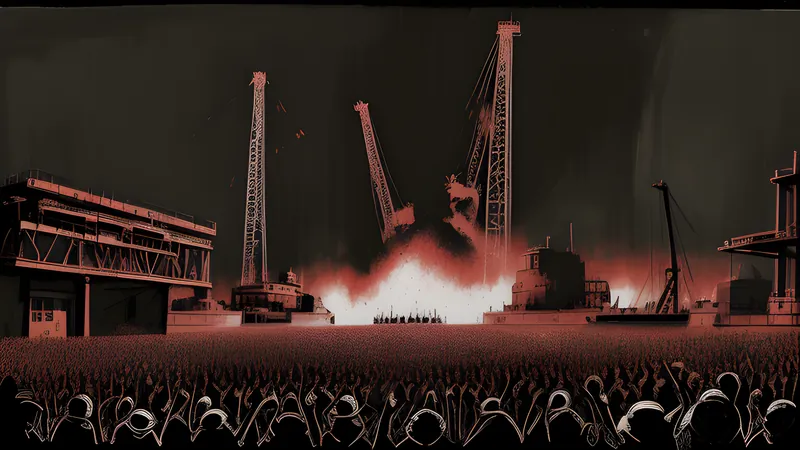
You approach Copenhell across water, which sets the whole thing up before a single band plays. Refshaleøen is a flat spit of reclaimed land east of the centre where Burmeister & Wain built ships for a century, and you get there by harbour bus or bike, watching the city recede behind you and the cranes rise up ahead. By the time you’re through the gate the transition has already done its work — you’ve left Copenhagen proper and arrived somewhere that looks like the industrial afterlife.
That landscape is the festival’s entire identity, and I’d underestimated it from a distance. The rusted gantry cranes are real cranes. The hulking sheds ringing the site made marine diesel engines within living memory. When the organisers drape the place in skulls and christen the stages Helvíti and Hades, they’re decorating a location that already looks like the end of something. Most festivals truck in their apocalypse as scaffolding and hire; Copenhell inherited a working one. I’d read that line before I went and assumed it was marketing. It isn’t. You feel it in your chest walking in. The full story of how a decommissioned shipyard became northern Europe’s premier metal address is worth the detour through the Copenhell overview; what I want to record here is the year the place converted me.
The bill I’d been ignoring
Copenhell 2015 ran Thursday 18 to Saturday 20 June, three days, and the lineup was the thing that finally shamed me into going. Slipknot were the Saturday headliner, touring behind .5: The Gray Chapter, their first album after the death of bassist Paul Gray, and a Slipknot main-stage set is a machine built for exactly this kind of dusk-on-a-shipyard slot. Nine masked men, a stage that moves, a crowd that turns into one organism the moment the intro tape rolls. I’d seen the band on video a hundred times and never live, and the difference between those two things is the difference between reading about weather and standing in it.
Primus brought their particular strain of warped, bass-led weirdness — Les Claypool playing an instrument the way nobody else on the bill would dare — and Ghost, still ascending in 2015, filled the early-evening slot with the theatrical Swedish occult-pop that would make them arena-sized within a few years. Watching Ghost that low on the poster now feels like catching a band on the exact upswing. Kreator supplied the German thrash backbone, fast and precise and merciless. Rise Against carried the melodic-hardcore contingent. That top tier alone would have justified the ticket, and I’d let four of these bills go past unwatched.
Deeper down the poster is where a first-timer learns what Copenhell actually curates. Gojira, the French band who were quietly becoming one of the most important heavy acts on earth, played a set that flattened me — precise, elemental, the sound of the planet’s tectonics turned into riffs. At The Gates, the Swedish melodic-death originators, reminded everyone where a whole genre’s DNA came from. Suicidal Tendencies turned their slot into a crossover-thrash circus. Cannibal Corpse did what Cannibal Corpse do. Body Count, Ice-T’s metal project, arrived with the confrontational energy the name promises. And scattered through the smaller stages were the Danish and Nordic acts — Bloodbath, Horned Almighty, Solbrud, Huldre — that make Copenhell feel like a local scene throwing a party rather than an import fair.
What the site does to you
Here is the thing nobody tells you about Copenhell until you’ve done a day of it: the ground fights back. Refshaleøen is compacted grey dockyard grit, and the harbour means weather arrives off open water with nothing to slow it down. You feel the site in your feet and your lower back by the second afternoon. I turned up in 2015 dressed like I was going to a park and learned the lesson the shipyard teaches everyone once — proper boots, a layer for the wind, and a strategy for the fact that the sun over a Danish June evening barely bothers to set, so the “night” sets play in a strange grey half-light that suits the whole aesthetic perfectly.
The trade-off for the hard ground is that Copenhell is genuinely in its city in a way rural mega-festivals never manage. You can see central Copenhagen across the water from the site. When the bands aren’t playing you’re twenty minutes from a proper meal and a real bed if you want one, which after years of Roskilde’s mud-and-tent totality felt almost like cheating. The city’s indoor rooms do the comfortable version of live music — VEGA a short ride away is as good-sounding a room as Denmark has — and Copenhell is the deliberate opposite: weather, grit, distance, endurance. That contrast is the point. You submit to the shipyard on purpose.
The scale in 2015 was still human. This was years before the festival ballooned toward the forty-thousand-strong four-day monster it would become, and there was a looseness to it — shorter queues, room to move between stages, the feeling of a thing that had found its identity but not yet its full commercial size. Live Nation’s ownership and the corporate scale-up that later editions would grapple with hadn’t yet flattened the edges. If you want to see how big and how polished this same festival got, the 2022 comeback is the far end of the arc — a stacked, sold-out, four-day machine. In 2015 it was leaner, cheaper, and a little wilder for it.
The set that made the decision for me
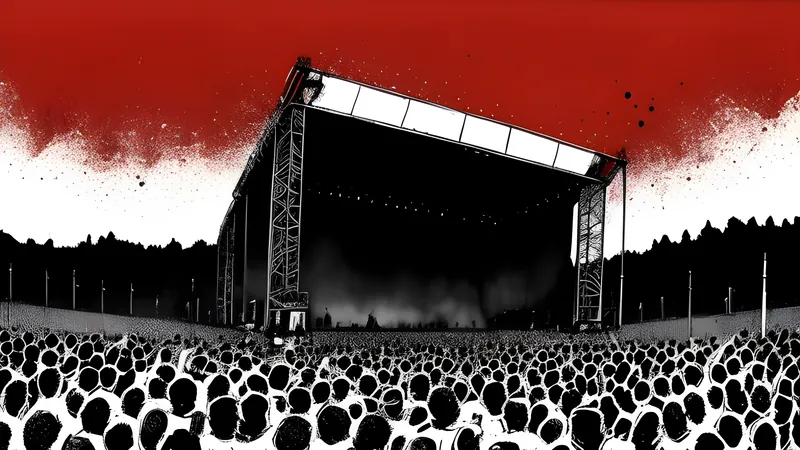
Every convert has a moment, and mine was Slipknot on the Saturday. Not because it was a surprise — everyone knew what a Slipknot headline set was — but because the site and the band and the light all arrived at once. The harbour wind had dropped. The grey Nordic dusk sat over the cranes. And a crowd of thousands who’d spent three days getting weathered together detonated on the first note in a way that recorded music simply cannot reproduce. That’s the thing I’d been denying myself for four summers: the physical fact of a big crowd hitting a big song together, in a landscape built for exactly this.
I’ve written elsewhere about what the mosh pit is actually for, and a headline set on the Helvíti stage is the largest-scale version of the same argument — thousands of strangers agreeing, for the length of a song, to be one thing. Slipknot are engineered for it. But honestly the sets that stayed with me longest were further down: Gojira’s tectonic precision, Ghost catching the exact moment before their ascent, At The Gates handing the crowd a genre’s origin story. A good festival gives you the headliner you paid for and the discovery you didn’t know you needed, and Copenhell 2015 did both.
That Denmark can host a festival this size and still field homegrown legends on the bill is a story in itself — the country’s improbable metal output is the subject of Little Country, Loud Export, and standing on that shipyard watching Danish and Nordic bands hold their own against the internationals was the argument made physical.
Why I stopped waiting
I went home from Copenhell 2015 with ruined boots, a wrecked voice and the specific irritation of someone who’s realised they’ve been an idiot for years. The festival had been sitting there the whole time, twenty minutes across the harbour, and I’d let four Junes go by. From 2015 on I didn’t miss one until the pandemic took the choice away.
Who is this festival for? Anyone who wants their metal served in an industrial landscape that actually means it, in a city you can enjoy when the bands aren’t playing. When does it work? When the harbour wind drops, the grey light sits over the cranes, and a headliner turns a weathered crowd into one moving thing. When do you skip it? When your feet or your patience have hard limits — this is real ground and real endurance, and no amount of good weather makes it a soft weekend. My only regret about 2015 is that it wasn’t 2011. If you’re standing where I stood — living in the city, finding reasons — stop finding them. The cranes are waiting.
Related Content