Converge: Hardcore's Enduring Standard
Four men from Massachusetts who set the benchmark for chaos with a shape
Contents
There is a particular sound that Converge make when all four of them hit at once, and it is difficult to describe to anyone who has not stood in front of it. Imagine a car crash that has been rehearsed to the millisecond, all the violence and none of the randomness, chaos delivered with the precision of a Swiss watch. For more than three decades this band from Salem, Massachusetts have been making that sound, and in the process they became the fixed point that every serious heavy band since is quietly measured against. When people argue about the best live band in heavy music, Converge is the name that ends the argument.
The long apprenticeship
Converge formed in 1990, which makes them older than most of the genres they get filed under. The classic and current line-up locked in over the following decade: Jacob Bannon on vocals, Kurt Ballou on guitar, Nate Newton on bass and Ben Koller on drums, a four-piece that has now been playing together long enough to operate as a single reflex. Their early years were the standard hardcore grind of split releases, tiny tours and constant lineup churn before the core settled, and the long apprenticeship shows in how completely they command the form now.
The transformation into a landmark band happened in 2001 with Jane Doe, still their defining statement and one of the most important heavy records of its era. It took the aggression and speed of hardcore, fed it through the dissonance and complexity that would later get labelled “mathcore”, and wrapped the whole thing in genuine emotional devastation. The album is essentially a breakup record played as an act of violence, and its cover — Bannon’s stark illustration of a woman’s face — became one of the most recognisable images in underground heavy music, tattooed on more forearms than any of the band could count.
Chaos with a shape
The word that gets used for Converge is “chaotic”, and it is half right. The music is dissonant, jagged and structurally unpredictable, full of sudden stops and lurching time changes that make it sound like it is falling apart. The other half of the truth is that none of it is actually chaos. Every apparent derailment is precisely placed, every collapse is rehearsed, and the band can reproduce these car-crash arrangements night after night with total accuracy. That combination — the appearance of pure violence built on absolute control — is the thing that separates Converge from the thousands of bands who can only manage one or the other.
Kurt Ballou is central to all of it, and not only as a guitarist. His playing is a genre unto itself, all screeching dissonant chords and impossible angular riffs, but he is also one of the most important producers in heavy music. His studio, GodCity in Salem, has become a pilgrimage site, and his production credits run across a huge swathe of modern hardcore, metal and everything in between. A very large fraction of the heavy records you love from the last twenty years passed through Ballou’s hands, which means Converge shaped the genre twice over: once as a band, and again through the desk.
The standard everyone is measured by
Converge’s real influence is harder to point at than a specific riff, because it is a standard rather than a style. They proved that hardcore could carry the emotional weight of the most serious art, that it could be technically dazzling without becoming a show-off exercise, and that a band could stay vital and uncompromising across three decades without ever cashing in. Every band that plays heavy, fast and emotionally raw is working in a space Converge defined, and the best of the current crop know it and say so freely.
You can trace their fingerprints across the modern heavy landscape. The blackened, punishing hardcore that Copenhagen’s Hexis make owes an obvious debt to the Converge template of intensity welded to atmosphere. The crossover success of bands like Turnstile rests on a foundation Converge helped pour, proof that hardcore could be taken seriously as art rather than dismissed as juvenile noise. The whole ecosystem of Danish hardcore weekends like Vanguard Festival exists because bands like Converge showed the form had this much depth in it.
The live thing
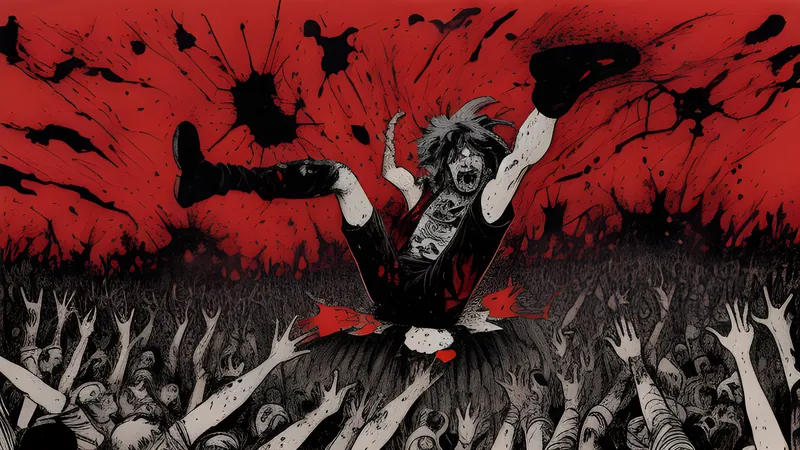
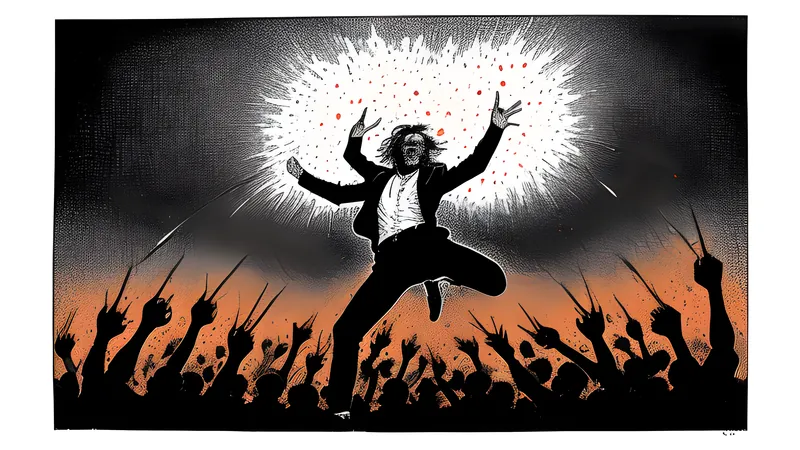
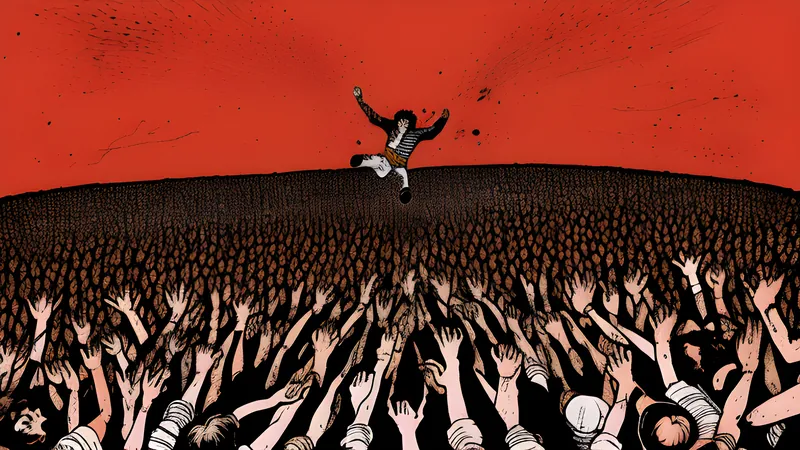
If Converge are the standard on record, live they are close to a religious experience for the people who care. Bannon prowls the stage like a man possessed, the band play with an intensity that seems impossible to sustain past the first song and then sustain it for forty minutes, and the room responds in kind. This is music built for a sweaty club with the crowd pressed against the monitors, the format where the exchange of energy between band and audience becomes a single circuit. In a big festival field some of the intimacy dissipates; in a small hot room it is overwhelming.
The band have never softened their live approach to fit bigger stages, which is part of why they command such loyalty. Later records have broadened the palette — 2017’s The Dusk in Us is more spacious and considered, and 2021’s Bloodmoon: I expanded the band into a larger collective with guests including Chelsea Wolfe, pushing into darker, slower, more gothic territory. Yet the core remains the same four men making the same rehearsed chaos, and the live show remains the reason to keep coming back.
The consistency is the thing that keeps astonishing people. Across thirty-five years the core four-piece has never once become a nostalgia act cycling through the old records for an ageing crowd, and never diluted the live show to fit larger rooms. New Converge records still arrive as events that matter to the people who care about heavy music, and the band still play as if their lives depend on it every night, which is why younger acts continue to cite them as the bar to clear rather than a museum piece to admire. In a genre that chews through bands and burns out its best within a few years, that refusal to coast is close to unique.
GodCity and the wider web
Converge are unusually well connected into the heavy underground, functioning as a hub as much as a band. Kurt Ballou’s GodCity Studio in Salem has become one of the most important production houses in modern heavy music, and his fingerprints are on a staggering number of the records that defined hardcore and metal over the past two decades. When a young band wants their album to sound genuinely heavy and genuinely alive, GodCity is near the top of the list, and Ballou’s aesthetic — raw, punishing, dynamic, allergic to the over-polished modern metal sound — has shaped the texture of the whole genre from behind the glass.
The other members spread the influence further through a dense network of side projects. Bassist Nate Newton plays in the experimental sludge collective Old Man Gloom and the more straightforward Doomriders; drummer Ben Koller keeps time in the riff-rock outfit Mutoid Man and the punishing All Pigs Must Die. These are serious bands in their own right rather than idle side hustles, and the effect is that the Converge members touch a huge swathe of the heavy underground, connecting scenes and mentoring younger acts. Few bands are so thoroughly woven into the fabric of their genre, which is part of why Converge’s standard-setting reputation is so widely and freely acknowledged by their peers.
Jacob Bannon, the whole aesthetic
Converge is also a visual identity, and that identity is Jacob Bannon’s work. Beyond the vocals, Bannon is the band’s artist and designer, responsible for the stark, distinctive imagery that has defined their records from the Jane Doe cover onward. His visual language — raw, expressive, emotionally direct, instantly recognisable — is as much a part of the band’s meaning as the music, and it extends the same aesthetic across everything they touch. That total control over their own presentation is another way Converge maintained their integrity across three decades.
Bannon also co-founded Deathwish Inc, an independent record label that became a crucial institution for heavy music, releasing records by a long roster of important hardcore, metal and post-hardcore bands. Running a label gave Converge a platform to support the scene they came from and to nurture the younger acts carrying the form forward, cementing their role as elders and enablers as well as practitioners. A band that writes the standard, produces half the genre, and runs a label releasing the next generation has embedded itself into heavy music at every level, which is exactly why removing Converge from the story of modern heavy music is impossible.
Why they endure
Longevity in heavy music usually comes at the cost of relevance. Bands survive by becoming nostalgia acts, playing the old records to ageing crowds while the culture moves on without them. Converge are the rare exception, a band who have stayed genuinely important for thirty-five years, whose new records still matter and whose influence still grows. They never had a commercial peak to decline from, which paradoxically freed them to keep evolving on their own terms, answerable to nobody but their own standards.
That is the final thing about Converge, the reason the word “standard” keeps coming back. They set a bar for what heavy music could be — honest, precise, uncompromising, emotionally real — and then they held themselves to it for three and a half decades without slipping. Younger bands do not just admire Converge; they measure themselves against Converge, consciously, and most of them fall short. In a genre that eats its own and burns out its best, that consistency is close to miraculous, and it is why Converge remain hardcore’s enduring standard.
Related Content