Cancelled: What a Pulled Festival Does to a Town
A silent field, an unbanked charity fund, and the week-long economy that vanishes when the licence is torn up
Contents
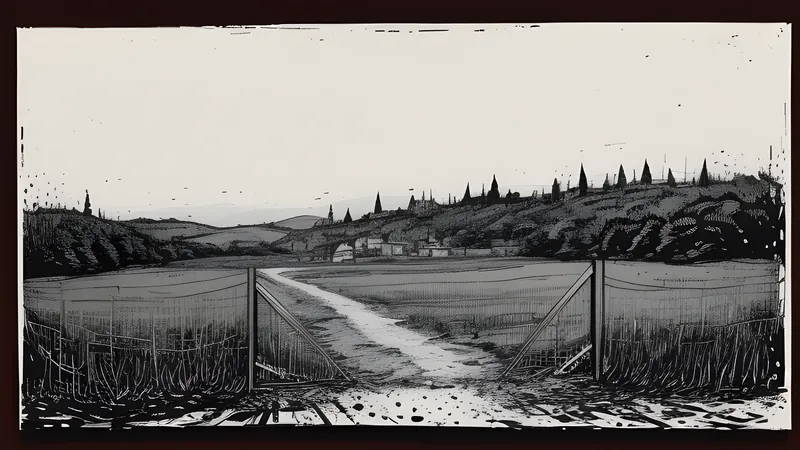
Roskilde should be starting about now. Late June, the campsite fields off Route 21 already trodden into mud-brown paths, the Orange Stage rigged and waiting, tens of thousands of tents going up in neat rows that will be chaos by Thursday. None of that happened this year. The festival was cancelled in April, the second cancellation of its kind I’ve watched land in a single miserable spring, and the field is just a field — grass growing back over ground that usually doesn’t see grass by June at all. I’ve spent the week that should have been the best one of my year going for walks instead, thinking about what actually goes missing when a festival doesn’t happen.
A festival the size of Roskilde or Wacken is a temporary city with its own week-long economy, and pulling it doesn’t pause that economy — it deletes it. Understanding what a cancellation actually costs means looking past the headline act who don’t get paid and at the whole scaffold of people and money that a festival drags into existence for seven days a year and then, this year, simply didn’t.
The temporary city that never got built
Start with the numbers, because they’re the part people underestimate. Wacken Open Air happens in a village in Schleswig-Holstein with a permanent population of around 1,800 people. For one week a year, that village becomes host to something like 75,000 metalheads — more than forty times its resident population, arriving by car, coach and chartered train, filling every field for miles with tents. That ratio is the whole story in one number: a festival this size is an economy the town runs on. Local farmers rent fields for parking and camping that they’d otherwise just be farming. Restaurants and Imbiss stands that survive on modest year-round trade suddenly do a week’s business worth of a normal month. The volunteer fire brigade, the local ambulance crew, the temp agencies that supply security and stewarding staff — all of it geared up, rostered, and then, this year, stood down before it started.
Roskilde runs the same maths at a different scale and with a different ending, and that ending is the part that’s stung most watching this year’s cancellation land. Roskilde Festival is run by a non-profit foundation that has, since the early 1970s, donated its entire surplus to humanitarian and cultural causes rather than to shareholders. A normal year sees several million kroner handed out afterwards to organisations working on everything from youth culture to disaster relief, money generated by ticket sales, bar takings and the thousands of volunteers who staff the site instead of paying for a ticket. Cancel the festival and the fund disappears with it. Whatever those organisations were counting on this year isn’t coming, because the festival that would have generated it never opened its gates.
The travel industry built around one weekend
Look further out from the site itself and the ripples keep going. Coach operators across Germany and the Netherlands run dedicated Wacken shuttle services every August, timetabled a year in advance and sold as a package with the ticket; regional airports add extra rotations into Hamburg for the same week, moving tens of thousands more passengers than usual. Roskilde does the same trick with Danish State Railways, which lays on extra trains to a station that otherwise sees a fraction of the traffic, timed to the minute around gates opening and the last band finishing. All of that capacity simply evaporates when a festival is pulled. It gets cancelled outright, refunded, and the planning that went into it — timetables built, drivers rostered, extra carriages sourced from elsewhere in a national rail network — sits wasted, because you can’t reassemble a festival two months later once everyone else’s summer has already been booked around its absence.
Travel insurers feel it from the other direction. Festival-specific cancellation cover is a real product, sold as an add-on precisely because promoters know an event this size can be pulled by causes far more mundane than a continent-wide crisis — a waterlogged site, a headliner’s medical emergency, a council revoking a noise licence at the last minute. Insurers price that risk every year assuming most years it never gets triggered. A year where it gets triggered simultaneously across an entire continent’s festival calendar is the kind of correlated loss the model isn’t built to absorb gracefully, which is one reason festival cancellation cover got markedly harder and pricier to buy in the years that followed.
Rostered, then stood down
The bands who lose a tour are the visible loss, and it’s real — a support slot at a festival like this can be a whole year’s income for a small act, and this year quietly erased that income for thousands of them across Europe. The invisible losses run deeper into a town’s ordinary workforce. Security firms that supply stewards to festivals across a whole summer circuit lost an entire season’s contracts in one go. Portaloo companies, generator hire firms, the agencies that supply bar staff for a single mad week each June — all of them built a year’s plan around dates that got wiped from the calendar in a single government briefing. Local taxi firms near festival sites typically clear a meaningful slice of their annual takings in festival week alone, ferrying people from stations and back roads at three in the morning; take that week away and a small firm’s whole year takes the hit.
Then there’s the quieter civic infrastructure nobody thinks about until it’s gone: the local hospital that brings in extra staff for festival week because attendance spikes at A&E always follow a big gathering; the council that budgets for extra waste collection and road cleaning; the schools and community halls rented out as overflow campsites or car parks for a fee that funds the roof repair or the minibus for the year. None of that is glamorous, and none of it shows up in a headline about a cancelled festival. It shows up months later as a hole in a small organisation’s budget that somebody has to explain.
The circuit traders who lose the whole year at once
The people hit hardest by a single cancellation are often the ones who don’t work anywhere else. A meaningful slice of the food and merchandise stalls at festivals like Wacken and Roskilde are run by itinerant traders who follow the summer festival calendar the way touring bands follow a circuit — the same burger van or patch-and-pin stall turning up at half a dozen European festivals between May and September, living on that income for the rest of the year. Losing one date on that circuit is a bad week. Losing the whole circuit in the same season, as happened across the summer of 2020, is a whole year’s income gone at once, because every other date further down the same calendar cancelled for the same reason, leaving nothing to make up the shortfall. Long-running stallholders who had worked the same European festival routes for a decade or more found themselves with every single booking pulled in the same year, and a business built to absorb one rained-off weekend or one quiet season isn’t built to absorb its entire annual calendar disappearing at once.
That’s the insurance problem again from a different angle. A specialist stall or a small stage-production crew plans a year’s income around a known, recurring set of dates; when every date on that plan cancels simultaneously rather than staggering across a bad season, there’s no diversification left to fall back on. It’s the festival economy’s version of a supply chain with a single point of failure, and 2020 was the year that point of failure got tested everywhere at once.
This has happened before, and the town remembers
None of this is unprecedented, which is oddly the most useful thing to hold onto. Glastonbury — the festival most people would name first if asked to name a festival — was cancelled in 2001 because of foot-and-mouth disease, a livestock epidemic that made a farm the size of Worthy Farm too dangerous to fill with half a million wellington boots. That cancellation is now a footnote in Glastonbury’s own history, told at its later anniversaries as the year it didn’t happen, and the town of Pilton absorbed it and the festival came back the year after. Foot-and-mouth also forced the cancellation or postponement of a string of smaller UK rural events that same year, for the same reason: land that a festival depends on is also land a farming community depends on, and sometimes those two dependencies collide.
That precedent matters because it tells you something about resilience that’s easy to miss in the middle of a bad year. A festival town survives a missed year. Whether the next one is coming is the harder question, because the whole model — farmers renting fields, security firms planning rosters, charities budgeting on a foundation’s promised surplus — depends on everyone believing the machine restarts on schedule. Wacken’s organisers cancelled early and cancelled plainly, because a festival this embedded in a place owes that place clarity rather than hope dragged out until it’s too late for anyone downstream to adjust.
What I actually miss
I’m writing this from Copenhagen with nowhere to be this week, which after nine years of always having somewhere to be in late June feels less like a holiday and more like an unfamiliar kind of quiet. The bands aren’t really what I miss most, though I miss them. I miss the specific, temporary, slightly absurd civic apparatus that a festival throws up out of nothing every year and dismantles a week later — the field that becomes a city, the farmer who becomes a car-park attendant, the volunteer collecting glasses so a foundation can write a cheque to a shelter in the autumn. That apparatus is more fragile than it looks precisely because it’s rebuilt from scratch every single year, and this is the year nobody rebuilt it.
I’ve written elsewhere about the two silent Junes Copenhell itself lost to the same cancellations, and about what a wristband tied to a cashless payment system reveals about how thoroughly festivals have industrialised in the years since. Both pieces are, in a way, about the same machine this one is — a thing so large and so seasonal that it looks permanent right up until the year it isn’t there, and a whole town notices the silence along with the crowd.
Related Content