Brutal Assault 2022: Metal in a Fortress
Deep in a Czech baroque fortress, extreme metal takes over the tunnels, ramparts and moats of Josefov
Contents
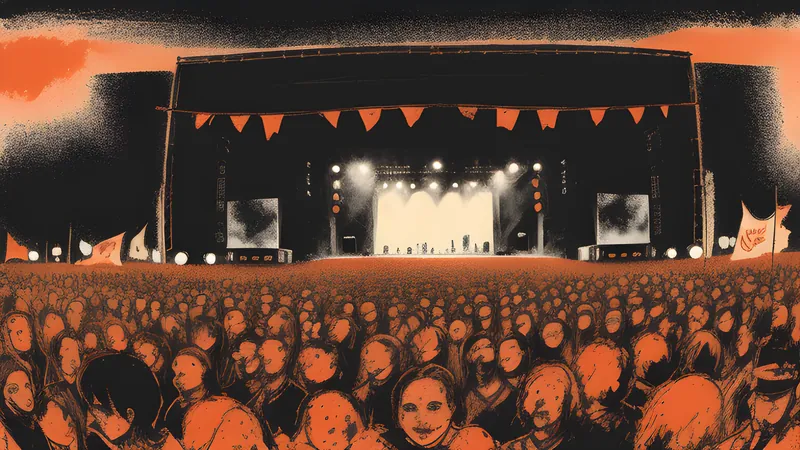
Most festivals build their atmosphere out of scaffolding. Brutal Assault inherited an eighteenth-century military fortress and simply moved in. In August 2022 I made the trip from Copenhagen down to Jaroměř in the northeast of the Czech Republic to see the festival that stages extreme metal inside the star-shaped ramparts, moats and underground tunnels of Josefov, and it is the single most striking setting I have stood in. The 2022 edition ran 9 to 13 August, and the fortress did what no amount of stage design can fake — it gave the whole thing the weight of a place that was already built to be forbidding long before a single amplifier arrived.
A fortress that was already the stage set
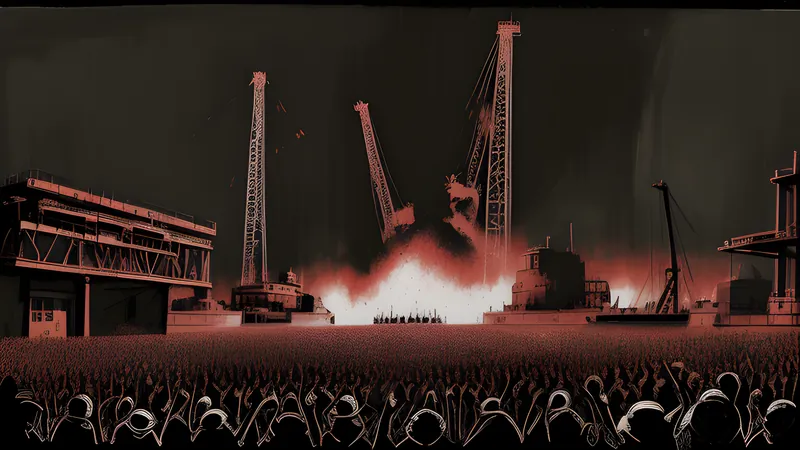
Josefov is a fortress town, built in the late 1700s under the Habsburg emperor Joseph II as a defensive stronghold — a planned star-fort of brick ramparts, dry moats and an extensive network of underground defensive tunnels bored through the earth beneath the walls. It never saw the great siege it was designed to withstand, and it settled into being a quiet garrison town. Which means that centuries later there was a ready-made piece of martial architecture sitting in the Czech countryside, waiting for someone to realise it was the most metal venue imaginable.
Brutal Assault realised it. The festival grew out of the mid-1990s Czech underground and eventually settled at Josefov, and the marriage of extreme metal and baroque fortress is now the festival’s entire identity. Stages sit against brick walls that have stood for over two hundred years. You can walk the ramparts between bands. The famous underground tunnels host art installations, and the whole site has a grandeur and a menace that a field in a farmer’s meadow can never manufacture. Where Wacken conjures its metropolis out of leased farmland, Brutal Assault got handed a fortress and only had to plug in.
2022 carried an extra charge because it was one of the first proper editions back after the pandemic wiped out two years of festivals across Europe. The extreme-metal underground had been starved of exactly this kind of gathering — the far-travelled pilgrimage, the shared week among people who care about this music as much as you do — and you could feel the pent-up hunger in the density of the crowd. A festival that asks its audience to travel deep into the Czech countryside had every reason to worry about a soft return. Instead Josefov filled with the international faithful, relieved to be back inside the walls, and the reopening had a gratitude to it that an ordinary year lacks.
King Diamond, Mercyful Fate, and a full moon
The set that crowned 2022, and the reason the year mattered to me specifically, was Mercyful Fate. The Danish band — the foundational act that put my own country on the extreme-metal map in the early 1980s — had reunited, and King Diamond led them onto the main stage at Josefov in front of a fortress crowd that received them as the returning legends they are. As luck or fate would have it, the set fell under a full moon over the fortress walls, which for a band this steeped in theatrical darkness was almost too perfect a stage effect to be real.
Watching Mercyful Fate in a Czech fortress carried a strange doubled charge for me. This is a band whose story I have told at length — how King Diamond and Mercyful Fate built the blueprint that the entire extreme-metal world later borrowed — and here they were, a few hundred kilometres from home, playing to a continental crowd that treats them as scripture. The same reunion brought them home to Copenhagen that year too, a homecoming I wrote about in my Copenhell 2022 report; catching them abroad, on those ancient ramparts, was the mirror image of the hometown moment. King Diamond’s falsetto against eighteenth-century brick, under a full moon, is the kind of thing you travel for.
Extreme metal, top to bottom
Brutal Assault is a more extreme animal than the big open-air festivals, and its bill reflects that. Where Wacken casts a broad net across all of heavy music, Brutal Assault points hard at the genre’s severe end — black metal, death metal, sludge, the uncompromising fringes — and 2022 assembled more than 140 acts to that brief.
The depth was serious. At the Gates brought Swedish melodic death metal from the band that helped write its rulebook. Cannibal Corpse delivered death metal at its most bluntly physical. Abbath carried the black-metal theatrics; Alcest brought the gauzy, melodic blackgaze end of the spectrum; Amenra supplied crushing Belgian post-metal catharsis. Arcturus, Katatonia, Decapitated, Aborted, Cradle of Filth, As I Lay Dying, Jinjer and the war-obsessed black metal of 1914 filled out a poster that ran deep into the underground’s most committed corners. Nergal, of Behemoth, turned up in his country-blues side project Me and That Man on one of the smaller stages — the kind of curveball a festival this confident can afford to throw. There was no filler-friendly mainstream cushion here. Brutal Assault knows exactly what it is, and it books to the true believers.
That focus is a deliberate identity, and it is why the festival punches so far above the size of the town it sits beside. The big open-air festivals have to book broad — a lineup that reaches from radio rock to death metal so it can sell out a field of tens of thousands. Brutal Assault has chosen a narrower, deeper lane, and the reward is a poster with almost no wasted slots for anyone who actually loves the extreme end. You do not spend your afternoons killing time until the band you came for. There is something worth watching on the severe end of the spectrum in nearly every slot, which is exactly what a genre-committed crowd wants and exactly what the broad festivals cannot deliver.
The tunnels, the ramparts and the art
The fortress is not just a backdrop; the festival uses it. Between sets you climb the grassy ramparts and look out over the star-shaped walls, or descend into the network of underground tunnels bored beneath the fortifications, which stay cool and dark through the Czech summer heat and host art installations and exhibitions in their brick vaults. That art programme is part of what separates Brutal Assault from a straightforward metal weekend — the festival has cultivated a reputation for pairing the music with visual work, using the fortress’s ready-made drama as a gallery as much as a venue.
Wandering those tunnels in the middle of a hot August afternoon, the muffled thump of a distant stage coming through two centuries of brick overhead, you feel how completely the setting does the atmospheric heavy lifting. No lighting rig can manufacture the weight of a real fortress. Josefov was built to intimidate, and even now, hosting a metal festival rather than repelling a siege, it still carries that intent in every wall. The organisers understood the gift they had been handed, and they built the whole festival around letting the place speak.
The trip, and whether it is worth it
Brutal Assault is a genuine expedition from Copenhagen — a long haul south and east into the Czech countryside, well off the beaten festival track. That distance is part of why the crowd feels the way it does. This is not a festival people wander into. Everyone there has travelled with intent, and it shows in the density of black shirts and the seriousness of the singalongs. The international underground converges on Josefov every August precisely because it is a pilgrimage.
The setting alone justifies the journey. Standing in a baroque fortress while a black-metal band plays against two-hundred-year-old brick, then wandering into cool underground tunnels to escape the August heat and finding art installations in the dark — no festival built on hired scaffolding gives you that. The fortress does half the atmospheric work before a note is played.
The honest cautions are the ones you would expect. It is far, and the travel is a real commitment. It is extreme — this is a festival for people who genuinely want the severe end of metal, and a casual fan would find four days of it relentless. Czech summer heat can be fierce out on the open ramparts, which is where the shade of those tunnels earns its keep. But set against a Mercyful Fate reunion under a full moon on the walls of an eighteenth-century star-fort, those are small prices.
Brutal Assault does something the big open-airs cannot: it fuses the music to a place with real history and real menace, and it aims that music squarely at the underground rather than the mainstream. If the broad-church, 75,000-strong field festival is your baseline, my Wacken 2016 report is the other pole of the European metal-festival map. Brutal Assault is the fortress at the far end of it — smaller, stranger, more extreme, and staged inside the most improbably perfect venue in the whole scene. The trip is long. The walls are worth it.
Related Content