Bremen Teater, Copenhagen: Gigs in the Grand Old Theatre
A raked mid-century auditorium on Nyropsgade that swaps a rock club's shove for chandeliers and a proper seated view
Contents
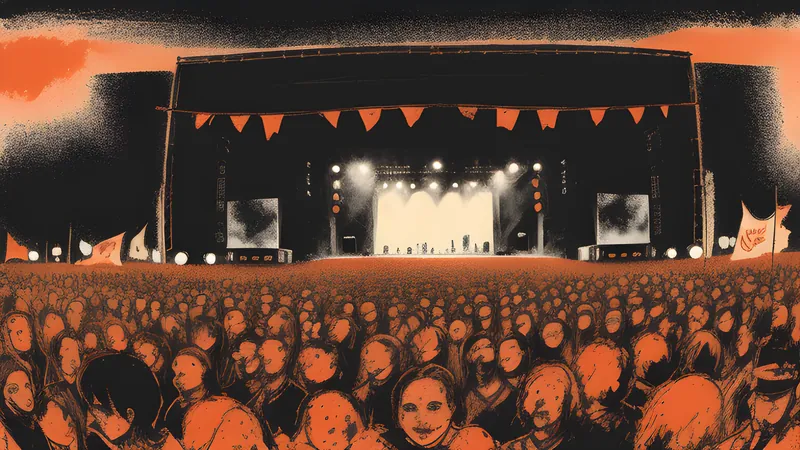
There is a specific kind of Copenhagen night that ends with you sitting down in a red plush seat under a chandelier while a band you love plays to a room that is dead silent between songs. Most of my nights end in a puddle of spilled lager on a flat club floor, so the Bremen Teater is the corrective — a proper old theatre on Nyropsgade, a couple of minutes from the lakes, where the seats are raked, the sightlines are honest and nobody is going to headbutt you during the encore.
It is one of the more misunderstood rooms in the city, because half the people who go assume it is only for stand-up and stage shows. It does plenty of both. But it is also one of the best seated concert rooms in central Copenhagen, and when the right act comes through, the theatre setting turns an ordinary gig into something you remember for the room as much as the music.
A mid-century theatre with several past lives
The building at Nyropsgade 39–41 was completed in 1956 to a design by the Danish architect Otto Frankild, and it has never really settled on being one thing. It went up in the middle of Copenhagen’s post-war cultural boom and opened as a cinema — Bremen Bio — which is where the raked floor and the big proscenium come from. That cinema DNA is the single most important fact about how the room works today: a steeply banked auditorium built so that everyone could see a screen now means everyone can see a stage.
The place has changed hands and names more times than is easy to keep track of. The Mercur Theatre arrived in 1965 under the director Aage Stentoft. In 1971 the travel magnate Simon Spies, who owned the building, took the thing over and ran it as a cinema-and-nightclub, launching his version on his fiftieth birthday. Through the 1980s and beyond it cycled through further incarnations as a music theatre and a private theatre before closing in 2007 when the money ran out. It came back in September 2009 under the name it carries now, Bremen Teater, revived by figures from the Danish entertainment world.
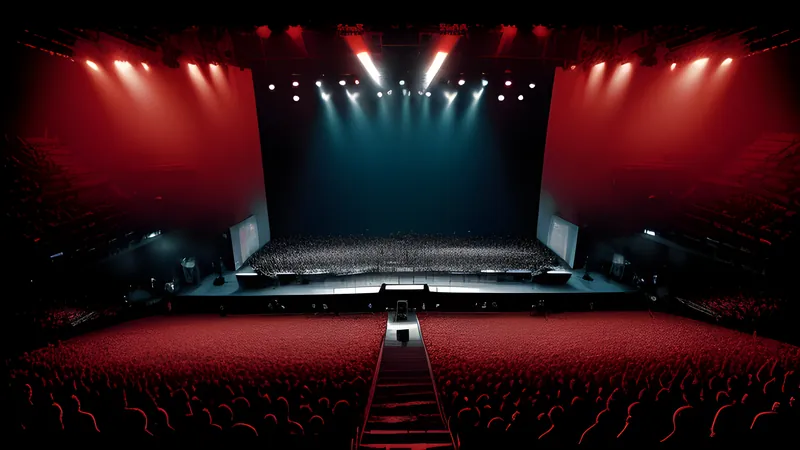
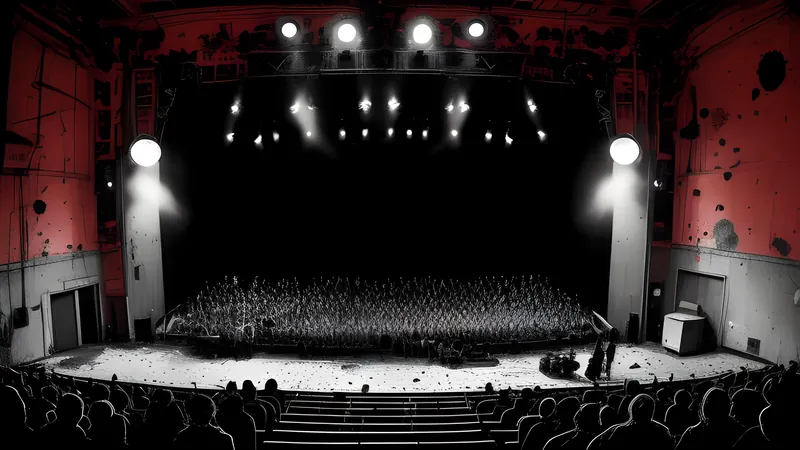
What survived all of that churn is the fabric. The room kept its well-preserved mid-century modernist character — the elegant chandeliers, the steeply raked auditorium, the sense of a grown-up theatre rather than a converted warehouse. Sit in it before the lights go down and you can feel the 1950s in the proportions. For a city whose loud-music life mostly happens in old industrial buildings and squat halls, Bremen is a genuine change of register.
What the room is actually good for
Capacity here is around 648 seated, which tells you almost everything about the kind of night the theatre does well. This is a listening room. The raked floor means the person in front of you is not a wall; you get a clean line to the stage from nearly every seat, and the sound arrives without the low-mid mud that plagues flat halls when the crowd packs in. For a singer-songwriter, a stripped-back set, a spoken-word or comedy bill, an acoustic-leaning band, or any act whose arrangement rewards actually hearing it, Bremen is close to ideal.
The programming reflects that. The theatre hosts concerts, comedy, talks and stage productions in roughly equal measure, and it has pulled serious international names on the spoken-word and music side — the American writer and hardcore forefather Henry Rollins has done his talking-tour thing here, and the comedian Bill Burr has played the room. The through-line is that these are all acts you sit down and pay attention to. If you have only ever seen Bremen listed for a comedy night, understand that the same qualities that make it a fine comedy room — sightlines, intimacy, quiet — make it a superb seated music room too.
It is worth being honest about how a seated show changes the physics of a gig. In a standing club the crowd is part of the instrument: the shove, the surge, the collective weight of a thousand bodies moving as one is half of why loud music feels the way it does live. Bremen removes all of that on purpose. What you get back is detail. You hear the reverb tail on a snare, the fingering noise on an acoustic guitar, the exact moment a singer pulls off the microphone. For a certain kind of act — a songwriter mid-catalogue, a band touring a quiet record, an artist whose whole appeal is nuance — that trade is the entire reason to book a theatre rather than a club. You are buying attention, both the room’s and your own.
The raked floor also does something subtle for the sound. Because each row sits higher than the one in front, there are fewer bodies for the mid and high frequencies to plough through on the way to your ears, so the top end stays crisp even at the back — the opposite of a flat club floor, where a tall crowd swallows detail and you end up hearing mostly bass and mush. It is the same reason a well-designed cinema sounds clean from the last row, and Bremen inherited that geometry wholesale from its picture-house past.
Where it is the wrong choice is equally clear. If you want a pit, a wall of death, or the feral close-quarters volume of a proper sweatbox, this is emphatically not your building, and you should point yourself at somewhere like Pumpehuset, the raw old-waterworks rock room a short walk south, or one of Copenhagen’s flat-floored clubs. Bremen trades danger for clarity and comfort. On the right night that is a wonderful trade, and on the wrong one you will feel pinned to your seat wishing you could move. Read the bill before you buy.
Where to sit, and getting there
Because it is raked and seated, the where-to-stand question that dominates most of my venue write-ups becomes a where-to-sit question, and the answer is refreshingly simple: the room is small enough that there is no truly bad seat. If you have a choice, aim for the middle blocks a little back from the very front — far enough that you are not craning up at the stage lip, central enough that the stereo image of the PA lands properly. The rake does the rest. Front rows put you close but at a neck-tilting angle; the back is still perfectly good in a room this size.
The location is about as central as Copenhagen gets. Nyropsgade runs just west of the city lakes and a short walk from Vesterport, close to the H.C. Ørsted Park, so you are within easy reach of the main railway arteries and the buses that thread through the middle of town. Coming out afterwards you are minutes from the inner-city bars and food, and because the crowd is a seated one that files out in an orderly way rather than a sweaty mass spilling into the street, the end of the night is a calmer affair than at most of my haunts.
The bar and interiors match the theatre’s grown-up tone. You are drinking in a preserved mid-century room rather than a breeze-block corridor, at standard central-Copenhagen prices that I will not quote because they will be wrong by the time you read this. What you are paying for, really, is the setting — the chandeliers, the plush, the feeling of having gone somewhere rather than just standing in a shed. Come early enough for a drink in the foyer and you get to enjoy the building as architecture before it becomes a music room, which is part of the value of a place this handsome.
One more practical note for the seated novice: because the shows here start and end on theatre time rather than club time, the whole evening runs earlier and tighter than a gig at a rock room across town. Doors, support and headliner keep to the clock, the encore lands at a civilised hour, and you are out into central Copenhagen with the night still young. For anyone who has aged slightly out of the two-in-the-morning club finish, that alone is a selling point.
Why it earns its place
Copenhagen’s live scene is defined by its loud rooms, and I love them for it — the wood-warmed clarity of VEGA at the top of the club tier, the honest grime of the smaller clubs below. Bremen Teater sits at an angle to all of that. It is the room you take someone to when the act is one you want to hear every syllable of, when you would rather sit than shove, when the night is about attention instead of adrenaline.
That makes it a specialist, and specialists get overlooked. But every serious music city needs a beautiful seated theatre that will book touring bands as readily as comedians and authors, and Bremen is Copenhagen’s. Watch its calendar for the acts that suit a raked auditorium and a quiet, focused crowd. When one turns up, buy the ticket and take the seat — you will hear the show the way the band actually meant it to sound, under a chandelier, in a proper old theatre that has been reinventing itself since 1956.
Related Content