Bloodstock: The Fan-Built Festival That Refused to Sell Out
How a fantasy painter's family built Britain's biggest independent metal festival
Contents
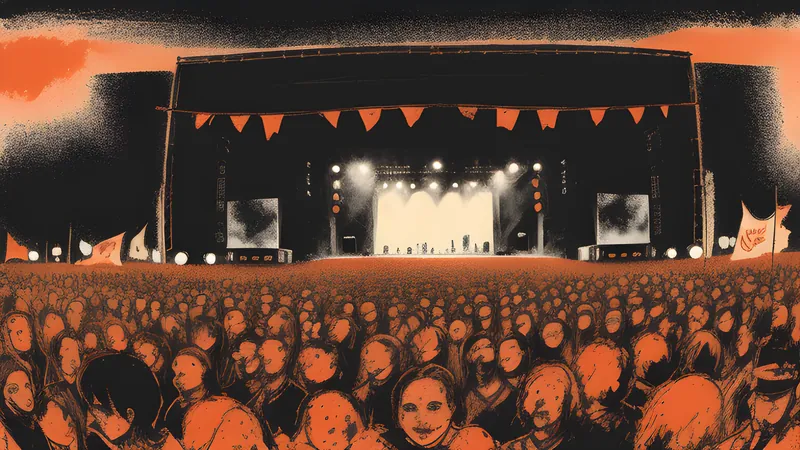
Every big metal festival tells you it loves the underground. Bloodstock is the one that actually built its main-stage pipeline out of it. The UK’s largest independent metal festival is family-run, owned by nobody but the family that started it, and it has spent two decades doing the thing the giants only talk about — putting unsigned British bands in front of a crowd of thousands and letting some of them climb. It sits in the grounds of Catton Park in Derbyshire every August, and it is the most convincing argument in Britain that a festival can grow large without losing its soul.
I have not been to Bloodstock — August is Wacken and Brutal Assault season for me, and there are only so many festival weekends in a Nordic summer. But Bloodstock is a festival I find myself defending in conversations, because it represents a model that the industry keeps insisting is impossible: independent ownership at scale. This is a read from the record of how the Gregory family built it, why the independence is load-bearing rather than decorative, and what the New Blood stage actually does for the bands nobody has heard of yet.
A fantasy painter and his family
Bloodstock’s origin is one of the more charming stories in metal. It was founded by Paul Raymond Gregory, a British fantasy artist who spent his career painting the kind of dragons-and-warriors album covers that defined a whole era of heavy metal record sleeves. Gregory did not come from the music-promotion industry; he came from the artwork, from the visual imagination of metal, and he wanted a festival that celebrated the epic, fantastical end of the genre he had spent his life illustrating.
The first Bloodstock was an indoor event, launched in 2001 at the Assembly Rooms in Derby. It was small, and it was pointedly for the faithful — power metal, epic metal, the stuff the mainstream festivals treated as embarrassing. In 2005 it went outdoors, moving to Catton Park in Walton-on-Trent, Derbyshire, and became Bloodstock Open Air. That move outdoors is when it started to grow into the festival it is now.
The crucial detail is who runs it. Bloodstock stayed a family operation, with Gregory’s daughters Vicky Hungerford and Rachael Greenfield and son Adam Gregory taking on directorships. It is not owned by Live Nation or a private-equity roll-up. That single fact shapes everything about how the festival behaves, and it is why the “refused to sell out” line is literal rather than marketing.
What independence actually buys
Independence is easy to romanticise, so let me be concrete about what it means at Bloodstock. It means the festival can book on conviction rather than radio metrics. It means the crowd trusts the programming, because the people choosing the bands are demonstrably fans first and businesspeople second. It means the festival can stay a manageable size — attendances run around 20,000 to 25,000, a fraction of Download’s six figures — and treat that ceiling as a feature. Bloodstock is the intimate, purist counterweight to the giant down the road.
The contrast with Download is the whole point, and it is not an accident. Bloodstock grew, in part, out of a feeling among British fans that the flagship had gone corporate and mainstream, that its bills had drifted toward the rock-radio middle. Bloodstock planted its flag at the heavier, more underground end and stayed there. The result is a UK metal scene with two poles — the vast corporate event and the fierce independent one — and that tension keeps both of them honest.
There is also a moral dimension the festival wears openly. One of Bloodstock’s stages is named after Sophie Lancaster, the young woman murdered in 2007 for the crime of being visibly a goth, whose family’s foundation campaigns against prejudice toward alternative subcultures. That a festival chose to make that memory part of its furniture tells you what kind of community it is trying to be.
The New Blood pipeline
The engine that makes Bloodstock genuinely different is Metal 2 the Masses. This is a nationwide battle-of-the-bands run through local metal venues across the UK — unsigned bands enter their regional heats, fight through a series of live rounds, and the champion of each region wins a slot on the festival’s New Blood stage. It is a proper ladder from the toilet-circuit venues to a real festival crowd, and it runs every year.
For a band, playing the New Blood stage can be a genuine turning point. Plenty of acts have used it as the springboard to bigger festival slots, wider tours and actual careers. It is the mechanism that connects the grimy local metal club to the main stage, and it is exactly the kind of infrastructure the big festivals gesture at but rarely build with any seriousness. Bloodstock made it central.
That commitment to the emerging band is close to my own heart. Back home in Copenhagen I spend as much time in the back rooms of Loppen watching openers nobody has heard of as I do in the big rooms, and I have written about how Denmark punches above its weight precisely because there is a live circuit willing to carry small bands. Bloodstock’s New Blood stage is the festival-scale version of that instinct — a structure that assumes today’s opener is tomorrow’s headliner and builds accordingly.
The Catton Park character
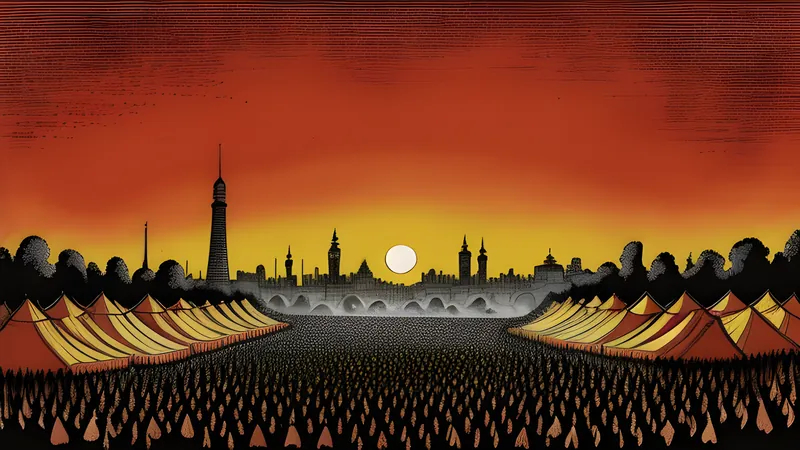
The site itself is part of the appeal. Catton Park is parkland in the Derbyshire countryside, greener and gentler than the churned racetrack infield of Donington, and Bloodstock’s smaller scale means the whole thing feels human. You are not managing the logistics of a small city; you are at a large gathering of people who mostly think the same way you do. The reputation is of a friendly, unpretentious, deeply committed crowd — the sort of festival where the extreme end of the genre is the norm rather than the fringe, and where a band playing blackened death metal at two in the afternoon gets a real crowd rather than a polite one.
That crowd character is the thing that keeps independent festivals alive when the economics say they should not exist. People come back to Bloodstock because it feels like theirs, and that loyalty is what a family operation can offer that a corporate calendar cannot.
The booking that trust allows
Because it answers to nobody but the family and the crowd, Bloodstock can programme in a way the corporate festivals structurally cannot. It leans into the extreme end — black metal, death metal, doom, the epic and power-metal traditions that Paul Gregory’s album-cover imagination came out of — and it treats those genres as the main event rather than the afternoon filler. A band that would be buried on a side stage at midday somewhere else can headline a stage at Bloodstock, because the whole festival is built for exactly that audience.
That freedom shows up in the range of the bills. Bloodstock has hosted legends of the underground and the genre’s serious touring names, and it has done so without diluting toward the rock-radio middle to chase a bigger gate. The crowd rewards that discipline with loyalty, and the loyalty lets the festival keep taking programming risks — a virtuous circle that only stays intact because there is no outside shareholder demanding the numbers go up every year. Staying the same size, and staying independent, is the strategy rather than a limitation on it.
It is worth being clear about how rare this is. The economics of live music push relentlessly toward consolidation — festivals get bought, bundled, and homogenised, and the independent operators get squeezed out or absorbed. That Bloodstock has grown to be Britain’s largest independent metal festival and stayed independent, family-run and taste-driven, is a genuine achievement in an industry designed to make that impossible. It is the exception that proves the rule still has exceptions.
Why it matters beyond Britain
From Copenhagen, Bloodstock reads as a proof of concept. I spend a lot of my writing worrying about why every festival now feels the same — the identical headliners, the corporate creep, the sponsor logos multiplying year over year. Bloodstock is the standing counterexample, a festival that got to a serious size while staying family-owned, booking on taste, and running a real ladder for unsigned bands. It is not the biggest, it is not the most famous, and it does not want to be either.
The lesson travels. Every country’s scene needs its Bloodstock — the independent pole that reminds the giants what they are supposed to be for. Britain is lucky to have one that works this well, and one of these Augusts, when Wacken is not calling, I will finally cross the North Sea to stand in Catton Park and watch a Metal 2 the Masses winner play the biggest gig of their life so far.
Until then Bloodstock stays, for me, the festival I hold up as evidence when someone tells me the corporate takeover of live music is total and inevitable. It is not inevitable. A fantasy painter and his family built a festival on taste and stubbornness, kept it independent through two decades of consolidation, gave unsigned bands a real ladder to climb, and grew it into the biggest thing of its kind in the country. That is a story worth crossing a sea for, and one summer I will.
Related Content