Black Sabbath, The End: Watching Metal's First Family Bow Out
The band that invented the whole genre in a Birmingham factory town spent 2016 and 2017 saying a long, deliberate goodbye — and it passed through a Copenhagen harbour on the way
Contents
Every heavy band that has ever existed is, in some traceable way, a descendant of four young men from Aston, a working-class district of Birmingham, who in 1968 decided that the blues could be made to sound like a horror film. That is not hyperbole; it is close to a matter of record. Black Sabbath invented heavy metal — the down-tuned riff, the sense of dread, the volume as an end in itself — and in 2016 and into early 2017 they spent a tour called The End deliberately, unhurriedly saying goodbye. The tour passed through the Copenhagen harbour in the summer of 2016, and this is a piece about what it is like to watch the origin of an entire genre close the book on itself while still standing up.
The factory accident that built a genre
The founding myth of Sabbath is true, which is rare for founding myths. Tony Iommi, the band’s guitarist and its actual musical architect, worked in a Birmingham sheet-metal factory as a teenager, and on what was meant to be his last day there — he was leaving to pursue music — a machine took the tips of two fingers on his right hand, his fretting hand. For a guitarist this should have been the end before the beginning. Instead Iommi fashioned thimbles from a melted plastic bottle to cap the ruined fingertips, slackened his strings to reduce the tension, and tuned the whole guitar down to make the softened strings easier to bend. The result was a sound thicker, darker and heavier than anything in rock at the time. The single most important texture in metal history was a workaround for an industrial injury.
Around Iommi’s detuned menace, the band assembled the rest of the template. Geezer Butler’s bass followed the guitar down into the murk and wrote lyrics of genuine dread and social unease. Bill Ward drummed with a jazzman’s swing under all the heaviness. And out front stood Ozzy Osbourne, a Birmingham kid with a wail that was more air-raid siren than singer, a frontman with no conventional technique and total, undeniable presence. They took their name from a horror film, wrote a song called “Black Sabbath” built on the tritone — the “devil’s interval” medieval church music tried to ban — and released their debut in 1970. The genre started there. Everything loud that came after is a footnote to that record.
The long goodbye of The End
By 2016 Sabbath had been ending for years, on and off, through breakups and reunions and Ozzy’s own spectacular personal chaos, but The End was framed as the real one — the last tour under the Black Sabbath name, with the classic core of Osbourne, Iommi and Butler. Bill Ward was absent, the result of a contractual and personal dispute that was never fully healed, and his place was taken live by Tommy Clufetos, a decision that some fans held against the band as a compromise on the original chemistry. The 2013 album 13, produced by Rick Rubin and topping charts in Britain and America, had given them a genuine late-career statement to go out on, proof that the band could still write in their own foundational idiom rather than merely revisit it.
The context that made The End feel weighty was Iommi’s health. He had been diagnosed with lymphoma in 2012 and was undergoing treatment through much of the reunion period, touring around medical appointments, and there was a real and public sense that the band was racing an illness to the finish line. That gave every show on the tour a charge that a routine farewell lacks. You were watching men in their late sixties, one of them fighting cancer, playing music of enormous physical weight because they had decided the genre they created deserved a proper ending rather than a quiet fade. The tour wound toward its final destination — two nights in the band’s home city of Birmingham in early February 2017, the story closing exactly where it opened.
Sabbath on a Copenhagen summer night
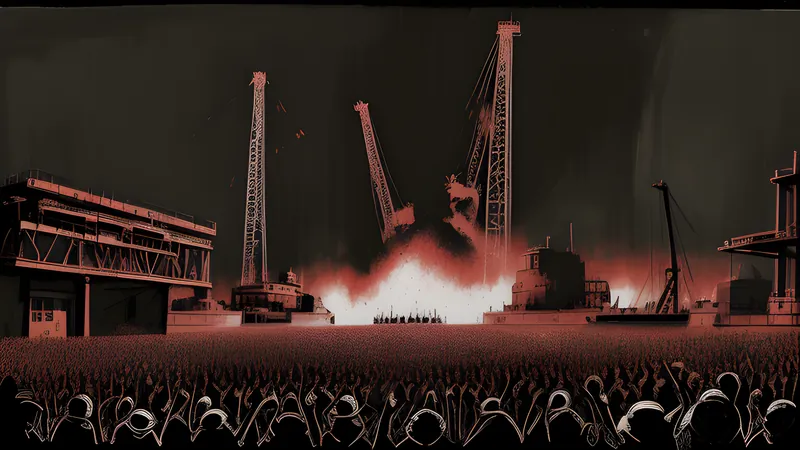
When The End tour reached Denmark in the summer of 2016, it did so at Copenhell, the loud-music festival that takes over the old industrial harbour land on Refshaleøen every June. There is a rightness to that setting that is hard to overstate. Sabbath were born in a Birmingham of factories and foundries and heavy industry, their sound shaped by the clang and grind of the world Iommi actually worked in, and Copenhell stages its bands amid rusting cranes and shipyard hulks and the reclaimed muscle of a working port. Watching the band that industrialised music play on a literal industrial site, in the long Nordic evening light, was one of those alignments of setting and subject that a festival occasionally stumbles into and never forgets.
The set was the canon, and it needed to be. “War Pigs” with its air-raid siren opening, “Iron Man” with the riff every teenager with a guitar learns first, “Paranoid” rattling out at the end like the pop song it accidentally became — these are not deep cuts, they are foundational texts, and a farewell is precisely the wrong occasion to get clever with a setlist. Iommi, seated calm at the centre of it all, played those riffs with the unhurried authority of a man who wrote the rulebook, and the sound coming off his guitar was still the heaviest thing in the field. Osbourne, whatever the years and the well-documented wear had done to his voice, remained one of the most magnetic presences the genre has ever produced, a frontman whose command has never really depended on conventional singing.
There was a bittersweet symmetry to seeing them there in particular. Sabbath had played Denmark across five decades, through the halls and festival fields the country used before it built a modern arena, and by 2016 the men on stage were closer to grandfathers than to the doom-struck youths who cut the first record. Yet the material had aged in a way rock rarely does. “War Pigs” was written as a protest against the Vietnam War, and its horror at industrialised slaughter had lost none of its force; “Iron Man” and “Children of the Grave” still sounded like warnings from a world that never learned. The songs were older than most of the audience and heavier than anything the younger bands on the bill could muster, which is the quiet joke at the centre of Sabbath’s whole legacy: the originators are frequently still the most extreme.
What it means when the source retires
There is a particular vertigo to watching the origin of something end. Most farewell tours are goodbyes to a band; Sabbath’s was closer to a goodbye to a beginning, the sensation of standing at the source of a river while it announces it is going to stop flowing. I am usually sceptical of the whole farewell-and-reunion economy — I have written with some suspicion about how the goodbye tour has become a marketing instrument in The Reunion Tour Is a Séance — but Sabbath’s felt like the genuine article, driven by age and illness and a clear-eyed decision to stop while they could still do it properly rather than dwindle into a tribute to themselves.
And the reach of what they started is everywhere you look, including in the small country hosting them that night. The whole edifice of Danish and Nordic heavy music — an export out of all proportion to the region’s size, which I have tried to account for in Little Country, Loud Export — rests on foundations Sabbath poured in a Birmingham rehearsal room in 1969. Every down-tuned riff at Copenhell, every doom band grinding through a set at a Copenhagen club, every teenager working out “Iron Man” in a bedroom, traces back to Iommi’s plastic thimbles and slackened strings. To watch that source play its farewell in the harbour was to watch the whole genealogy of the festival’s own music standing on the stage.
The book closes
Sabbath finished The End in Birmingham in February 2017, the last notes played a few miles from where the whole thing began, which is about as fitting a full stop as rock has ever managed. Ozzy would carry on solo, Iommi would recover and keep composing, the individual members would go on doing what they do; the band, though, the specific four-man idea that changed the direction of popular music, was done. Watching it wind down through 2016 — in a Copenhagen harbour built for exactly this kind of heaviness — you understood that you were seeing something that could only happen once, because a genre can only be invented once, and the people who invented it are mortal like everyone else.
If you want the setting that made the Danish leg so resonant, the Copenhell guide walks through why an old industrial harbour turned out to be the perfect cathedral for loud music, and why bands like Sabbath belong there more than in any purpose-built arena. Black Sabbath gave that harbour, and every stage like it, the reason to exist in the first place. The End was the sound of the first family of metal setting down a genre they had carried for nearly fifty years, and doing it upright, at full volume, exactly as they should.
Related Content