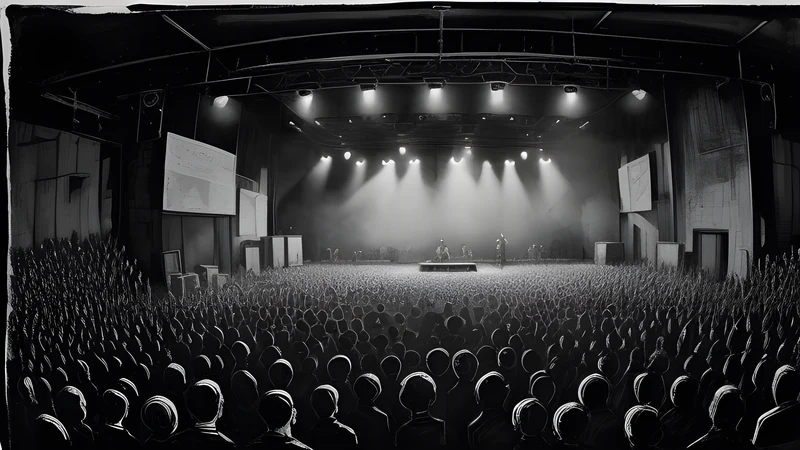
Beta: Amager's Small-Room Stalwart
The 200-capacity little sister that keeps Amager's underground breathing
Contents
Amager gets written off. To a lot of central Copenhageners the island across the water is where the airport is and where you change trains, a flat expanse of postwar housing and reclaimed land that does not register as a music destination. That reputation is lazy and it is wrong, and the sharpest single argument against it is a small room on Øresundsvej called Beta, which for well over a decade has been one of the most dependable places in the city to catch a band before the rest of the country catches on.
Beta is the little sister of Amager Bio, sharing a home under the same organisation on the same stretch of Sundby. Amager Bio is the big room, an old cinema turned mid-to-large concert hall that handles the established touring acts. Beta is the roughly 200-capacity small stage next door, and its whole purpose is the tier below — the upcoming, the niche, the underground, the bands that need a proper small room with a proper PA before they are ready for the big hall. Together they form a two-room operation that covers an enormous span of a band’s career without anyone having to leave Amager, and the pairing is one of the smartest bits of venue design in Copenhagen.
A decade-plus of quiet reliability
Beta has been doing this since around the start of the 2010s, which in the fragile economy of small venues counts as a long and honourable run. The story of the last fifteen years across European cities is largely a story of small rooms closing — priced out, squeezed by rising rents, undercut by the collapse in touring margins that hit hardest at the bottom of the ladder. That Beta has kept its lights on through all of that, including the brutal shutdown of 2020 and 2021 when live music stopped entirely and the small independent venues were the ones nobody was sure would survive, is a real achievement and not a given.
The secret is partly the shared operation. Being yoked to Amager Bio gives Beta an institutional stability that a standalone 200-cap room could never manage on its own, spreading the costs and the risk across two stages and a single organisation. That structure lets the small room take chances on the untested band without betting the whole enterprise on it, which is exactly the freedom a scene-building venue needs. The big room pays the bills; the little room takes the risks; both are better for the arrangement. It is a model more cities should copy, and it is a large part of why the Amager underground still has a proper home.
The 200-capacity sweet spot
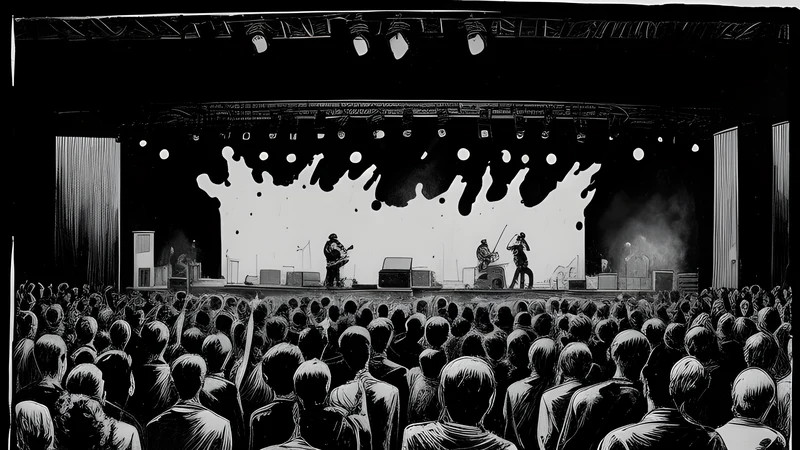
Two hundred people is a magic number for live music. It is small enough that a band cannot hide behind production and a crowd cannot hide behind its own size, and large enough to generate real heat and real momentum when the room fills. Beta lives at that number, and it makes the most of it. The stage is close, the ceiling is not far above your head, and a loud band at Beta arrives with the kind of physical immediacy that big rooms spend fortunes chasing and rarely catch. When 200 people pack in for a hyped underground act, the room becomes a single organism, and there is no better way to experience a band on the cusp.
The programming leans into exactly the music this room was built for. Beta has long been a landing pad for metal, hardcore, punk and the harder edges of indie, alongside a broad diet of niche international acts routing through Copenhagen who need a small, committed room rather than a cavernous one. This is the venue that catches the touring band too big for a back-bar but too small, or too specialised, for a 600-cap hall. For a certain kind of underground act, Beta is the natural Copenhagen stop, and for a certain kind of punter — me, most weekends I can manage it — it is a first port of call in the listings precisely because the booking is so consistently interesting.
What I value about Beta is that it treats the small show with total seriousness. There is a temptation, in a two-room operation, to treat the little stage as an afterthought, a holding pen for acts not important enough for the main hall. Beta does the opposite. The sound is properly handled, the room is run with care, and a band playing to 200 people gets the same professionalism as one playing to a thousand next door. That respect for the small gig is the difference between a venue that merely has a second room and one that genuinely builds a scene.
Why Amager, and why it matters
Beta’s location is central to its character, so it is worth defending Amager properly. The island has been part of Copenhagen’s growth for a century, from the old working-class Sundby districts to the gleaming new Ørestad development further south, and it has always had a slightly separate, self-sufficient identity from the fashionable central quarters. That separateness is good for music. A venue on Amager is not fighting for space in the crowded, expensive, over-programmed centre; it has room to breathe and an audience that will travel across the water for the right band.
The Amager Bio and Beta pairing anchors the island’s live-music identity, and it does so as a genuine institution rather than a passing commercial venture, run with the kind of continuity that lets an audience grow up around it. For people who live on Amager, having a proper small venue on the doorstep means the underground is not something that only happens somewhere else, across a bridge, in a hipper postcode. It happens here, on Øresundsvej, on a Tuesday, and that local rootedness gives Beta a loyal, unpretentious crowd that shows up for bands rather than for scenes.
Where it sits in the city’s small rooms
Copenhagen’s underground runs on a handful of small rooms scattered across the neighbourhoods, and each has its own flavour. Loppen has the anarchic stone-walled character of Christiania; Stengade has the punk grit of Nørrebro; Beta has the plain, honest, workmanlike quality of Amager, a room that makes no claims to bohemian glamour and just gets on with putting the right bands on stage. The scene is healthier for having all of them, because a band routing through Copenhagen has a proper small venue to land in whatever their exact size and sound, and a punter has somewhere different to be depending on the night.
The two-room logic also gives Beta a clear place in the career ladder. A band that sells out Beta earns a shot at Amager Bio next door, the same way a band climbs from Lille Vega to Store Vega across town or from Pumpehuset up to the bigger halls. Watching an act move from the small stage to the big one, sometimes within a year, is one of the quiet pleasures of following the Amager rooms closely. You saw them when 200 people fit in the room. Now they fill the old cinema next door, and you get to be smug about it.
What the small room does to a band
There is a specific thing that happens to a band in a room like Beta, and it is worth naming because it is the whole reason to go. In a 200-capacity space there is nowhere to hide. A band that leans on backing tracks, on a light show, on the sheer distance between stage and crowd that a big room provides, gets exposed instantly. What survives Beta is conviction — songs that stand up close, a performance that means it, a connection with the front row that you can see being made in real time. The room is a truth serum, and watching a band pass that test is one of the most reliable pleasures in live music.
It cuts the other way too. The small room can lift a merely decent band into something transcendent for one night, because the heat and the proximity and the shared attention of 200 committed people generate an energy that flatters everyone in it. Some of the most intense hours I have spent in front of a stage happened in rooms this size, watching an act that would look ordinary in a big hall become, for forty-five minutes in a packed little room, the most important band in the world. That alchemy is what the underground is for, and Beta produces it about as reliably as any room on the island.
Practical business
Getting to Beta is easier than the mainland snobbery suggests. Amager is well connected — the metro runs straight out to Sundby and beyond, the buses are frequent, and Øresundsvej is a short walk from the transit, so the venue is genuinely accessible from across the region even late at night. Amager also eats well, with a strong and unfussy food scene around the venue, so the pre-gig meal is sorted.
Inside, the room is small enough that distance is never a problem, but the usual small-club rules apply: arrive early if you want a clear angle and a spot at the front, because 200 people fills up fast when the band is hyped. The place runs hot when it is full, so travel light. And above all, gamble on the booking. Beta’s diary is a reliable curator of the interesting and the emerging, and the whole reward of a room like this is turning up for a band you only half know and walking out a convert. I have done exactly that more times on Amager than I can count, and the little room on Øresundsvej has repaid the trust again and again. One last argument for making the trip. A night at Beta tends to be cheaper than the equivalent in the fashionable centre — the tickets, the beer, the whole evening — because the room runs on love and a loyal local audience rather than tourist markup. For a young or broke music fan, that matters enormously, and it is part of why Amager has kept a genuine grassroots scene while pricier neighbourhoods have watched theirs thin out. The mainland can keep underestimating Amager. Those of us who make the trip across the water get the bands first, cheaper, and closer, and we get to say we were in the little room on Øresundsvej when the band that later filled the cinema next door was still learning how to hold a crowd.
Related Content