Beltane Fire Festival: Edinburgh Wakes the Summer on Calton Hill
A 1980s art-punk revival of a Celtic fire rite, drumming a May Queen and a Green Man around a floodlit hilltop on the last night of April
Contents
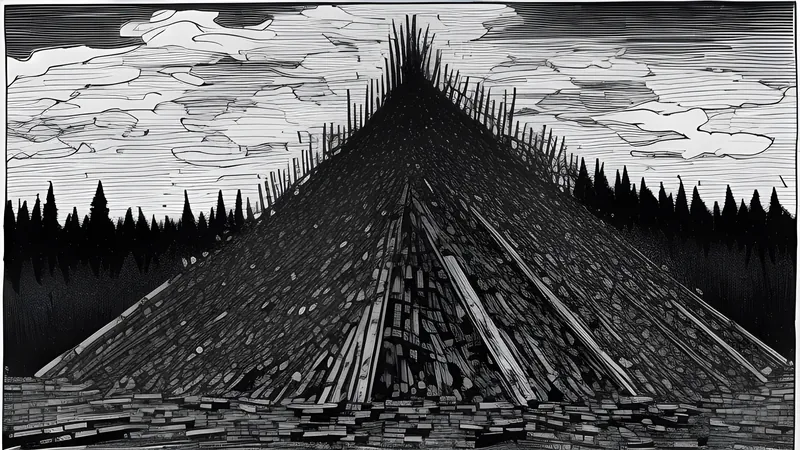
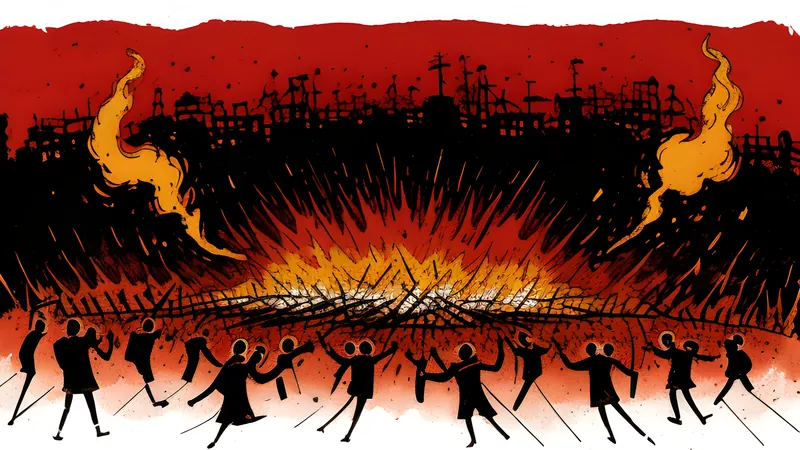
On the last night of April, a hill in the middle of Edinburgh fills with drums and torchlight and several hundred people painted red from the scalp down, and they spend the dark hours dragging summer up out of the ground by force. That is Beltane, and the strangest thing about it is how new it is. The rite it performs is old enough to be genuinely Celtic. The festival you can actually attend was built by a handful of art-punks in 1988, and I think that combination is exactly why it works.
I have not stood on Calton Hill for it. Late April is Roadburn season for me, and the two collide most years, so this is a read from the record — from the Beltane Fire Society’s own accounts, from the reportage, from photographs of a floodlit acropolis crawling with fire. But this is squarely my patch: a loud, physical, communal spectacle run by volunteers who mean it, in the tradition of the Nordic and British fire nights I actually work. Beltane belongs on the same shelf, and it earns its place.
What Beltane was before it was a show
Beltane is one of the four Gaelic quarter-day festivals, the one that opens the light half of the year at the start of May, opposite Samhain in the autumn dark. The historical rite was agricultural and protective: cattle driven between two bonfires to bless and cleanse them before the summer pastures, hearth fires doused and relit from a communal flame, the whole community underwriting the turn of the season with fire. It faded across the Scottish countryside as the farming world that needed it faded. By the twentieth century it survived mostly in folklore collections and place-names — a rite remembered rather than practised.
What happens on Calton Hill now is a revival, and it is honest about being one. It doesn’t pretend to an unbroken lineage back to the Iron Age. It takes the bones of the old festival — the fire, the fertility, the turning of the year — and rebuilds them as living performance.
1988, and the art-punks who lit it again
The Beltane Fire Society was formed in 1988, and its origins are more interesting than most folk revivals because they come out of the art underground rather than the heritage sector. Among the founders was Angus Farquhar of the industrial-music collective Test Dept — a band whose whole aesthetic was hammered metal, mass percussion and reclaimed ritual — working alongside choreographers, dancers, and Gaelic ethnologists and academics from the University of Edinburgh’s School of Scottish Studies. Test Dept energy plus actual scholarship: that is a rare and excellent pairing, and you can feel both halves in the result. The drumming is relentless and the mythology is researched.
The first Beltane drew an audience of around fifty. By the end of the 1990s it was pulling something on the order of ten thousand onto the hill, which tells you the revival answered a real appetite. The Society runs Samhuinn on the other side of the wheel at the end of October too, but Beltane is the flagship, and it has become one of the largest events of its kind anywhere in Europe.
The procession: a May Queen, a Green Man, and a lot of red
The night is structured as a processional drama around the hilltop, and the two figures at its centre carry the whole story. The May Queen leads — the embodiment of spring, of the summer coming into her power. The Green Man is her counterpart, the spirit of the wild and of vegetation, and over the course of the procession he undergoes the festival’s central transformation: his old winter self is stripped away and he is reborn into summer, and the Queen brings the season to life. It is a marriage and a resurrection told entirely in movement, drums and fire, with no script you need to read beforehand to feel what is happening.
Around them moves an entire cast, colour-coded into groups the regulars know by sight. The Reds are the chaos — body-painted crimson, unpredictable, the disruptive spirits who test and torment the procession. The Whites guard the Queen and hold the order. Drummers drive the whole thing forward with a wall of percussion that, by every account, does to the crowd exactly what a good opening band does to a festival field: locks a few thousand strangers into one shared pulse. There are fire performers, torchbearers, tableaux staged at points around the hill — the National Monument, the old observatory, the slopes — so the audience moves through the story rather than watching it from seats.
Everyone on that hill is a volunteer. Hundreds of performers rehearse for months, build their own costumes and paint, and put on one of Europe’s most striking fire spectacles for free, for the pleasure and the meaning of it. That is the detail I keep coming back to. This is the same economy that runs the burns and the bonfire nights I love — no headliner, no backstage, no ticket-price cynicism, just a community deciding a thing is worth doing at scale and then doing it. When a spectacle is built by the people watching it, it hits differently, and Beltane is built almost entirely from the inside.
The costuming and the paint are worth dwelling on, because they are a huge part of why the thing photographs like a fever dream. The Reds are painted head to foot, faces and all, so that in torchlight a whole troupe of them reads as something genuinely other — not people in costume so much as spirits let loose on the hill. The design language is elaborate and it changes and grows year on year, refined by the volunteers who build it, so Beltane never quite calcifies into a fixed pageant. Each spring the Society reworks the myth, adds groups, retires others, rethinks the tableaux. That is the mark of a living tradition rather than a re-enactment: it is allowed to evolve, and the people who make it are trusted to change it. A revival that kept everything frozen at 1988 would be a museum. Beltane stays messy and current because the crew rebuild it every year from the inside.
There is a bodily commitment to it as well that I respect enormously. The performers are out on an exposed Scottish hilltop at the end of April, half-dressed and painted, drumming and running and dancing for hours in weather that has no obligation to be kind. Nobody is being paid. The cold is real, the fire is real, the exhaustion at the end of the night is real, and they do it because the night means something to them. That is the exact currency every scene I care about runs on, and Beltane trades in it as purely as anything I know.
Why a modern city still climbs the hill
Calton Hill is a good stage for it, which matters. It is a genuine hill in the centre of Edinburgh, crowned with the columns of the unfinished National Monument — a fragment of a Parthenon that Scotland ran out of money to build — so the procession moves through what looks like a ruined Greek acropolis with the whole lit city laid out below. Fire against that backdrop, several thousand people packed onto the slopes, drums rolling off the stone: the venue does half the work, the way a great room always does.
And the deeper question — why a twenty-first-century capital, full of people who don’t believe cattle need blessing before the summer grazing, still fills a hill with fire on 30 April — is the one worth sitting with. Part of it is spectacle, plainly. But the older function survives underneath the performance. Beltane marks the moment the year tips toward light, and cities are actually worse than farms at noticing that turn, because a city insulates you from the seasons until you forget them. Climbing a hill in the cold dark to drum the summer awake is a way of refusing that amnesia. You put your body on the exact hinge of the year and mark it, together, out loud.
The same fire, all over the map
Edinburgh is doing on Calton Hill what a lot of the north does at the turn from dark to light. The very same night, Valborg burns across the Nordic countries with student choirs singing the spring in over the bonfires; weeks later Denmark stands a witch on a beach fire for Sankt Hans at midsummer; in the Shetland dark of January Up Helly Aa sends a Viking galley up in flames to drag the light back; and in March Valencia burns a year of giant sculptures to clear the way for spring. Different saints, different myths, different centuries — one instinct. Light a fire at the seam of the seasons and put the whole community around it.
Beltane’s particular genius is that it proved the instinct survives transplant. You can take a rite that died with the old farming year, hand it to a bunch of industrial-music people and folklore scholars in the 1980s, rebuild it from research and drums and red body-paint, and ten thousand people will climb a hill in the cold to be part of it. The tradition wasn’t preserved. It was restarted, on purpose, by people who understood that a city needs its fire nights more than the countryside ever did. I’ll make it there in an April that lets me. Until then, the record is enough to tell me they got it right.
Related Content