ArcTanGent: Math-Rock in a Field
The most technical festival in Britain, and why the odd time signatures fill a Somerset farm
Contents
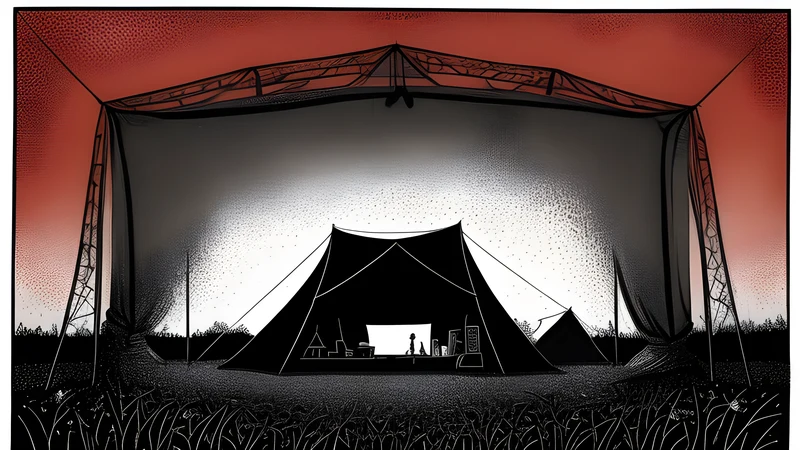
There is a specific kind of British festival that only makes sense once you accept that some people go to gigs to count. ArcTanGent is the temple of those people. It runs every August on Fernhill Farm, a working sheep farm up in the Mendip Hills near Compton Martin, a short drive south of Bristol, and it caps its crowd at somewhere around five thousand. That is small. Copenhell puts more than that through the gates before the first band on the first day. What ArcTanGent lacks in scale it makes up for in the density of the music, which is the most rhythmically deranged programming you will find on any European festival bill.
The festival started in 2013, spun out of the same Gloucestershire crew who run 2000trees, and from the beginning it planted its flag on a genre most promoters treat as commercial poison: math rock. Guitars in fifths and sevenths, songs that change gear every eight bars, drummers playing in 7/8 while the bass sits in 4/4, and long instrumental builds that resolve into a wall of noise. It sounds like homework. In a field, with a good PA and the sun going down, it turns out to be one of the most physical experiences going.
The name is a warning
They called it ArcTanGent, after the trigonometric function, and named the stages to match the joke. The Arc, the Tan, the Gent, the PX3, the Yohkai, the Bixler. If you do not get why that is funny you are probably not the target audience, and that self-selection is the whole design. This is a festival that trusts its crowd to be nerds and rewards them for it. The bar talk is about tunings and pedalboards. People argue about whether a band is post-rock or post-metal as though it matters, and at ArcTanGent it sort of does.
The bookings tell you exactly where the ceiling of this scene sits. Meshuggah, the Swedish band who effectively invented the polyrhythmic djent template that half of modern metal now runs on, have headlined. So have 65daysofstatic, the Sheffield instrumentalists who scored the video game No Man’s Sky. Godspeed You! Black Emperor, the Montreal collective who turn crescendos into ninety-minute rituals, brought their doom-laden orchestral drone. Mono from Japan, Russian Circles from Chicago, And So I Watch You From Afar from Belfast, TTNG from Oxford who are more or less the house band of the genre. These are not household names. Put them on one bill in one field and you have assembled most of the global A-list of clever, loud, instrumental music.
The genre itself has an oddly specific pedigree. Math rock traces back through American bands like Slint, Don Caballero and Shellac in the late eighties and nineties, all interlocking guitar lines and cold, deliberate precision, and then it crossed the Pacific and the Japanese scene, led by bands like Toe and Lite, made it warmer and more melodic. Britain came late to it but adopted it hard, and ArcTanGent became the point where those three traditions meet in one place every summer. You can stand at one stage and hear the American austerity, walk to the next and get the Japanese sweetness, and end the night in front of a European post-metal band the size of a weather system.
Why instrumental music works better outdoors
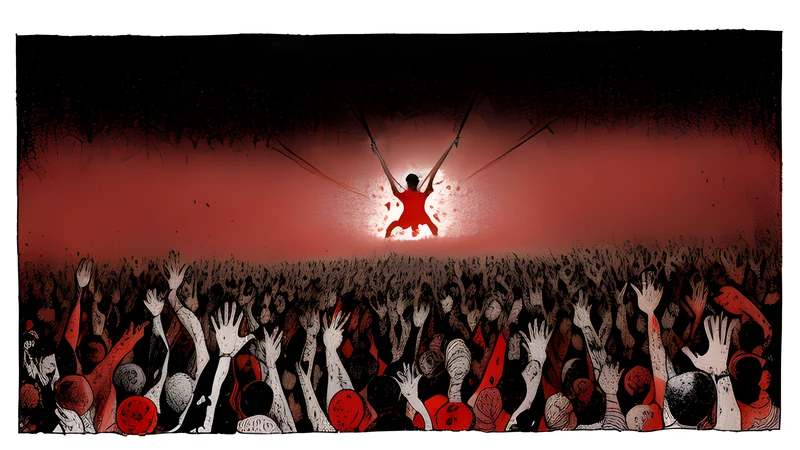
Here is the thing nobody tells you about post-rock until you stand in it. Music without a singer removes the anchor that pop uses to hold your attention, and in a small room that can feel like drift. Outdoors, with the sky doing half the work, it lands completely differently. A band like Cult of Luna, all glacial build and cathartic release, needs space and volume and a horizon to open up against. ArcTanGent gives them a hillside and a proper sound system and gets out of the way. The quiet passages are genuinely quiet because the crowd shuts up to listen, which is a discipline you almost never get at a bigger festival.
That crowd discipline is the festival’s real asset. Five thousand people who have travelled to the Mendips specifically for angular instrumental rock are a self-curating audience. There is very little of the drift-in-drift-out phone-scrolling that hollows out the middle of the day at a mega-festival. People commit to sets. They watch bands they have never heard because a friend swore blind the drummer was worth it. The discovery rate is absurdly high, which is exactly the promise every festival makes and almost none deliver.
There is also a technical reason the sound is so good, and it comes down to the size. A five-thousand-cap site does not need the enormous, delayed, tower-stacked PA systems that a hundred-thousand-cap field demands, and those big systems always cost you clarity at distance. At ArcTanGent you are close enough to the source that the detail survives, which matters enormously for music built entirely on detail. When a band’s whole appeal is the interplay between two guitars playing different patterns, you need to hear both, cleanly, or the point is lost. This festival is engineered around that requirement.
The scale is the point, and the risk
The problem with running a beloved small festival is that beloved small festivals get squeezed. ArcTanGent’s capacity keeps it intimate and keeps it solvent only if it sells out, and a wet August on an exposed Somerset hillside can turn a campsite into a bog and a budget into a hole. The festival has weathered years where the mud became the main story. It has also resisted the obvious temptation to grow its way out of the risk, because the moment you double the capacity you dilute the thing people pay for. This is the tightrope every independent festival walks, and I have written before about why every festival now feels the same once the private-equity money moves in. ArcTanGent has stayed on the right side of that line so far, largely by refusing to book anything a commercial promoter would recognise as a safe bet.
There is a lineage here worth respecting. The technical, instrumental end of loud music has always needed sympathetic homes, and Britain has historically under-served it. For decades the choice was a sweaty Camden basement or nothing. ArcTanGent built a destination for it, and in doing so gave a genre that lives online a physical annual gathering. That matters more than it sounds. Scenes that only exist on the internet fray. Scenes that meet once a year in a field, drink warm cider, and watch the same bands together develop the connective tissue that keeps them alive.
Compare it to the way the circle pit works as a set of unwritten manners at a metal show. The ArcTanGent crowd has its own etiquette, quieter but just as real: you do not talk over the ambient passages, you clap the odd-metre sections because you clocked the change, and you give the band the silence they need before the drop. It is a room full of people paying attention on purpose, and that attention is the currency the whole festival runs on.
The practical shape of it
Four days now, Wednesday to Saturday, with the Wednesday a lower-key warm-up that the regulars treat as the secret best day. Camping is the default and effectively compulsory given how far the site sits from anything. The stages cluster close enough that you can genuinely see most of what you want without the forced-march logistics of a Reading or a Download. Silent disco after the bands, the usual overpriced festival food, the usual queue for a decent coffee in the morning. None of that is the reason you go.
The Bristol connection runs deep and is worth understanding, because it explains the festival’s character. Bristol has one of the most fertile underground music economies in Britain, a city of squats-turned-venues, DIY promoters and cross-pollinating scenes, and ArcTanGent effectively functions as that city’s annual overflow into the countryside. Many of the smaller bands on the bill are Bristol or Cardiff acts a train ride away, and the crowd skews toward the kind of people who already spend their weekends in the city’s basements. The festival gathered an audience that already existed and gave it a horizon to look at.
The bottom of the bill is the whole point
At most festivals the bottom third of the poster is filler, the local-opener padding you drift past on the way to a burger. At ArcTanGent it is where the action is. Because the genre lives online and the barrier to entry is a laptop and a well-tuned guitar, there is a constant churn of extraordinary young bands with two hundred monthly listeners and the technical chops of session players twice their age. The festival’s booking team clearly spends the year with headphones on, and the reward for arriving early and watching the first band on a small stage is regularly better than the headline slot. I have always been first through the door for the openers back home, and this is a festival organised entirely around that instinct, which is rarer than it should be.
That churn also means the festival ages well. A band that opened the smallest stage three years ago comes back mid-afternoon on a bigger one, and the crowd who caught them the first time feel a proprietorial pride about it. It builds a memory into the event, a sense that you watched a scene grow in real time. Very few festivals earn that kind of loyalty, and the ones that do tend to be the small, stubborn, uncommercial ones that never chased the wrong crowd.
You go because there is no other place on the calendar where you can watch a Japanese post-rock band, a Belfast riff machine, a Chicago instrumental trio and a Swedish sludge monolith inside twelve hours, all playing to people who actually chose to be there. For a certain kind of listener, the kind who reads liner notes and cares what a band tunes to, that is the best weekend of the year. I champion the small rooms and the openers back home at Den Grå Hal and Christiania’s back rooms, and ArcTanGent is what happens when you build a whole festival out of that same instinct: trust the difficult stuff, trust the crowd, and let the odd time signatures do the talking.
It should not work. A festival built on music you cannot hum, on a farm on a hill, in the least reliable weather in Europe, capped at a size that leaves no margin for error. It works because the people who run it never once flinched on the one thing that makes it special, which is the music itself. Everything else is negotiable. The 7/8 is not.
Related Content