Arch Enemy: Melodic Death and the Frontwoman Era
How Michael Amott's melodic death machine made the growling frontwoman a headline act
Contents
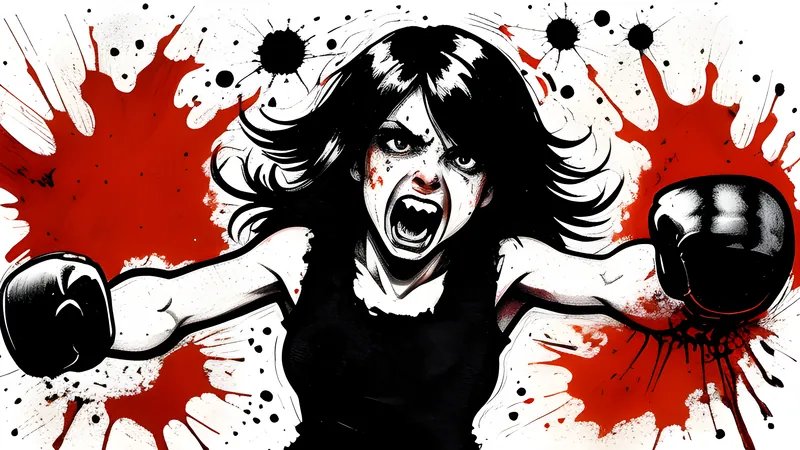
The single most important thing Arch Enemy ever did had nothing to do with a riff. In 2000 they hired a woman to do the growling, and in doing so they quietly dismantled one of extreme metal’s dumbest assumptions — that the person delivering the guttural roar had to be a man. Two decades and two frontwomen later, that decision looks like one of the more consequential hires in modern metal.
Arch Enemy formed in Halmstad, on Sweden’s west coast, in 1995. The founder and constant is guitarist Michael Amott, a genuine pedigree player — he had already served time in the British grindcore pioneers Carcass and the Swedish death metal band Carnage before starting his own project. Arch Enemy were his vehicle for melodic death metal, the tuneful, twin-guitar strain of extreme music that Sweden had turned into a national export. Amott brought a slightly different flavour to it: a hard-rock sense of the guitar hero, big harmonised solos, riffs with real swing under the aggression.
The Amott sound
Musically, Arch Enemy sit adjacent to the classic Gothenburg template without being purely of it. The melodic death vocabulary is all there — the galloping tempos, the harmonised leads, the melody riding over brutality — and they share plenty of DNA with the bands covered in the piece on the Gothenburg sound. But Amott’s writing leans harder on the guitar-hero tradition, the twin-lead interplay between him and (for many years) his brother Christopher owing as much to Iron Maiden and Thin Lizzy as to death metal. The songs are built around solos and hooks, engineered to be memorable rather than merely punishing.
The breakthrough record is Wages of Sin in 2001, and it is inseparable from the vocal change. The early Arch Enemy albums — Black Earth, Stigmata, Burning Bridges — featured Johan Liiva on vocals and were respected without being huge. Then Liiva left, and Amott made the hire that changed everything.
Angela Gossow and the roar that ended an argument
Angela Gossow was a German vocalist with a death growl that stopped people in their tracks. Not a novelty, not a softer “female” version of the sound — a full, throat-shredding roar the equal of any man in the genre. She joined for Wages of Sin in 2001 and immediately became the story, though it says something depressing about the era that her gender was the headline rather than her sheer ability.
What Gossow did over the next thirteen years was make the argument disappear. Album by album — Anthems of Rebellion, Doomsday Machine, Rise of the Tyrant, Khaos Legions — she fronted a band that got bigger and bigger, and the novelty conversation gradually died because it had nowhere to go. You cannot keep calling something a gimmick after a decade of it headlining festivals. Live, she was a commanding presence: total control of the growl, an easy authority on stage, none of the visual apology that the industry so often demanded of women in heavy music. She looked and sounded like a frontman in the oldest sense of the word, and the fact that “frontman” is the natural word tells you how thoroughly she won.
Gossow’s other significant contribution was strategic. When she stepped back from performing in 2014, she moved into managing the band, and she personally identified her own replacement. That is a rare and generous thing — an outgoing singer curating her own succession rather than letting the band fold or flounder.
Alissa White-Gluz and the second act
The replacement was Alissa White-Gluz, a Canadian vocalist previously of The Agonist, and she joined in 2014. The handover could easily have gone badly. Replacing a beloved and genre-defining frontperson is one of the hardest jobs in music, and the internet was ready to be cruel. Instead White-Gluz turned out to be a shrewd choice: a powerful growl of her own plus a strong clean singing voice, which opened up a new dimension the band had mostly kept in reserve.
The albums with White-Gluz — War Eternal, Will to Power, Deceivers — lean a little more melodic, using her clean vocals as a contrast to the roar, and the results have kept Arch Enemy firmly in the festival-headline tier. Her stage presence is more overtly theatrical than Gossow’s, all blue hair and kinetic energy, and she has become an outspoken public figure on ethics and animal rights. The band she fronts is, if anything, bigger than the one she inherited.
The frontwoman lineage — Gossow to White-Gluz, one commanding growler handing off to another — is now simply part of what Arch Enemy is. Two women have fronted the band across more than two decades, and the conversation has moved so far that a young metal fan today might not even register it as remarkable. That is the real victory. The thing that was once a talking point has become unremarkable, which is exactly what progress is supposed to feel like.
The live machine
On stage, Arch Enemy are a professional, high-gloss melodic death machine, and I mean that as a compliment. Michael Amott, greying now and utterly unbothered, stands stage-side delivering those harmonised leads with the calm of a man who has done it ten thousand times. White-Gluz covers the whole stage. The songs are built for exactly this — big choruses, guitar-hero solos, breakdowns engineered to move a festival field.
They fit naturally on a bill alongside their Swedish melodic-death kin. Put them near Amon Amarth, the Viking-metal stadium act from the other side of the country, and you get a full picture of how far the melodic death template can be pushed — one band toward saga-metal spectacle, the other toward the sleek, solo-driven headline set. Both prove the same underlying point: the tuneful, aggressive sound Sweden invented in the nineties turned out to have enormous commercial reach once bands worked out how to present it.
Arch Enemy’s presentation was always sharp. Amott understood from the start that melodic death metal needed a face and a hook, and he built a band around big guitars and a magnetic vocalist. That the vocalist happened to be a woman, twice over, is the part history will remember — but it worked because the music underneath was strong enough to carry it. A gimmick lasts an album. Arch Enemy have lasted nearly thirty years.
The Amott pedigree and the craft underneath
It would be easy, given how much of the Arch Enemy story is about the vocalists, to undersell the musician who built the whole thing, so let me correct that. Michael Amott is one of the more accomplished guitarists his generation of extreme metal produced, and his CV is a small history of the genre in itself. He played on Carcass’s Heartwork in 1993, a record widely credited as one of the founding documents of melodic death metal, so his fingerprints are on the sound’s origin as well as its later commercial peak. He knows exactly what he is doing, because he helped work out what there was to do.
That pedigree shows in the consistency of Arch Enemy’s writing. Across nearly thirty years and multiple lineups the guitar identity has stayed remarkably stable — big, memorable, solo-driven, rooted in classic hard rock as much as in death metal. Amott writes riffs that a casual listener can hum and a guitar nerd can respect, which is a harder trick than it sounds. The band has never chased trends the way some of their melodic-death peers did; they found a lane early and refined it rather than reinventing it, and the reliability is part of why they became a festival fixture.
The brother dynamic mattered too, for years. Christopher Amott’s presence gave the band a genuine twin-lead partnership in the Maiden tradition, two players trading and harmonising rather than one guitarist and a hired hand. His comings and goings over the years shifted the band’s chemistry, but the core Amott approach — melody first, aggression as the frame around it — has never wavered. Take away the frontwoman story entirely and you would still have a very good band, and it is worth saying so, because the vocalists have sometimes overshadowed the man who wrote the songs they sang over.
Why it matters beyond the novelty
Strip out the frontwoman story and Arch Enemy are a very good melodic death metal band with a gift for the memorable and a guitarist of real class. Keep the frontwoman story in and they become something more significant: the band that proved, definitively and at scale, that the growl has no gender. Angela Gossow kicked the door down and Alissa White-Gluz walked through it like the door had never been closed, and every woman fronting an extreme metal band today is standing in the space they cleared.
That is a legacy worth more than any single riff. Michael Amott built the machine, but the two women he put out front are the reason Arch Enemy changed the conversation. The roar was always the same. The mouth it came out of is what rewrote the rules.
Related Content