Alcatraz: Belgium's Hardcore-and-Metal Prison Break
How an indoor one-dayer in Deinze became a four-day prison-themed metal fortress
Contents
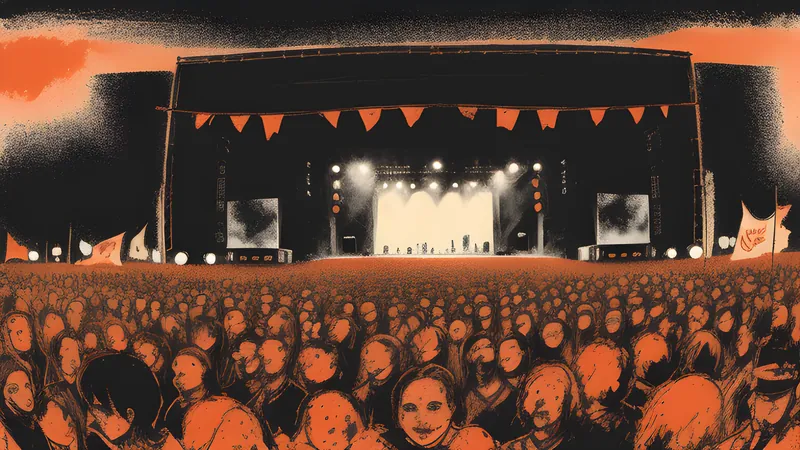
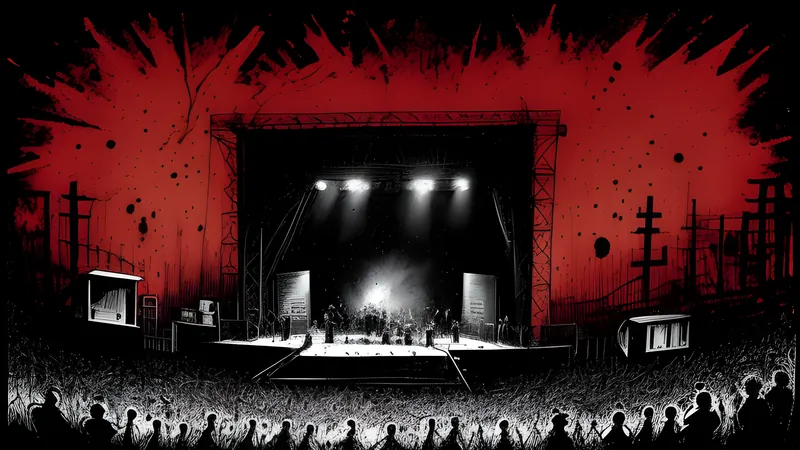
The gimmick is right there in the name, and the festival commits to it completely. Alcatraz dresses its site in Kortrijk, in the Belgian region of West Flanders, as a mock prison — watchtowers over the field, the main stage christened The Prison, the ticket-holders styled as inmates staging a weekend-long breakout. It is one of Europe’s fastest-growing metal festivals, and it got there by being genuinely, unapologetically heavy while everyone around it chased a wider audience.
From a hall in Deinze to a field in Kortrijk
Alcatraz did not start as an open-air fortress. The first edition ran in 2008 as a one-day indoor event at the Brielpoort concert hall in the Belgian town of Deinze — a single day of metal in a box, the modest beginning that most durable festivals share. It was a scene event by scene people, with no particular pretension to size.
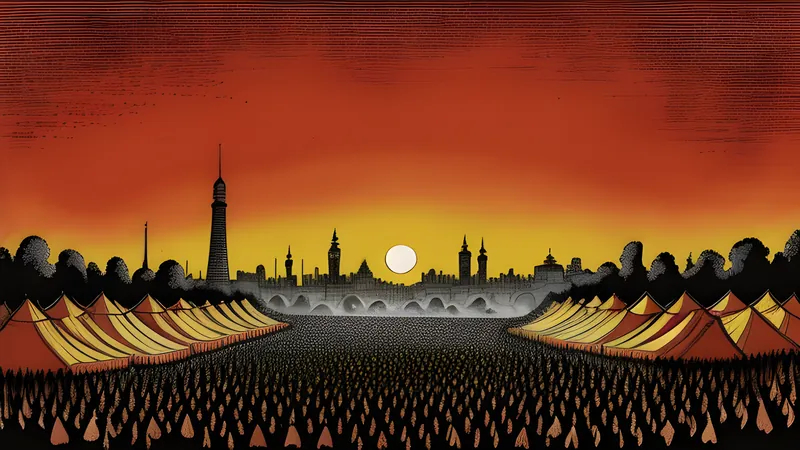
The turning point came in 2013, when the festival relocated to Kortrijk and took its current name and identity. The move to the Sportcampus Lange Munte site gave it room to grow into an open-air event, and grow it did. Since 2014 the festival has run across two days, since 2017 across three, and recent editions have stretched to four days with well over 100 bands on the bill. The mayor of Kortrijk has cited attendance around 25,000, and the festival’s own projections for its 2026 edition run to roughly 45,000 metalheads. For a festival that was a single indoor day fifteen years ago, that is a remarkable climb.
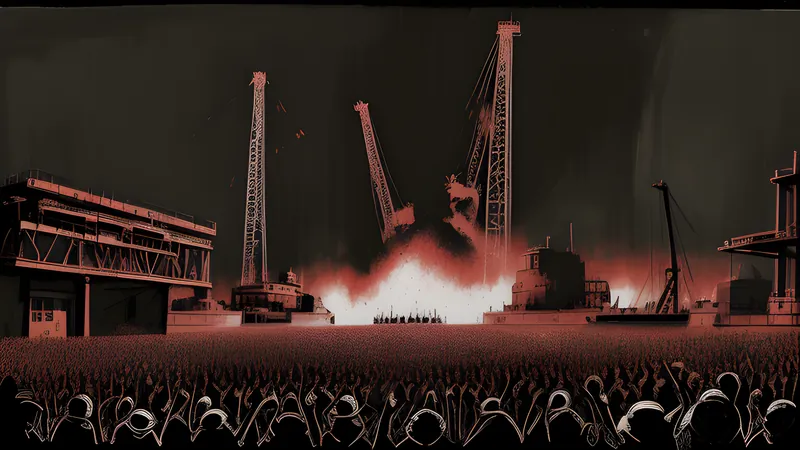
The prison theme, adopted with the Kortrijk move, is what gives Alcatraz its face. The grounds are laid out as a penitentiary — watchtowers rising over the crowd, the main stage as The Prison, the whole design leaning into the idea of a weekend jailbreak. It is theatrical in a way that suits metal’s love of spectacle, and it gives the festival a strong visual identity that sets it apart from the generic open-air template. You are not just at a field with stages; you are, for the weekend, an inmate.
Heavy without apology
What matters more than the theme is the booking policy, and here Alcatraz has made a clear choice. This is a festival programmed for people who like their metal genuinely heavy. The bills lean hard into thrash, death, black and industrial metal, with the kind of extreme-end headliners — Kreator anchoring a thrash-heavy day, for instance — that signal a festival unembarrassed about being for the committed. It also books the bigger, more accessible names that move volume, so the lineup keeps a broad top end while the centre of gravity sits heavier than most.
That positioning is the whole strategy, and it is a smart one. As the mega-festivals broaden their bills to chase the largest possible crowd, they leave a gap for events that stay properly heavy, and Alcatraz has driven straight into it. It is one of a cluster of European festivals — alongside the likes of Hellfest in France and the extreme-metal institutions of Germany — that have thrived by trusting that a dedicated metal audience is big enough to build a real festival on. The heaviness is the selling point, not a liability to be softened.
The crowd that policy attracts is the good kind. A festival programmed this hard draws people who came specifically for the music, not for a general summer knees-up with some bands attached, and that changes the temperature of the whole event. These are audiences fluent in the physical language of heavy shows — the circle pits, the walls of death, the collective heave of a crowd that knows exactly what a band is asking of it. If you want to understand what that ritualised violence is actually for, I have made the case in what the mosh pit is actually for; at Alcatraz it is a native tongue.
Belgium’s place on the metal map
Belgium is a small country with a mighty festival footprint, and understanding Alcatraz means understanding its neighbourhood. The country already hosts Graspop Metal Meeting, one of the continent’s biggest metal festivals, over in the Flemish town of Dessel. For Alcatraz to carve out a thriving space in the same small nation is a real achievement, and it did it by being the more focused, heavier, more independent option — the scene festival to Graspop’s mainstream giant.
That independence is part of the appeal. Alcatraz has built its reputation on booking the bands the committed actually want, running its own prison-themed world, and growing organically off the strength of its programming rather than chasing crossover names. The West Flanders location, near Kortrijk in the corner of Belgium close to the French border, sits it in the dense metal geography of northwest Europe, within easy reach of France, the Netherlands and Germany, so the crowd draws from across the region rather than from Belgium alone.
The festival’s steady climb — indoor one-dayer to four-day open-air fortress in fifteen years — is a case study in how to build a heavy festival the durable way. It did not launch huge and expensive; it started small, found its identity, committed to a clear booking philosophy, and let word of mouth in a loyal scene do the rest. That is the same organic, scene-first growth pattern that has produced the most respected festivals in the extreme-metal world, the German extreme-metal institution I have written up in With Full Force among them.
Building a festival the slow way
The temptation for anyone starting a festival is to launch big — a splashy first edition with expensive headliners, a huge site, a marketing blitz — and a great many festivals that took that route are no longer running, because a single bad-weather weekend or one overpriced booking can sink an event that overreached. Alcatraz did the opposite, and its trajectory is a quiet argument for patience. One indoor day in a concert hall, then two days, then a move outdoors, then three days, then four, each expansion earned by the demand the previous edition proved. Nothing was gambled that the festival could not afford to lose.
That measured growth built something more valuable than size: trust. A metal audience is discerning and loyal in equal measure, quick to spot a festival that is chasing crossover money and quick to reward one that keeps faith with the scene. By growing off the strength of its bookings and its identity rather than a burst of hype, Alcatraz accumulated the kind of goodwill that fills a field year after year regardless of who is headlining. The prison theme and the heavy lineups told the audience exactly what the festival stood for, and the audience believed it because the festival never contradicted itself.
The four-stage layout, anchored by the open-air Prison main stage, gives the modern festival the scale to host over a hundred bands while keeping the heavy identity intact across the site. Running a bill that deep means the smaller and newer acts get real slots in front of real crowds, which feeds the same scene-ladder that healthy metal festivals depend on — today’s early-afternoon opener is a future main-stage name, and the committed crowd is there early enough to catch them. That is the mark of a festival built by people who understand the ecosystem they are part of rather than merely selling tickets into it.
Why the breakout works
There is a version of the criticism that says the prison theme is a gimmick, and of course it is — but it is a gimmick executed with enough commitment and wit that it becomes an asset rather than an embarrassment. The watchtowers and the Prison Stage give the festival a coherent identity in a crowded market, and metal has always understood that theatre and heaviness reinforce each other. A festival that dresses itself as a penitentiary and books Kreator to headline knows exactly what it is and who it is for.
That clarity is Alcatraz’s real strength. In a European festival landscape where a lot of events are converging on the same broad, safe, interchangeable formula, Alcatraz has stayed pointedly itself: heavy, themed, independent, and growing precisely because it refused to dilute. It bet that Belgium had room for a second major metal festival if that festival was willing to be genuinely extreme, and the bet has paid off in the fastest-rising attendance figures in the region.
There is a broader lesson in Alcatraz’s rise for anyone watching the European festival market. The received wisdom for years was that survival meant broadening — softening the bill, chasing crossover names, widening the tent until a metal festival was really a general festival wearing metal branding. Alcatraz proved the opposite bet could win: that staying pointedly, proudly heavy, in a small country already served by a mainstream giant, was a route to some of the fastest-growing attendance figures in the region. The audience for genuinely extreme music turned out to be larger and more loyal than the cautious money assumed.
Alcatraz is the festival for the metalhead who wants the heavy stuff served straight, in a field dressed as a jail, surrounded by tens of thousands of people who came for exactly the same reason. The breakout, fifteen years in, is still gathering speed.
Related Content