Aalborg Karneval: Northern Europe's Biggest Carnival Is in Jutland
How a northern Danish city borrowed samba from Rio, kept the beer, and built Scandinavia's largest street party
Contents
The last Saturday in May, a city in northern Jutland that spends the other fifty-one weeks of the year being reasonable puts on feathers, glitter and very little else, and pours a hundred thousand people into the streets to dance samba in the general direction of the Limfjord. This is Aalborg Karneval, and the first thing to understand about it is the sheer improbability of the address. Carnival belongs to Rio, to Venice, to Notting Hill — to places with heat and history and a Catholic calendar. Aalborg has a cement works, a football club that punches above its weight, and a latitude of 57 degrees north, which is roughly level with the southern tip of Alaska. It has, somehow, also got the biggest carnival in Scandinavia.
I have been up for it more than once, and the drive from Copenhagen — four hours and a bridge — is worth it for the cognitive whiplash alone. You arrive expecting the tasteful, low-lit, hygge-forward Denmark of the tourist brochures and you walk instead into a city that has decided, collectively and without apparent embarrassment, to lose its mind for a weekend. The strangeness is the whole appeal. A place this far north has no business throwing a party this loud, and the fact that it does anyway tells you something about how much a Danish spring has to make up for.
Where a Jutland carnival even comes from
It is genuinely new, which surprises people who assume any European street festival must be medieval. Aalborg Karneval dates to 1983. The origin is almost comically specific: a group of Aalborgensians went down to a small carnival in Copenhagen in 1982, watched people dance samba in the street, and drove home to northern Jutland convinced their own city deserved the same. The first edition landed in 1983, centred on Gammel Torv, the old square, where by most accounts several thousand people threw themselves into the then-exotic business of Brazilian samba with the total commitment of northerners who have decided to enjoy something.
That could easily have been a one-off, a municipal folly that fizzled by 1985. Instead it grew, and kept growing, until the numbers stopped sounding Danish at all. The modern carnival draws crowds counted in six figures — organisers and local press routinely put the Grand Parade day at around 100,000 people, which for a city whose normal population sits near the 120,000 mark is a genuinely destabilising ratio. For one Saturday, the carnival is not an event Aalborg hosts. It is what Aalborg temporarily is.
The Copenhagen seed matters because it explains the flavour. This is not a carnival with a thousand years of penitential Catholic scaffolding under it, no Lenten fasting to justify the excess. Aalborg imported the aesthetics of Rio — the samba, the feathers, the sequins, the sheer volume of exposed goose-pimpled Danish skin — and grafted them onto the one thing Denmark genuinely does have a deep tradition of, which is drinking outdoors in a crowd the moment the weather permits it. What you get is a Brazilian costume on a Nordic drinking culture, and the seam shows in the best possible way.
The shape of the week
The carnival is not a single afternoon. It stretches across roughly two weeks of build-up and satellite events, and the structure has settled into a few fixed pillars that anyone planning a trip should know.
The Battle of Carnival Bands comes the night before the main parade. This is the connoisseur’s event, and the one that gives the carnival its competitive spine. Carnival groups — the organised troupes who spend months on choreography and costume — come from across Denmark and from abroad to perform for the honorary title of Best Carnival Band. It is the part of the weekend where you can see that under all the amateur exuberance there is a real, serious sub-culture of people who take samba percussion and street performance as a craft. If you want to understand why the parade the next day looks as coordinated as it does, watch the bands first.
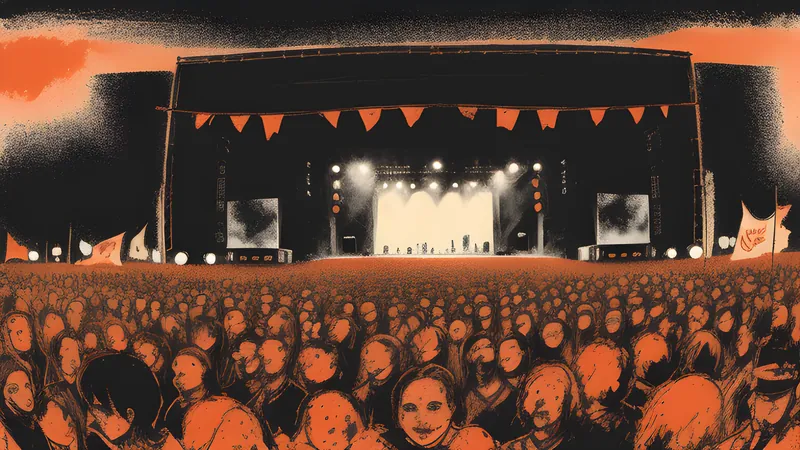
Then comes the Grand Parade, the Saturday centrepiece, and the reason for the hundred thousand. Four separate processions set off from different points around the city, wind through the centre gathering costumed civilians as they go, and converge on Kildeparken, the big central park, where the whole thing dissolves into a single enormous open-air party with stages, sound systems and a level of daytime drinking that would alarm most nations and delights this one. There is also a Children’s Carnival, which keeps the whole affair anchored as a genuine city-wide family festival rather than purely an excuse for adults to behave badly — though it is also, unmistakably, an excuse for adults to behave badly.
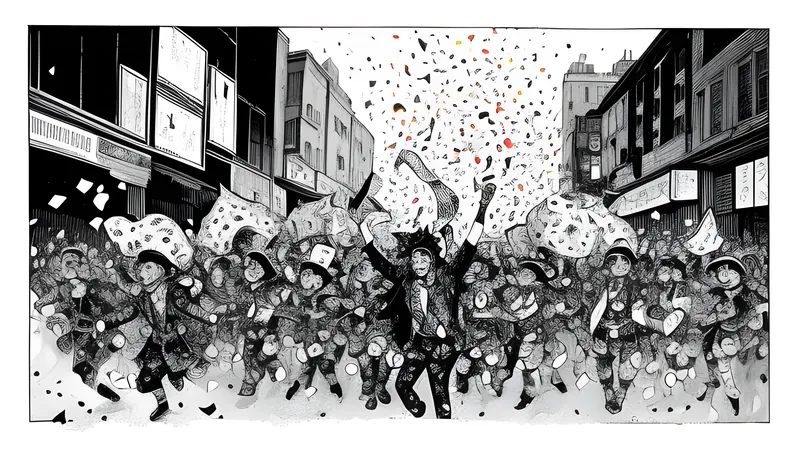
The professional groups — usually around fifteen troupes from various countries — form the backbone of the parade, the trained core around which the amateur mass assembles. But the defining sight of Aalborg is not the professionals. It is the tens of thousands of ordinary people in home-assembled costume, an entire population that has decided fancy dress is compulsory and has interpreted the brief with a Danish literalism that ranges from the genuinely spectacular to the frankly deranged.
The theme changes year to year, and part of the ritual is the collective decision about how to interpret it — offices, sports clubs, student halls and groups of friends spending weeks on costume with an intensity that only makes sense once you have been. The routes matter, too. Four processions setting off from four corners is a deliberate piece of civic engineering: it seeds the party across the whole city at once, so that no single street carries the crush alone and the pressure builds toward Kildeparken rather than gridlocking the centre. By the time the four rivers of costumed humanity meet, the scale has become genuinely disorienting, and the sound — dozens of samba sections, none of them quite in time with any other — turns the town into one enormous, overlapping, cheerfully chaotic drum machine.
What a Dane looks like off the leash
The thing that stays with you is the collective transformation. Danes, in the ordinary run of things, are a reserved people — courteous, ironic, allergic to public sincerity, keepers of the famous emotional short leash. I have watched the same reserve dissolve at midsummer, when the whole country lets itself feel something for ninety seconds around a bonfire on Sankt Hans Aften. Aalborg is that impulse cranked to a completely different register: full sensory riot, sustained for hours, in costume.
What makes it work, and what keeps it from tipping into the grim end-of-night ugliness that afflicts a lot of big drinking events, is that the entire thing is powered by mischief rather than menace. The prevailing mood is silly. People have spent real money and real hours to dress as a shoal of prawns or a Viking longship crewed by six flatmates, and having done so they are committed to the bit, and the commitment is infectious. You cannot stay aloof from a hundred thousand people in fancy dress. The city’s ordinary rules of Nordic decorum are suspended by mutual agreement, and everyone knows they go back up on Sunday.
There is a longer point buried in all this samba. Denmark’s grand communal gatherings tend to be either solemn or ticketed — the reflective fires of midsummer, or the fenced cathedrals of noise like Roskilde, where a temporary city of a hundred thousand assembles behind a wristband. Aalborg is free, open, and unserious, and it proves that the Danish appetite for mass gathering does not always need a gate or a purpose. Sometimes it just needs an excuse and a good percussion section.
Why bother going north for it
The honest sell for Aalborg Karneval is not that it is the most beautiful carnival in Europe — Venice has that, and it isn’t close — or the biggest in the world, because Rio exists and operates on another planet. The sell is the incongruity, and incongruity, done at scale, is its own kind of spectacle.
There is a specific joy in watching a cool-climate, low-key, faintly self-deprecating culture throw off the whole apparatus of Nordic restraint for one Saturday and commit, without irony, to a party imported wholesale from twelve thousand kilometres closer to the equator. It works because Danes do very little by halves once they have decided to do it at all, and they have decided, since 1983, to do this. The late-May timing helps: this is the country’s first properly warm weekend of the year, the payoff after a long grey winter, and the pent-up appetite for daylight and noise has to go somewhere. In Aalborg, it goes into samba.
If your image of Denmark is candlelight, good chairs and murmured conversation, a Saturday in Kildeparken with a hundred thousand costumed locals and a wall of Brazilian drums will usefully complicate it. The carnival is the country’s other face — loud, daft, generous, and completely unbothered about looking cool — and it is, for my money, one of the best weekends the Nordic calendar offers. Aalborg belongs on the same shortlist as the medieval sprawl of the Horsens Medieval Festival further down the Jutland coast and the Iron Age reenactment of the Danish Viking markets: proof that this small, sensible country keeps a surprisingly deep bench of large-scale, whole-hearted public spectacle. Go for the improbability. Stay for the prawns.
Related Content