013, Tilburg: Roadburn's Home Room
The purpose-built Dutch pop hall that became the doom world's annual pilgrimage site
Contents
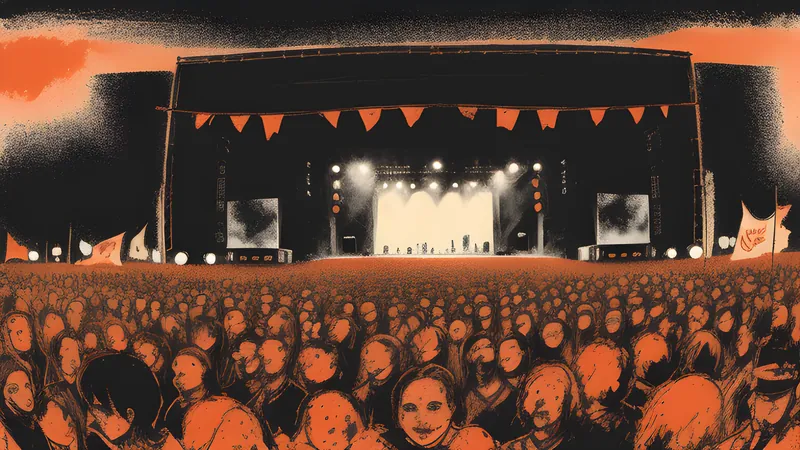
Once a year the Dutch town of Tilburg fills up with the doom faithful, and they all point themselves at the same brutal grey building in the centre of town. That building is 013, and for four days every April it becomes the most concentrated patch of heavy music in Europe. The rest of the year it is a regional pop venue doing the ordinary work of a mid-sized Dutch city — touring rock bands, hip-hop nights, club shows, the whole spread. Then Roadburn arrives and turns it into a cathedral.
I have made the trip twice, in 2017 and again in 2023, and both times the room did the same trick on me. You walk in off a flat, unremarkable street in a flat, unremarkable town, and inside there is a black box built with real care about how loud music should hit a body. Tilburg is not a place you would visit for the architecture or the scenery. You go for what happens inside 013, and it turns out that is plenty.
A venue built on purpose
Most great music rooms are accidents — old baths, waterworks, freetown army halls, buildings that were meant for something duller and got repurposed by people who noticed the acoustics. I have written enough of those pieces to have a soft spot for the type. 013 is the opposite case, and interesting because of it. It opened on 13 November 1998 as one of the first venues in the Netherlands designed from the ground up specifically for pop and rock music, replacing a cluster of smaller Tilburg clubs that had run their course.
The name comes from the old telephone area code for Tilburg, which is the sort of flatly practical Dutch choice that grows on you. The building itself is unlovely in the honest way that purpose-built venues often are: a big slab in the Veemarktkwartier quarter of the town centre, more concrete than charm from the outside. What matters is that everything inside was decided by people asking how a room should behave when a band is playing at volume, and that intent shows the moment the first chord lands.
The main hall — called the Main Stage now, after a run of beer-brand sponsor names over the years — holds around three thousand people. It was closer to two thousand until a 2016 renovation reworked the space and pushed the capacity up. There is a smaller second room seating a few hundred for club shows and support-level touring acts. Two rooms, one building, a proper bar operation, and a location you can walk to from Tilburg’s train station in a few minutes. For a town of this size it is an unusually serious piece of music infrastructure, and the Dutch built it deliberately.
What the room does to sound
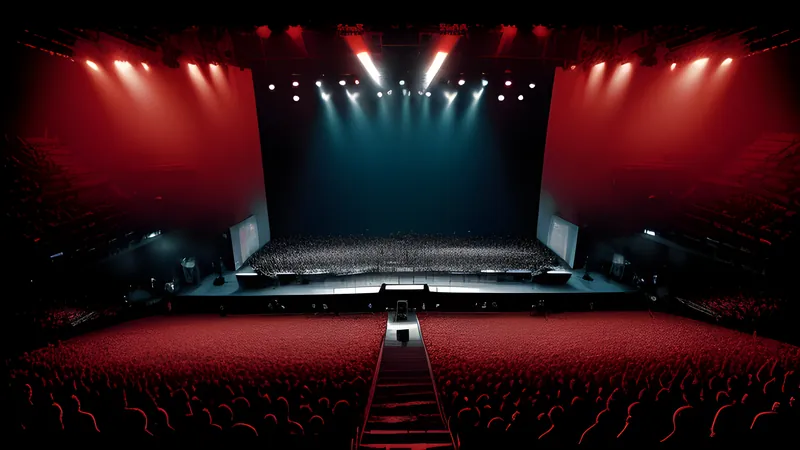
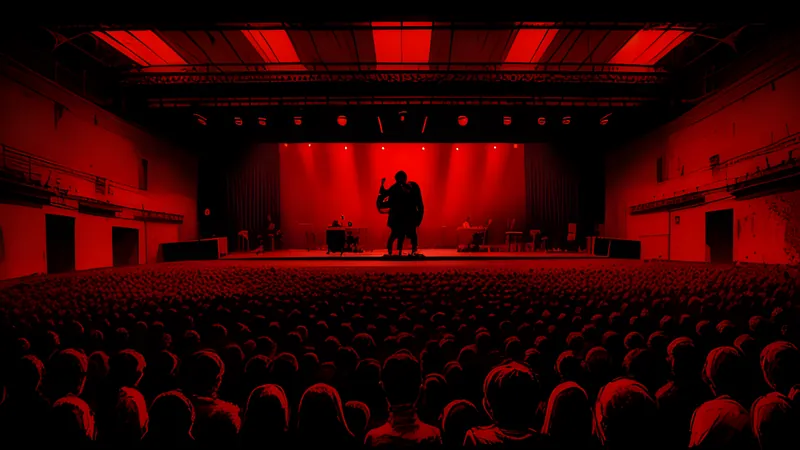
The Main Stage is a black box, and it is a good one. The floor is broad and flat with a generous ceiling, the stage sits at a sensible height, and the sightlines hold up better than you would expect for a flat-floor room of three thousand. Stand anywhere in the front two-thirds and you can see. The sound is where 013 earns its reputation, though: it is clean and it is heavy, and for the kind of music that lives on low end and detonating volume, it manages the rare double of being crushing and legible at the same time.
That combination is exactly why Roadburn works here. Doom, sludge, drone and post-metal are genres that live or die on how a room handles low frequencies. Put that music in a boomy, badly tuned hall and it turns to mud — a wall of undifferentiated roar with no shape to it. Put it in 013 and you can feel the individual notes of a downtuned riff move through the floor while still hearing what the guitarist is actually doing. The room lets heaviness stay articulate. When I stood through Roadburn’s slower, quieter sets — the ones built on a single sustained tone held for minutes — the silence between the notes was as clean as the notes themselves. That is a tuned room doing its job.
The smaller hall is a more ordinary club space, tighter and hotter, the sort of room where you catch a band on the way up before they graduate to the big stage. During Roadburn the whole complex gets rechristened and reconfigured, so the Main Stage keeps its name but the second room and the various nooks become the Green Room, Stage01 and the rest of the festival’s temporary geography. The bones underneath stay the same.
Roadburn’s home since 2005
013 and Roadburn are bound together now, and the marriage dates to 2005. The festival had knocked around a couple of homes before the venue invited it to settle in Tilburg for good, and it has stayed put ever since, growing each year into the surrounding town. That is the crucial thing to understand about Roadburn’s geography: 013 is the epicentre, but the festival long ago outgrew a single building. It spills into other Tilburg rooms within short walking distance — most famously Het Patronaat, a deconsecrated church a few minutes away whose stone interior gives the darkest, most ritualistic sets a setting that borders on the theatrical.
I have written at length about what Roadburn is as an event in the doom pilgrimage piece, and about the specific editions I made it to in 2017 and 2023. What I want to register here is how much of Roadburn’s character comes down to this room. A festival is shaped by its venue more than most people credit. Roskilde is a field, Copenhell is a harbour brownfield, Wacken is farmland — and Roadburn is a well-tuned three-thousand-capacity black box in a small Dutch town, plus a scatter of satellites you reach on foot. The intimacy, the walkability, the sense that you are always five minutes from the next thing, the shared feeling of everyone being packed into the same handful of rooms — all of it flows from 013 being the anchor.
It also explains why Roadburn has kept its scale sane while other festivals ballooned. The venue caps the crowd. You cannot inflate a black box the way you can add another field, so the festival stayed roughly the size the room allows, and that constraint has protected it. The doom world’s annual gathering is small because its home is a fixed indoor space, and that is a large part of why it still feels like a congregation rather than a market.
The satellite geography deserves a word of its own, because it is unusual. Het Patronaat, the deconsecrated church, gives the festival a second flavour entirely — a stone-walled space where the acoustics ring and reverberate, perfect for drone and ritual sets and hopeless for anything that needs punch and clarity. The programmers know the difference and book accordingly, sending the crushing, articulate sets to 013’s tuned black box and the atmospheric, ceremonial ones to the church. Learning which room suits which band is part of becoming a Roadburn regular, and it is a genuinely different festival experience depending on which set of walls you spend the weekend inside. That the whole constellation sits within a few minutes’ walk is the quiet logistical miracle underneath the whole thing.
Getting the most out of the room
Practical notes from two visits, worth the little they cost. Tilburg is easy: the venue sits in the centre, a short walk from the station, and trains run frequently from the bigger Dutch hubs. You do not need a car, and during Roadburn you actively do not want one — the whole point is the compact on-foot circuit between 013 and its satellite rooms.
Inside the Main Stage, the sweet spot for sound is the usual black-box advice: back off the very front, find the middle of the floor a good way back from the stage, and let the room do the work. The low end is engineered to arrive properly out there, and you keep your hearing and your sightline both. Down the front you get the physical crush and the direct impact, which is the right call for the heavier sets if your body is up for it, and less so for the long drone pieces where you want the whole room’s acoustic rather than a stack in your face.
If you are coming for Roadburn specifically, treat 013 as base camp and plan your walking. The festival deliberately runs sets against each other across its rooms, so you will spend the weekend moving between the Main Stage, the church and the smaller spaces, making the small hard choices that are half the fun. If you are coming any other week of the year, you are getting one of the better-sounding rooms in the southern Netherlands doing ordinary touring business, and that is a fine reason to visit on its own.
The Netherlands is well served for this kind of room. An hour east, Doornroosje in Nijmegen is a comparably serious purpose-built hall with its own strong sound, and the two make a natural pair if you are working the Dutch circuit. But 013 has the thing Nijmegen does not: one weekend every April when a grey box in a quiet town becomes, briefly, the loudest and most devoted room in Europe.
Related Content